Orange County outlines Vision Zero plan to cut fatalities, wins $3.7M regional grant
November 15, 2025 | Orange County, Florida
This article was created by AI summarizing key points discussed. AI makes mistakes, so for full details and context, please refer to the video of the full meeting. Please report any errors so we can fix them. Report an error »
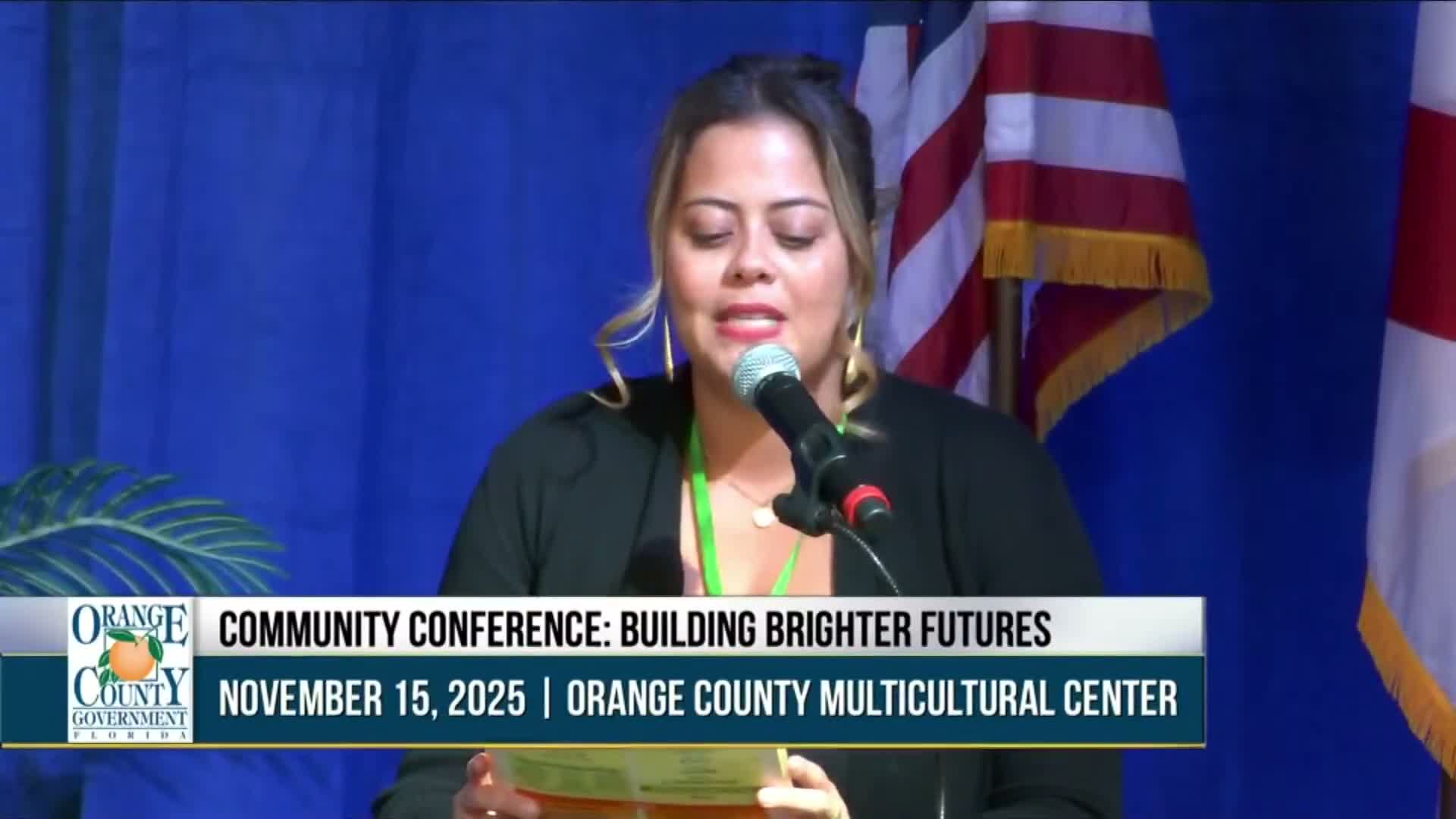
Humberto Castillero, manager of the county's Traffic Engineering Division, told a packed audience at the Orange County Community Conference that the goal of the plan is "to eliminate fatalities and severe injuries by the year 2040." He said the county is using crash data, public input and national countermeasures to prioritize short-, mid- and long-term safety investments.
The plan identifies 24 corridors across the county with concentrated crashes and proposes a menu of countermeasures that range from low-cost markings and lighting to larger investments such as signals and roundabouts. Castillero highlighted measures that can be deployed quickly, including leading pedestrian intervals (which give pedestrians a head start before vehicles get a green signal), improved lighting, pedestrian hybrid beacons and mid-block crossings.
Public funding and partnerships are already backing the effort. Castillero said a regional MetroPlan application won a $3,700,000 federal grant to support the Vision Zero planning effort; MetroPlan covered the bulk of the vision plan's $400,000 design cost and the county committed to its 20 percent match. He told attendees that the county will bring a resolution on traffic calming before the Board of County Commissioners on Dec. 2 and emphasized that implementation will combine county funds, commissioner discretionary allocations and grant competitions.
The presentation included a detailed data review showing that while most crashes involve vehicles, nearly half of traffic fatalities affect vulnerable users (pedestrians, bicyclists, motorcyclists). Castillero cited a recent high‑fatality crash on a county corridor as an example of why speed management and rapid countermeasures matter. He also described a planned school‑zone automated enforcement pilot that would include a public-information period and a subsequent enforcement phase if approved; officials expect an RFP and trial period before full enforcement is implemented.
County engineers and staff stressed equity in selecting projects: earlier versions of traffic calming required a 50 percent community match, which officials said was not feasible in some lower-income areas; the county reported it will now fund these projects fully in many cases.
What happens next: the county will present specific corridor recommendations to commissioners for funding and timeline decisions, seek additional grants, and begin lower-cost countermeasures where the toolkit shows faster implementation.
“I would rather have a fender bender than a T-bone,” Castillero said, summarizing the plan's safety-first approach.
Provenance: Presentation and Q&A at the Orange County Community Conference (topic start SEG 2538; topic finish SEG 3848).
View the Full Meeting & All Its Details
This article offers just a summary. Unlock complete video, transcripts, and insights as a Founder Member.
30-day money-back guarantee
Sponsors
Proudly supported by sponsors who keep Florida articles free in 2025

