Public commenters pressed Hazardville on hard water and PFAS; company to provide testing and treatment detail
December 04, 2025 | Public Utilities Regulatory Authority, Departments and Agencies, Organizations, Executive, Connecticut
This article was created by AI summarizing key points discussed. AI makes mistakes, so for full details and context, please refer to the video of the full meeting. Please report any errors so we can fix them. Report an error »
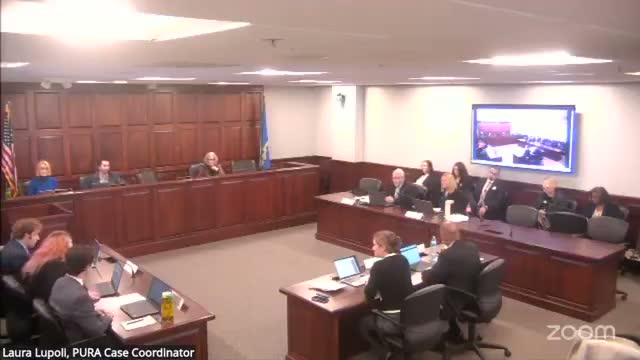
Company witnesses told PURA and OCC staff that they currently use a polyphosphate sequestrant (referred to in filings as Aquadaine) at some wells and in the treatment plant to keep hardness minerals in solution, not to remove them. The company said it does not operate large-scale softening systems such as ion exchange or reverse osmosis and that installing such treatment would require study; company witnesses agreed to provide any feasibility or cost information if directed.
On well-specific issues, the company acknowledged that the Avery well field had hardness concentrations that prompted corrective measures and agreed to file the measured hardness concentration and the second-highest well hardness as Late File 49. For Grant Road well (currently offline for E. coli), OCC asked whether PFAS testing had been performed: company agreed to check and to provide PFAS test results and concentrations as Late File 50. The company stated that PFOS levels at the Grant Road well had been above reportable levels and that PFOS would be factored into any treatment plan to return the well to service.
Staff also requested consumer-facing materials and customer-service documentation because many public-comment complainants had not previously contacted the company. The company agreed to provide the customer-service outline and associated messaging as Late File 52 and to supplement RRU52 with an Aquadaine datasheet.
Next steps: PURA ordered supplements and late-file exhibits (Late Files 49, 50, 52) to document measured hardness concentrations, PFAS testing results, and the company’s customer-service communications; the late-file schedule was set so those materials become part of the evidentiary record.
Don't Miss a Word: See the Full Meeting!
Go beyond summaries. Unlock every video, transcript, and key insight with a Founder Membership.
30-day money-back guarantee
Sponsors
Proudly supported by sponsors who keep Connecticut articles free in 2025

