GDOT outlines 10-year plan, funding mix and technology push
December 04, 2025 | Transportation, HOUSE OF REPRESENTATIVES, Committees, Legislative, Georgia
This article was created by AI summarizing key points discussed. AI makes mistakes, so for full details and context, please refer to the video of the full meeting. Please report any errors so we can fix them. Report an error »
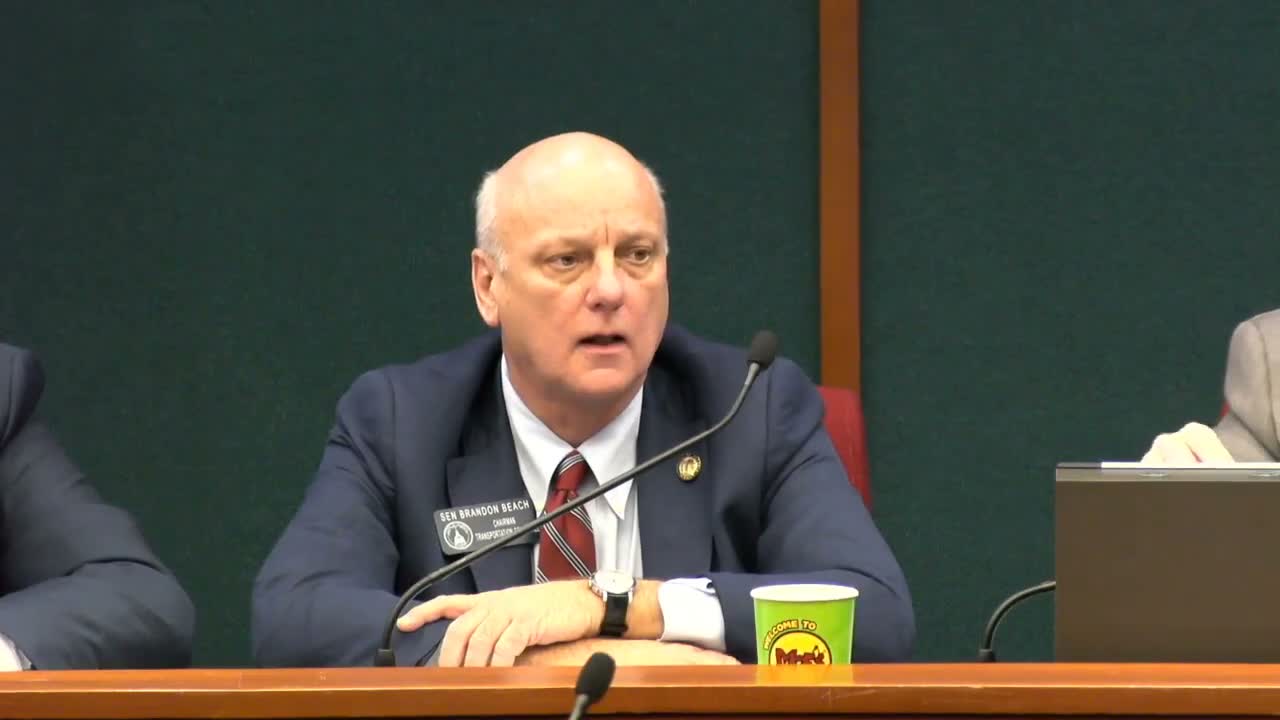
Russell told the committee the plan aggregates state revenues (excise taxes, hotel/motel fees, vehicle fees and bridge bonds created by House Bill 170) and federal funding streams (Federal Highway, Federal Aviation Administration and Federal Transit Administration). He said federal obligation authority for the state was roughly $1.281 billion while Georgia's statutory apportionment is about $1.421 billion and reminded members that most federal programs require a 20% state match and are reimbursable.
On allocation, Russell said the plan follows code direction and places the largest share toward construction and new highways (about 48% to 52% over 10 years), with maintenance typically 22% to 27%, bridge repair and replacement about 8% to 11%, safety-focused investments roughly 7% to 8% and administration around 8%. He described an 18-month project "shotgun map" representing about $2.74 billion in projects and said combined construction value for the two fiscal years was about $3.26 billion. Russell also reported GDOT executed 1,451 professional-services contracts in FY2019 totaling about $489 million to support project delivery.
Russell highlighted several discrete items that influence planning: a proposed $50 million bridge bond for FY2021, an SR-400 INFRA grant of $184 million and the effects of falling fuel consumption on excise-tax receipts. He noted a single-month vehicle-miles-traveled figure of roughly 285.1 billion miles and said Georgia ranks fourth nationally by that metric.
The commissioner emphasized the role of studies in shaping investment choices: a Carl Vinson Institute analysis showing substantial economic return from transportation investment and a McKinsey review GDOT commissioned to compare state and federal delivery processes and identify efficiency gains. Russell said those reviews help determine when to pursue state-only delivery versus leveraging federal programs.
On technology, Russell said Georgia will be an early adopter of connected-infrastructure: "we will ... deploy 1,000 traffic signals that will communicate to your vehicle," allowing vehicles to receive signal-phase information and improving safety and freight efficiency. He described pilot deployments in Metro Atlanta and noted automakers are beginning to include that capability.
Committee members asked about roundabouts, right-of-way acquisition and managed lanes. Russell said roundabout projects can sometimes receive full federal funding and that GDOT is pursuing early right-of-way acquisition on larger projects where federal approvals allow it. On managed lanes and tolling, he explained toll revenue often underpins private financing and enables projects that would otherwise be unaffordable under current annual budgets.
The committee did not vote on the 10-year plan at the meeting; Russell said the plan will be presented for approval at a later session and offered staff and online resources (including www.garoads.org and a provided thumb drive) for members to review project-level information.
Don't Miss a Word: See the Full Meeting!
Go beyond summaries. Unlock every video, transcript, and key insight with a Founder Membership.
30-day money-back guarantee
Sponsors
Proudly supported by sponsors who keep Georgia articles free in 2025

