OSP reports more investigations and bias‑based incidents; OIG outlines substantiated cases and removals
December 04, 2025 | City of Chicago SD 299, School Boards, Illinois
This article was created by AI summarizing key points discussed. AI makes mistakes, so for full details and context, please refer to the video of the full meeting. Please report any errors so we can fix them. Report an error »
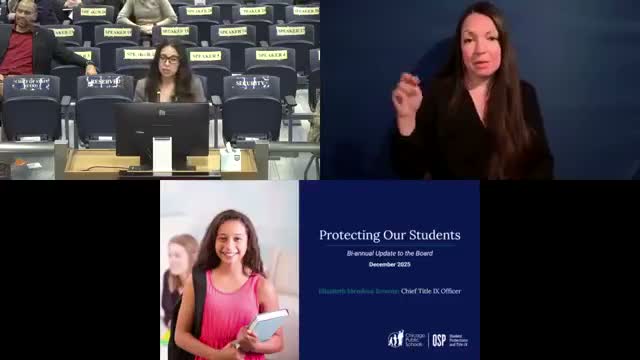
Office of Student Protections: Elizabeth Mendoza Brown, chief Title IX officer, reported OSP received about 12,000 reports in school year 2025 and opened roughly 4,100 cases, a 6% increase in cases opened from the prior school year. Among case types, OSP opened about 2,064 investigations categorized as student‑to‑student misconduct, 1,117 bias‑based harm investigations and 998 general staff‑misconduct cases. Mendoza Brown said bias‑based harm cases continue to be concentrated in middle grades and that race‑related harassment accounted for a rising share of bias investigations. She noted a 70% increase in dating‑violence cases from the prior year and said OSP closed a record number of cases in school year 2025, including Title IX matters resolved informally.
Why it matters: OSP data show both large volumes of reports and demographic disparities in complainants; the office is expanding prevention, training and student awareness materials and said it will increase outreach and compliance efforts for mandatory staff trainings.
Office of Inspector General: Inspector General Phil Wagenek presented the OIG’s allegations‑unit update. He said last school year the OIG opened 246 cases and closed 336, and that since the unit’s inception in 2018 it has opened about 2,700 cases and substantiated 471 with reports to the board. The OIG reported 31 staff members removed from schools so far this school year while investigations are pending and noted that 14 staff have been reinstated following initial fact‑gathering. Wagenek said the unit continues to prioritize allegations of serious misconduct and described ongoing efforts to reduce investigatory backlogs.
Board member follow‑up: board members asked for demographic crossbreaks (for example, the demographic profile of boys experiencing bias‑based harms) and for improved timeliness; OSP and OIG staff said they will provide additional breakdowns and work on quicker resolutions.
Ending: both oversight offices emphasized prevention, staff training and partnership with community organizations as key next steps to reduce harms and speed closures of investigations.
View the Full Meeting & All Its Details
This article offers just a summary. Unlock complete video, transcripts, and insights as a Founder Member.
30-day money-back guarantee
Sponsors
Proudly supported by sponsors who keep Illinois articles free in 2025

