Santa Barbara staff outline plan to streamline single‑family design reviews; HLC offers guidance
December 04, 2025 | Santa Barbara City, Santa Barbara County, California
This article was created by AI summarizing key points discussed. AI makes mistakes, so for full details and context, please refer to the video of the full meeting. Please report any errors so we can fix them. Report an error »
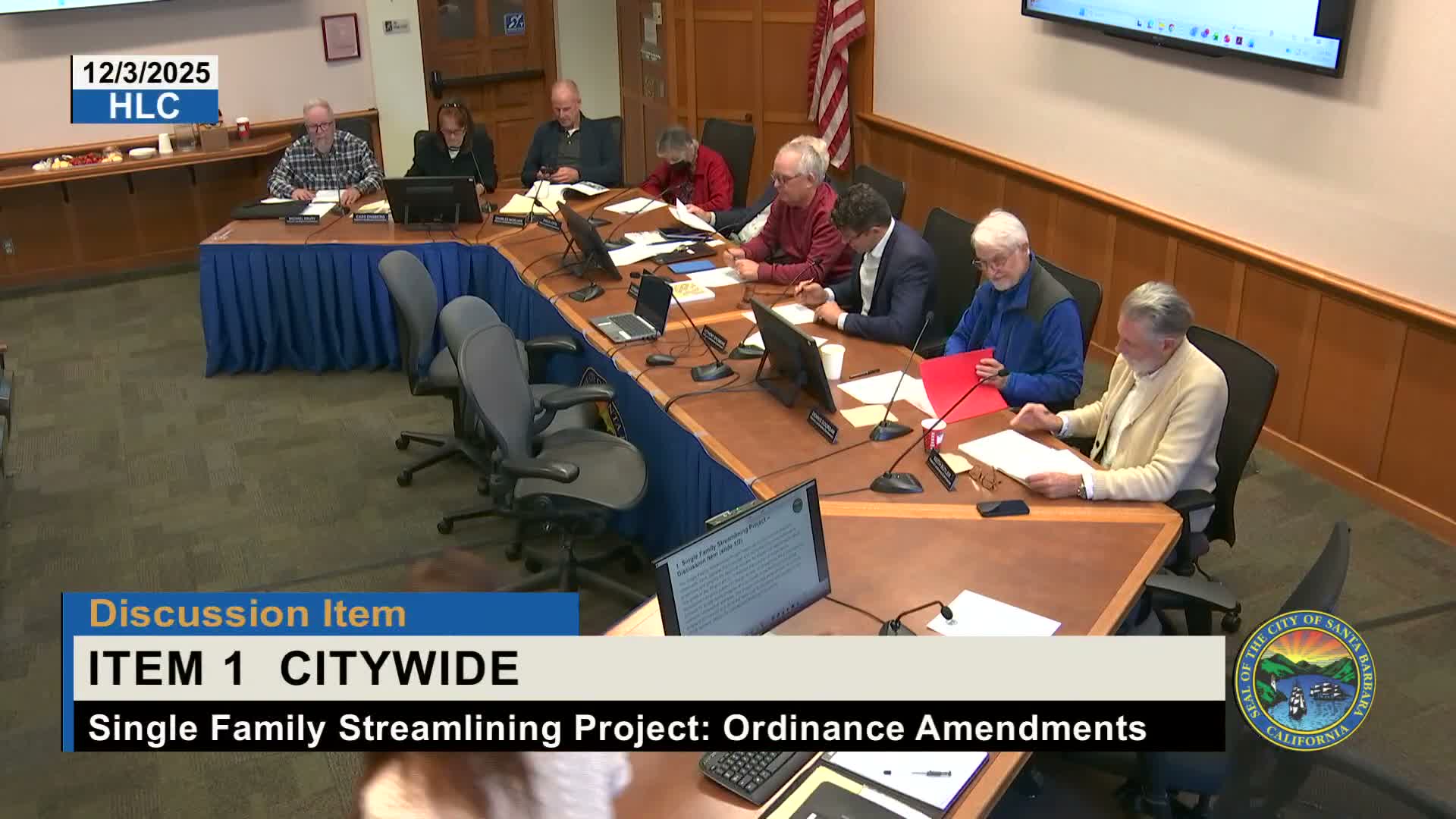
Ted Hamilton, acting design‑review supervisor, told the commission the package is meant to reduce the number of projects requiring discretionary review, create clear standards homeowners can use to qualify for administrative approval, and reassign review of floor‑area‑ratio exceptions (now termed FAR exceptions) to design review bodies rather than Planning Commission. Staff proposed raising the mailed‑notice threshold for first‑story additions from 500 to 800 square feet, increasing upper‑story mail‑notice thresholds, removing a requirement that all single‑family parking spaces be covered, and reducing minimum open‑yard area for very small lots.
Commissioners pressed staff to make the appeals process and timeline clearer in public materials, noting the change that would make final‑approval appeals allowable only by project applicants (a step intended to comply with the Housing Crisis Act five‑hearing limit). Commissioners also asked staff to clarify who would make administrative determinations in EPV, to expand applicant handouts and online guidance, and to develop a short set of standard construction details the city architect could maintain to speed review and reduce repetitive errors.
Hamilton said the single‑family design board, Planning Commission and City Council have supported shifting FAR exception decisions to design review because the findings are primarily aesthetic and site‑specific. He estimated a conservative 21% reduction in SFDB caseload under the new triggers, with a possible upper range near 35%, while promising additional training and website updates for applicants and staff.
The commission did not vote to block the package; commissioners asked staff to forward HLC’s comments to Planning Commission and to provide clearer language on public notices, appeal timelines and the scope of administrative approvals in EPV as the ordinance moves forward.
Don't Miss a Word: See the Full Meeting!
Go beyond summaries. Unlock every video, transcript, and key insight with a Founder Membership.
30-day money-back guarantee
Sponsors
Proudly supported by sponsors who keep California articles free in 2025

