After hours of testimony, Portland council directs study of human‑rights investment screen
December 04, 2025 | Portland, Multnomah County, Oregon
This article was created by AI summarizing key points discussed. AI makes mistakes, so for full details and context, please refer to the video of the full meeting. Please report any errors so we can fix them. Report an error »
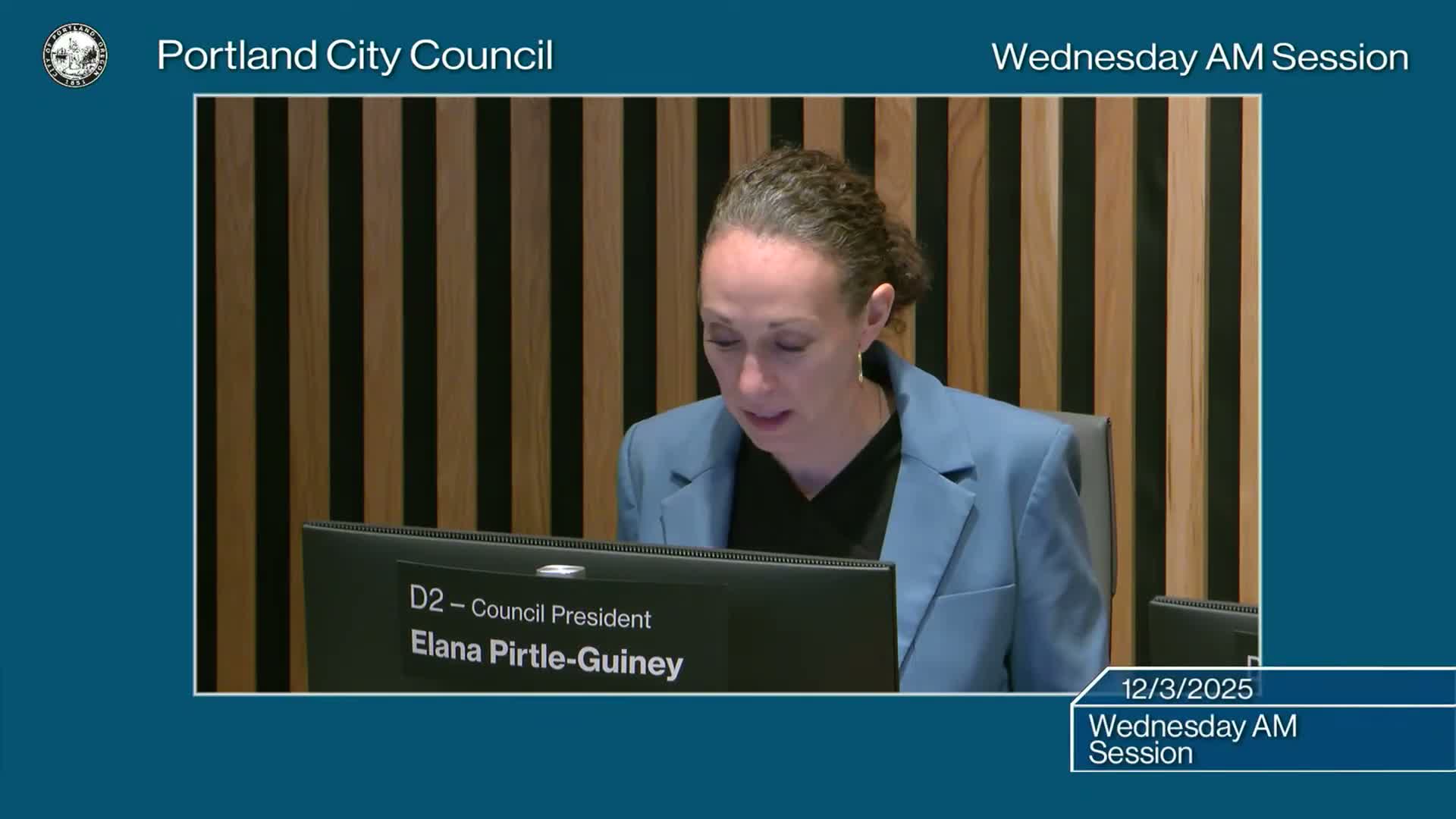
The finance committee had recommended adoption of the existing policy with only administrative updates, but dozens of speakers urged the council to go further. Public testimony — from labor groups, faith organizations, human‑rights advocates and tech workers — focused on corporate holdings such as Amazon, Google, Microsoft, Nvidia, Apple, Caterpillar and Walmart, which speakers linked to human‑rights concerns including the Israeli‑Palestinian conflict, corrections systems and surveillance technologies used by immigration enforcement.
CFO Jonas Bieri and Treasurer Bridget O’Callaghan answered technical questions about tradeoffs: narrowing permitted investments can reduce yields and shrink the universe of eligible securities, and changes require careful technical design to avoid placing subjective, case‑by‑case judgments on single staff members. Bieri said the city’s AAA bond rating is a multi‑factor assessment and that limitations on the investment policy could reduce revenue in a non‑zero way; the administration also flagged staff capacity needed to support a multi‑month analytic and outreach process.
Councilor Knoell proposed an amendment (Knoell‑1) directing the council to seek and evaluate options for a screening mechanism that would prioritize human‑rights considerations (including, but not limited to, genocide, slavery, torture, indefinite detention) and to consider labor, environmental and consumer impacts as part of the evaluation. The amendment calls for public outreach and for the administration to provide technical feedback and estimates of trade‑offs. Council adopted the amendment 8–3.
Council members split along pragmatic and principled lines: some said the council should lead on values and push the city to develop an ethical screen; others said the technical implementation is complex and warned against delegating subjective judgments to staff or narrowing the market in ways that might harm returns. Several councilors said the amendment was a compromise that pledges a months‑long, collaborative process rather than immediate divestment.
What’s next: The amendment instructs the administration (with interested council offices) to evaluate options, study other jurisdictions’ approaches and return to council with proposals and community engagement before the 2026 investment policy cycle. CFO and Treasurer said the work will require staff capacity and likely vendor/technical input to identify objective screening tools.
View the Full Meeting & All Its Details
This article offers just a summary. Unlock complete video, transcripts, and insights as a Founder Member.
30-day money-back guarantee
Sponsors
Proudly supported by sponsors who keep Oregon articles free in 2025

