Johnson County commissioners direct staff to expand property tax-relief pilot, vote 7–0
December 05, 2025 | Johnson County, Kansas
This article was created by AI summarizing key points discussed. AI makes mistakes, so for full details and context, please refer to the video of the full meeting. Please report any errors so we can fix them. Report an error »
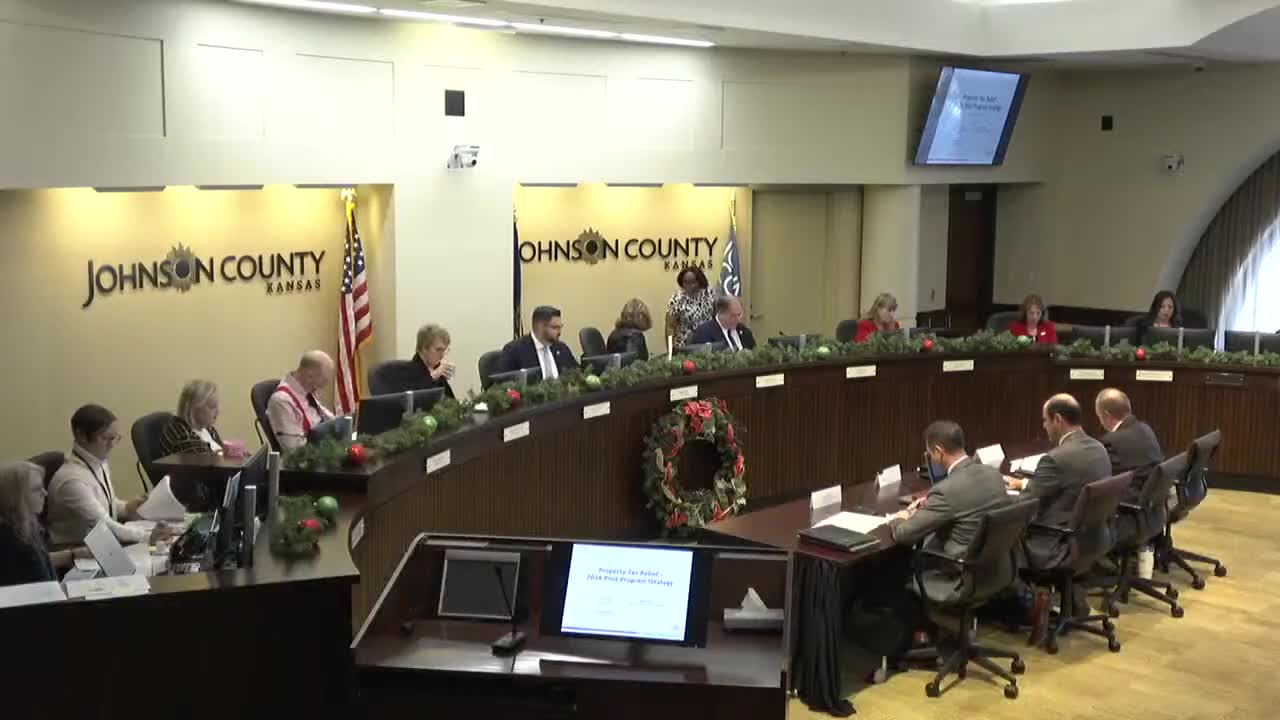
Treasury staff presented the background and data that led to the motion. Tom Franzen of Treasury Taxation and Vehicles told the board the first year of the pilot issued about $41,000 in relief to 207 eligible applicants on a $500,000 initial fund setup and had a first-year adoption rate of 3.2. After staff removed a $200 cap in year two, adoption rose to about 5.6 percent and dollars disbursed increased substantially; the county’s current program fund balance stands at $365,005.90. Greg Baldwin’s analysis projected that, under the proposed changes, payments would at minimum double (to roughly $369,463.16 based on current adoption behavior and about 718 eligible applicants) and could rise much further if take-up increases—Baldwin presented scenarios ranging from roughly $700,000 at a 10% adoption rate to more than $7 million at full uptake, and an upper bound of about $14.6 million if all eligibility levers were maximized.
Board members debated trade-offs between targeting relief to the most vulnerable and the risk of rapid cost growth as awareness and eligibility expand. Chair Mike Kelly framed the program as a way to deliver targeted relief, noting that a hypothetical 2-mill countywide reduction would cost roughly $30 million and deliver comparatively modest savings to many households. Several commissioners supported removing the age limit and raising the home-value cap while differing on whether to broaden income eligibility beyond HUD’s "very low" standard; others urged keeping the program narrowly targeted during the pilot to avoid overcommitting county funds.
The motion, made by Commissioner Hanzlick and seconded by Commissioner Brewer, directed staff to move forward with the recommended changes and return with implementation materials. The clerk called the roll; the board voted 7–0 in favor. Chair Kelly thanked staff and directed a short adjournment to reconvene for a separate VSOC meeting. Staff told the board they expect to return with detailed implementation options on Dec. 11 and aim to implement the third year of the pilot in January 2026.
Staff also outlined contingency options if applications exceed the available fund balance: pro rata allocations, tiered payouts by criteria, first-come/first-served processing, or using county reserves (which would require budget consideration). The chair emphasized that the county cannot rebate taxes that have not been paid and that program design must respect legal limits; staff said any partnership or system changes (for example exploring tax-credit mechanisms) would require additional analysis and potential legal review before adoption.
The board’s direction preserves the program’s intent as targeted relief while formally authorizing staff to prepare materials and legal/operational recommendations for the board to consider at the next meeting.
Ending: The board adjourned the Committee of the Whole session for a five-minute break to reconfigure technology and reconvene as the VSOC; staff will return Dec. 11 with recommended implementation steps and materials ahead of a planned January 2026 rollout.
Don't Miss a Word: See the Full Meeting!
Go beyond summaries. Unlock every video, transcript, and key insight with a Founder Membership.
30-day money-back guarantee
Sponsors
Proudly supported by sponsors who keep Kansas articles free in 2025

