Harford County councilors back zoning change to let nonprofit shelters offer limited low-cost spay/neuter and vaccinations
December 04, 2025 | Harford County, Maryland
This article was created by AI summarizing key points discussed. AI makes mistakes, so for full details and context, please refer to the video of the full meeting. Please report any errors so we can fix them. Report an error »
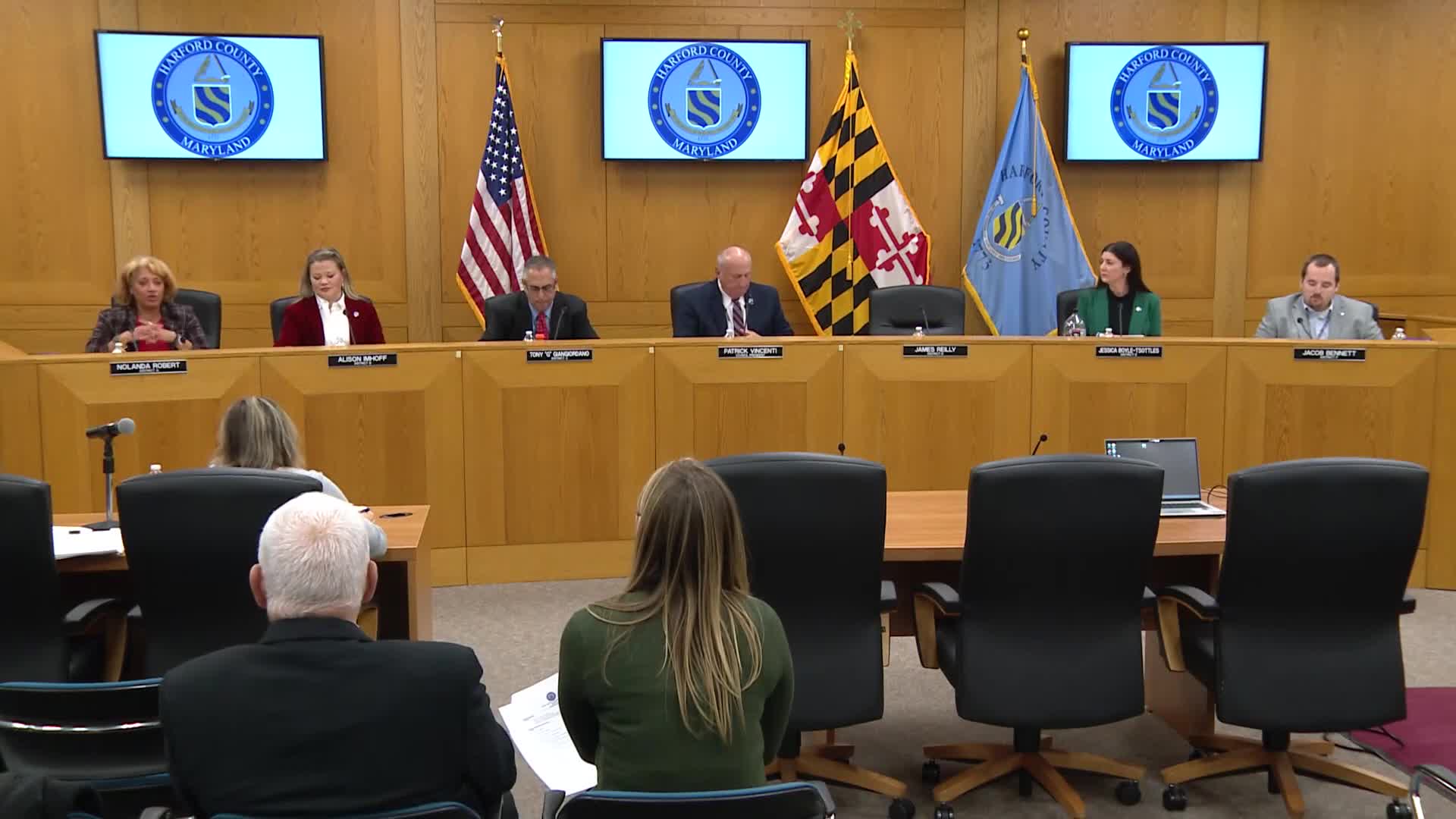
Robert said the change is narrowly tailored to permit only spay/neuter procedures and core preventive vaccines (for example, rabies and other routine immunizations) and specifically prohibits full veterinary examinations, diagnostics or treatment for illness or injury. "This amendment authorizes what many shelters are already equipped to do but are currently restricted from offering by zoning language," she said, adding the change would help reduce unwanted litters, shelter overcrowding and public-health risks from unvaccinated animals.
Councilwoman Imhoff supported the measure as a preventive step that would let rescues and shelters partner with veterinarians and local agencies to keep services in-county and reduce the cost burden of transporting animals to neighboring jurisdictions.
Amanda Hickman, executive director of the Humane Society of Harford County, told the council the county’s only fully open-admission shelter supports the proposal, but said the shelter would need to secure grant funding before it could immediately open services to the general public. "We will not be able to open this up to the general public immediately if this change were to take effect. We do need to obtain grant funding," Hickman said, citing interest in the Maryland spay-and-neuter program.
Council members asked whether the bill would allow owners to drop off animals and sign a declaration of temporary custody in lieu of formal surrender. Staff and councilors clarified that under the proposed language services would be limited to animals in the shelter’s custody; the exchange in the hearing made clear the intent is to allow shelters to serve animals already under their care rather than to convert shelters into general public clinics.
Council members and presenters emphasized the bill is intended to be revenue neutral for the county; Robert said the additional services would typically be funded by donations, grants and volunteer veterinarians rather than new county spending. With no further public speakers, the hearing on Bill 25-016 concluded and the council president said the bill will be considered at the next meeting.
Don't Miss a Word: See the Full Meeting!
Go beyond summaries. Unlock every video, transcript, and key insight with a Founder Membership.
30-day money-back guarantee
Sponsors
Proudly supported by sponsors who keep Maryland articles free in 2025

