Montgomery County committee advances expedited survivor-benefit bill for line-of-duty firefighter deaths
December 05, 2025 | Montgomery County, Maryland
This article was created by AI summarizing key points discussed. AI makes mistakes, so for full details and context, please refer to the video of the full meeting. Please report any errors so we can fix them. Report an error »
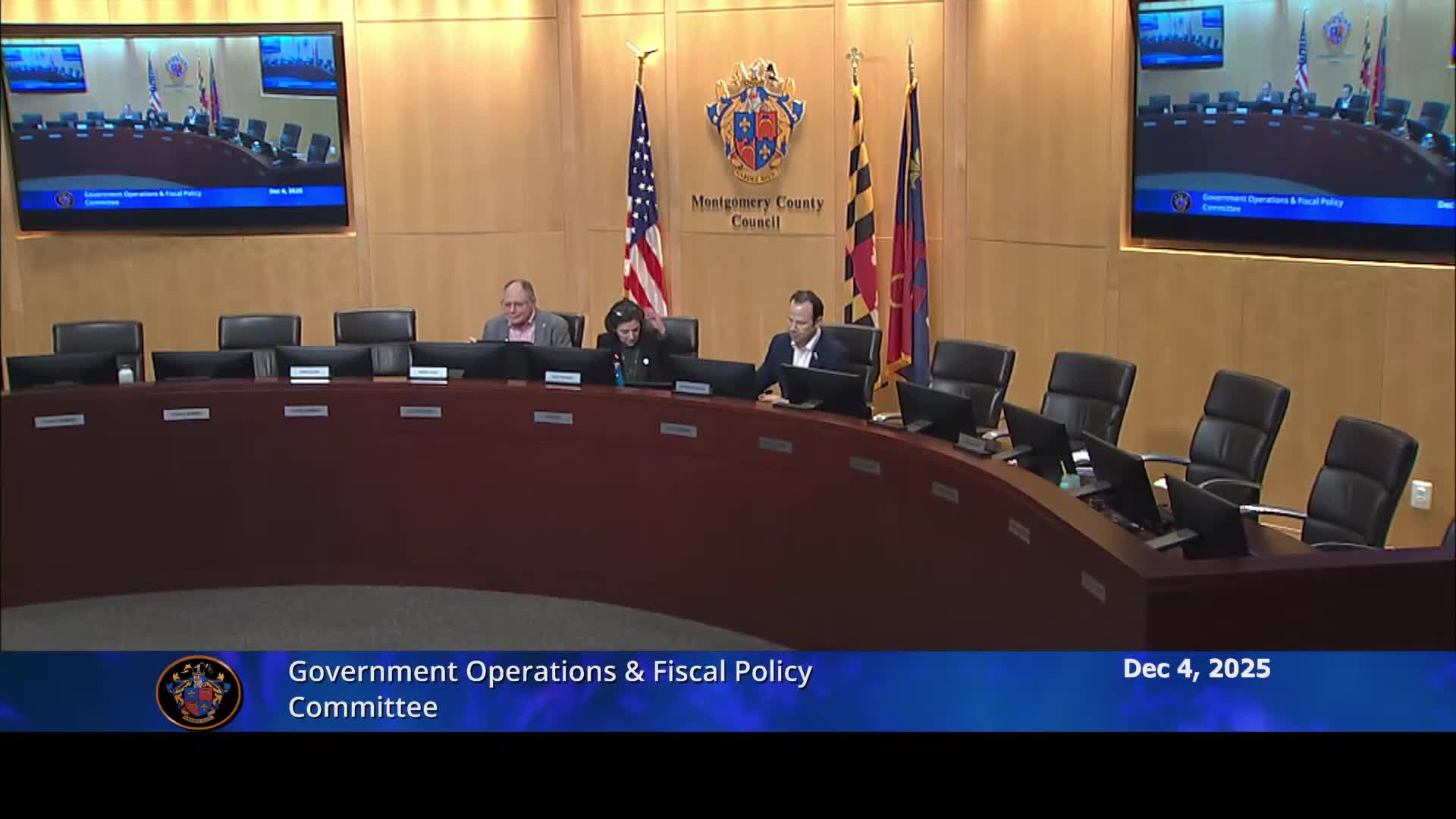
Miss Wellens of the executive branch told the committee the bill would offer surviving spouses three benefit-election options and that its main purpose is to ensure benefits are delivered quickly. Staff said the bill is expected to have minimal fiscal, racial equity or climate impacts and noted broad public support including testimony from the fire chief, the county executive's office, the International Association of Fire Fighters and multiple captains and firefighters.
Committee members focused discussion on timing and eligibility. The county executive’s suggested amendment would make benefits payable beginning the first of the month after the surviving spouse makes an election of benefits (within the bill’s 60-day election window) and after the county receives required documentation. Doctor Stoddard (executive branch) told the committee that establishing eligibility can hinge on a medical examiner’s report, which is sometimes delayed or inconclusive in presumptive cancer cases, creating a trade-off between prompt payments and the risk of later discovering ineligibility.
Several council members said they preferred expeditious payments rather than delaying support to grieving families. Council Member Katz told the committee that if a later review showed a mistaken payment, the county should absorb the cost. The committee read into the record the timing amendment language and accepted it without objection. Staff clarified that accepted payments would be retroactive to the date of death when appropriate.
The committee also accepted a clarifying amendment to the credited-service language to reference section 33-41, ensuring the benefit-calculation option refers to the statute’s definition of credited service. A proposal from the executive branch to extend the 20-year-assumption option to beneficiaries other than spouses (children/dependents) was objected to and not adopted at the committee hearing.
Members discussed the statutory definition of "line of duty" and agreed the topic requires further review with bargaining units. Council Member Lukey said she is working with the Montgomery County Police Department, Office of Legislative Review and the Fraternal Order of Police and will circulate amendment language and a memorandum of understanding to add police and other public safety bargaining units at full council next week.
The committee voted to advance the bill as amended; the chair reported the vote was unanimous. The full council is scheduled to consider the expedited bill at its next meeting.
Quotes in context:
"The benefit must be paid at the beginning of the first month following the date the surviving spouse makes an election of benefits, period," staff read into the record when the timing amendment was discussed.
"If the time happens that we find out that something wasn't supposed to be paid out, then I believe the county should be the one to eat it," Council Member Katz said while urging quick payments to families.
What’s next: The bill will go to full council with the committee’s amendments; sponsors and staff expect to circulate additional amendment language and an MOU to incorporate police and other bargaining units before that session.
View the Full Meeting & All Its Details
This article offers just a summary. Unlock complete video, transcripts, and insights as a Founder Member.
30-day money-back guarantee
Sponsors
Proudly supported by sponsors who keep Maryland articles free in 2025

