Dallas County adopts contingent precinct map as U.S. Supreme Court weighs redistricting case
December 05, 2025 | Dallas County, Texas
This article was created by AI summarizing key points discussed. AI makes mistakes, so for full details and context, please refer to the video of the full meeting. Please report any errors so we can fix them. Report an error »
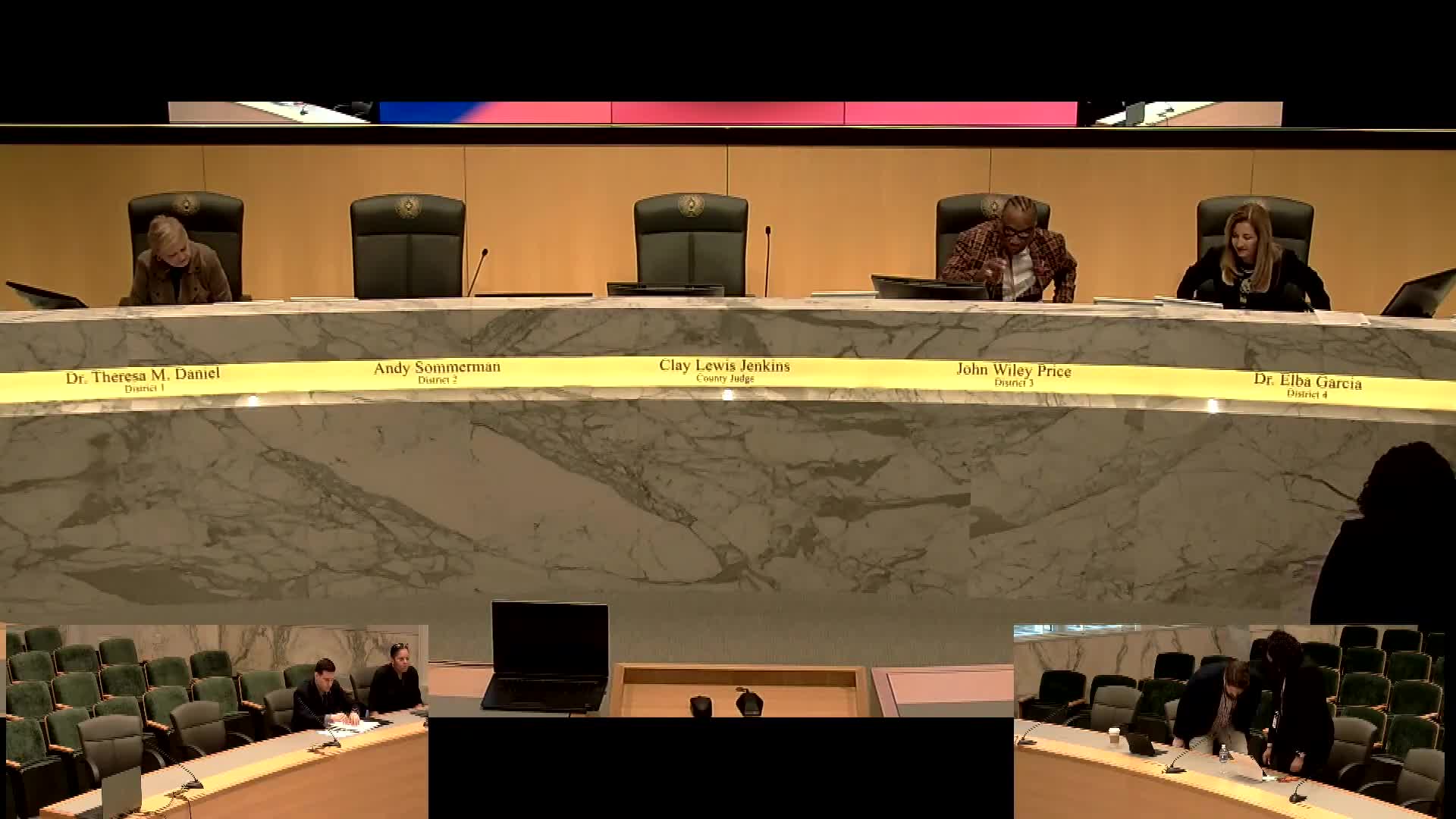
The order, moved on the record by a court member and seconded by another, reads the new precincts and attachments into the record and explicitly conditions the adoption "if and only if the Supreme Court vacates the ruling of the lower court" concerning recent Texas redistricting. In practice the order means the new precinct map will take effect only if the Supreme Court allows the so-called "Trump lines" to remain in force; otherwise, election precincts will revert to the currently implemented lines.
Why it matters: Elections staff told commissioners the changes were necessary after earlier congressional redistricting required precinct realignments. Paul Adams of the elections office told the court they worked with outside counsel and used GIS overlays to eliminate precincts with few or no active voters, aiming to improve administration and reduce the number of tiny precincts that complicate ballot handling and staffing.
Elections administrator Paul Adams said the office reduced precincts countywide from the old plan to the new plan as part of this motion and noted "hard lines" — state and federal district boundaries that cannot be split — constrained what could be combined. Adams added that the office aimed to ensure that polling locations remained the same and that lines are identical for both parties.
Public reaction: Several precinct chairs spoke during the public-comment period. Linda Weiss, precinct chair 4076, described difficulties when a previous change moved a high-rise of older voters to a different polling site, saying, "It was horrible," and thanking the court for restoring the countywide voting option that had eased the problem. Elizabeth Hamline, an Irving precinct chair and election judge, criticized the recent congressional map and said it "silences our majority minority city," alleging the map was crafted to disadvantage Black, Latino and Muslim voters in Irving and West Dallas County. Michael McPhail, who said he is a former Dallas County Democratic Party elections director, praised the consolidation as overdue and likely to make administration and recruitment of election judges easier.
Staff response and transparency: Staff said they sent notifications to precinct chairs and party chairs and that the county asked political parties to provide email addresses to supplement mailed notices. Adams acknowledged some precinct chairs reported not receiving a mailed letter but said notifications were posted and, where parties provided email, messages were sent.
Procedure and contingency: Commissioners discussed the legal and practical need to make the adoption contingent on the Supreme Court's pending action because the county's filing deadline for candidates is Monday. Staff warned that if the court waited until after the filing deadline, officials could be forced into an emergency meeting or face a mismatch between precincts and the filing process.
What passed: The court approved the motion to adopt the attached precinct amendments, with the order explicitly tied to the outcome of the pending Supreme Court decision. A voice vote was taken and "the motion carries unanimously." Commissioners thanked elections staff (including Latoya Jenkins, Jessica Mendoza, Kevin in GIS and Jasmine Flores) for quick work producing the maps and lists on short notice.
Next steps: Because the order is contingent on the Supreme Court's decision, the new precinct lines will only be used if the high court permits the challenged congressional lines to stand; otherwise the current precinct plan remains in effect. Staff and commissioners said they will follow up with written letters to neighborhood groups and precinct chairs to explain the contingency and the effect of the senatorial/other "hard lines" that constrain reconfiguration.
View the Full Meeting & All Its Details
This article offers just a summary. Unlock complete video, transcripts, and insights as a Founder Member.
30-day money-back guarantee
Sponsors
Proudly supported by sponsors who keep Texas articles free in 2025

