Orange County lays out Vision Zero plan, highlights $3.7 million regional grant and high-injury corridors
November 15, 2025 | Orange County, Florida
This article was created by AI summarizing key points discussed. AI makes mistakes, so for full details and context, please refer to the video of the full meeting. Please report any errors so we can fix them. Report an error »
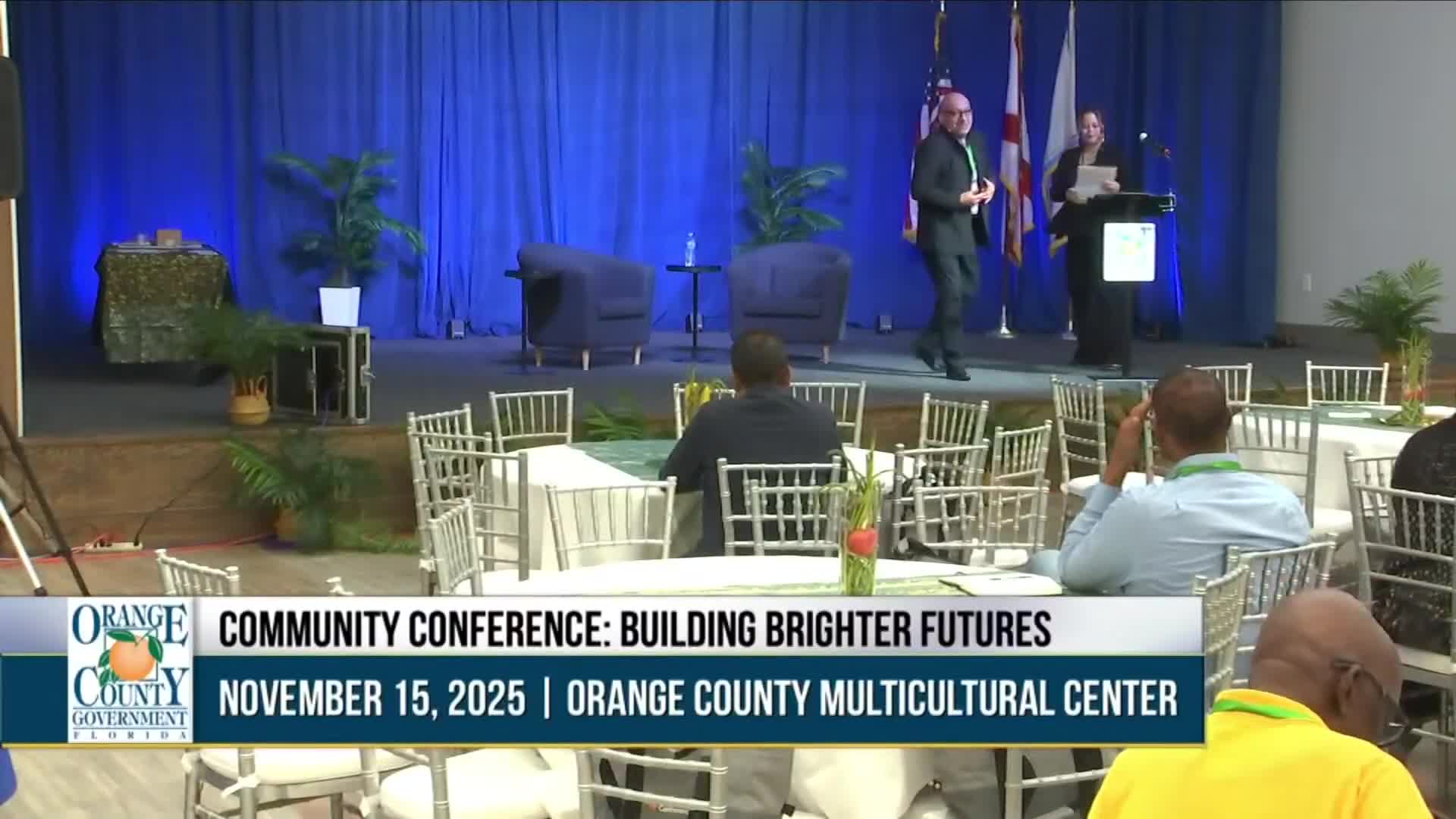
Humberto Castillero, manager of the county’s Traffic Engineering Division, described the program’s six chapters—crash analysis, data, public engagement, policy review, toolkit and recommendations—and the 50-plus countermeasures the county will use to prioritize work on the most dangerous corridors. He said a regional grant of $3,700,000 helped pay for the action-plan development and toolkit; the county will continue to seek grants and federal funding for implementation while also using local capital where available.
Castillero highlighted data-driven targeting. "On one five-year corridor analysis, Pine Hills showed 538 crashes, seven fatalities and 25 severe injuries," he said, and warned that nearly half of roadway fatalities involve vulnerable road users. The presentation emphasized the nonlinearity of crash severity with speed—Castillero noted studies showing much higher fatality risk as vehicle speed increases—and the need for a systems approach combining engineering, enforcement, education and emergency response.
Short-term, low-cost changes in the toolkit include improved crosswalk lighting, leading pedestrian intervals at signals and pedestrian hybrid beacons. Medium- and long-term measures listed range from roundabouts and reconfigured intersections to corridor-level resurfacing and redesign. Cost indicators were included for each countermeasure so communities and commissioners can match requests to available funding.
The county’s outreach and equity approach was also central: Castillero said Orange County asked commissioners to remove a prior requirement that neighborhood residents shoulder half of traffic-calming costs and instead fund the full cost in many cases to avoid creating equity gaps. He also said staff will press for integration of Division 0 priorities into county planning documents and capital-improvement programs.
Officials noted a pending board action: the Board of County Commissioners was scheduled to consider a traffic-calming resolution in December designed to formalize some of the program’s next steps and funding pathways. The presentation urged residents to consult the online toolkit and contact their commissioners for neighborhood-level follow-up.
Don't Miss a Word: See the Full Meeting!
Go beyond summaries. Unlock every video, transcript, and key insight with a Founder Membership.
30-day money-back guarantee
Sponsors
Proudly supported by sponsors who keep Florida articles free in 2025

