Defendant accepts deferred adjudication; judge sets 6-year probation and program requirements
December 04, 2025 | Judge Stephanie Boyd 187th District, District Court Judges, Judicial, Texas
This article was created by AI summarizing key points discussed. AI makes mistakes, so for full details and context, please refer to the video of the full meeting. Please report any errors so we can fix them. Report an error »
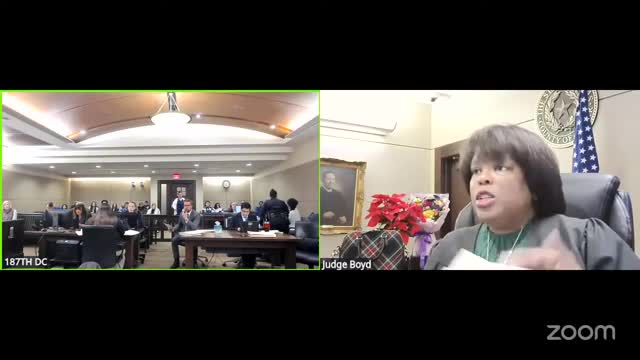
The prosecutor and the judge flagged inconsistencies between the defendant’s account and the written police reports, including a complainant’s statement and purported video surveillance. The judge asked the defendant directly whether he had taken credit cards from the residence; the defendant admitted, “I did, take the, credit cards,” and said he did so because he was hungry and homeless. The state noted there was no reference to showering in investigative reports and that surveillance footage showed movements consistent with taking property.
After hearing allocution, the court offered a choice between an immediate prison sentence or deferred adjudication. The defendant accepted deferred adjudication. The judge pronounced a six-year deferred-adjudication term and ordered the following conditions: a $2,000 fine probated; a TAP evaluation and compliance with its recommendations; regular reporting (by Zoom or in person); random urinalysis testing; proof of employment within 45 days of release; prohibition from employment in home-health settings or work with minors; one field visit per month; 300 hours of community-service restitution with one hour deducted for each sober-support meeting attended; an order of 60 sober-support meetings in 60 days; and a requirement that the defendant enroll in either a trade-school certification or college program.
The judge reiterated that because the defendant followed a plea-bargain agreement and waived the right to appeal, the court’s adherence to the plea limits appeal rights. Probation was asked to assist with housing referrals and the court held a felony drug-court referral in abeyance pending available space. The defendant acknowledged the conditions and the court provided him with the trial-court certification of appeal rights.
The judge closed by counseling the defendant about avoiding conduct that could expose him to a potential 20-year sentence if deferred adjudication were revoked, and urged communication with probation and use of support networks.
Don't Miss a Word: See the Full Meeting!
Go beyond summaries. Unlock every video, transcript, and key insight with a Founder Membership.
30-day money-back guarantee
Sponsors
Proudly supported by sponsors who keep Texas articles free in 2025

