Capacity study: design can handle up to about 1,100 students, consultants say
November 08, 2025 | Salem Public Schools, School Boards, Massachusetts
This article was created by AI summarizing key points discussed. AI makes mistakes, so for full details and context, please refer to the video of the full meeting. Please report any errors so we can fix them. Report an error »
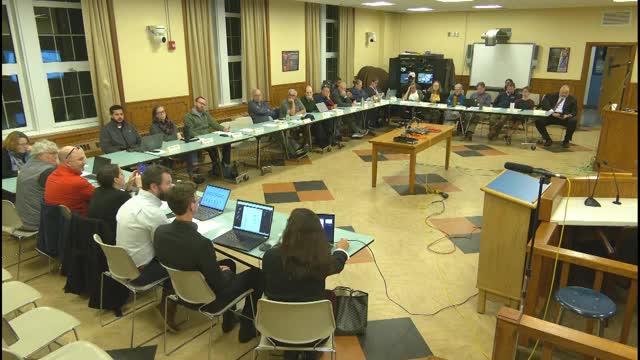
Brad Rogers, a design-team representative who led the analysis, said the baseline classroom inventory shows 49 general classrooms, science labs and art rooms providing 1,173 seats. "So at that puts you at 93% utilization if you're at 1,100 students," Rogers said, noting that the MSBA typically aims for about 85% utilization.
The study also counted vocational instructional spaces. "You see that that adds another 264 seats," Rogers said, which brings total capacity to about 1,400 seats and would place a 1,100 enrollment at roughly 75% utilization. The team said that including vocational rooms provides flexibility for scheduling and reduces the chance of pinch points during peak periods.
Committee members pressed the presenters on modeling assumptions. One member asked whether the analysis assumed perfect attendance; Rogers replied it tested a worst‑case scenario (everyone present in general classrooms) and used the district's actual schedule to look for peak conflicts. The presenters said they modeled a standard section size of about 24 students per class and that scheduling levers — such as using specialty rooms at different times — could relieve pressure if enrollment increased further.
The presentation also addressed support spaces. Rogers said dining and other amenity spaces appeared to have additional flexibility and that the auditorium and field‑house capacities would be examined separately; the auditorium was cited at about 640 seats and bleacher capacity was targeted around 1,200, pending confirmation.
Why it matters: The enrollment figure tied to MSBA reimbursement drives how much space the project is designed and how much of the building is eligible for state reimbursement. The study suggests the current schematic design is tight under the MSBA 1,000‑student template but workable, and that vocational spaces materially expand capacity.
Next steps: The design team will continue refining modeling and will provide more detailed counts and scheduling examples as the project moves into design development and estimating.
Don't Miss a Word: See the Full Meeting!
Go beyond summaries. Unlock every video, transcript, and key insight with a Founder Membership.
30-day money-back guarantee
Sponsors
Proudly supported by sponsors who keep Massachusetts articles free in 2025

