Clark County planners outline housing shortfall, propose upzones and funding options
November 08, 2025 | Clark County, Washington
This article was created by AI summarizing key points discussed. AI makes mistakes, so for full details and context, please refer to the video of the full meeting. Please report any errors so we can fix them. Report an error »
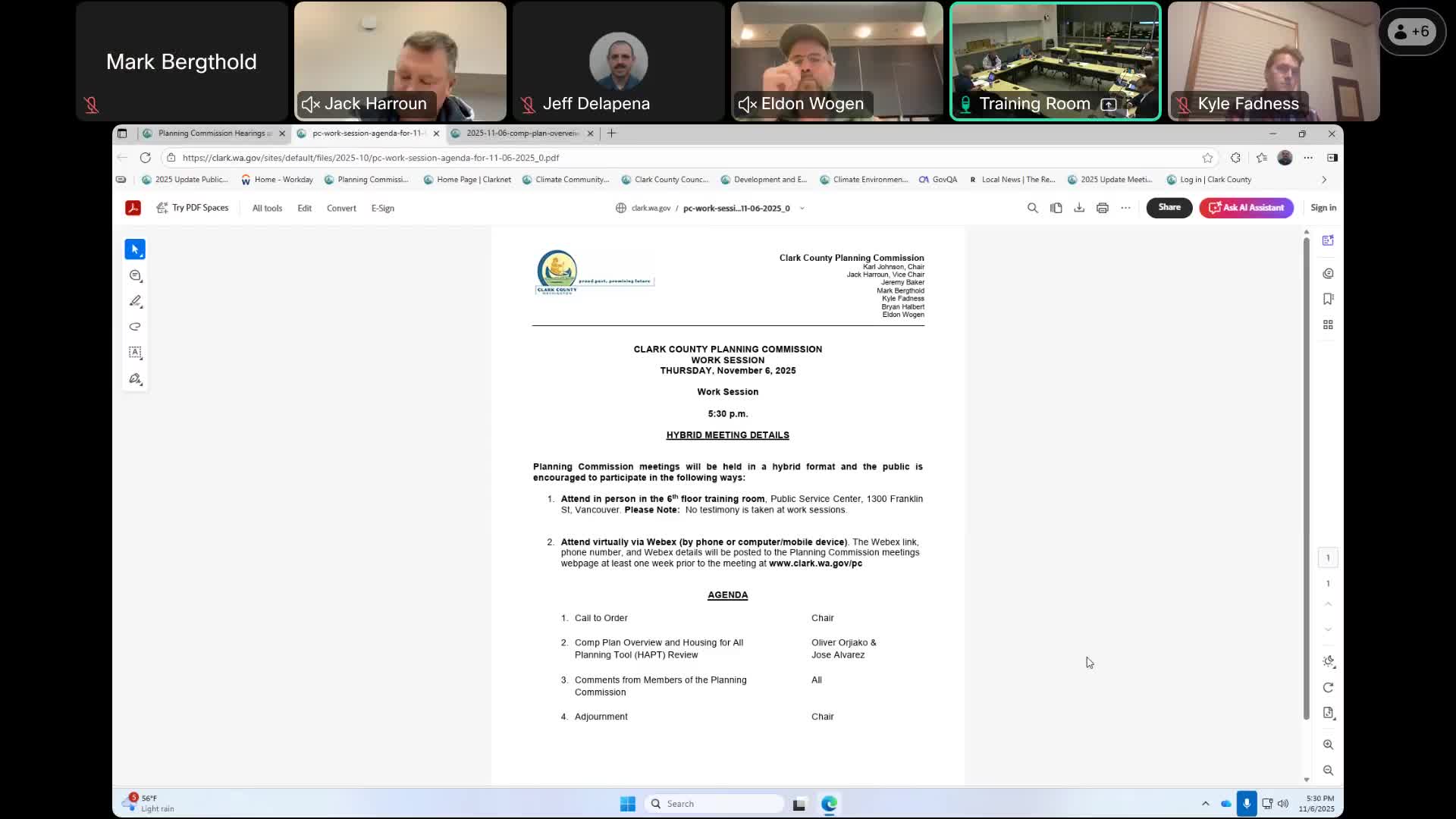
Ojeko said the council previously adopted a population forecast used for planning and that staff are using that forecast to derive allocations for housing and jobs. Alvarez said countywide housing projections — derived from the state Department of Commerce tool and adjusted for units built since 2020 — translate to roughly 103,000 additional housing units needed by 2045 after removing about 12,000 units added from 2020–2023. "That's a big, big, big lift," Alvarez said of adding tens of thousands of homes.
Staff and commissioners discussed how the projected need breaks down by income bands. Alvarez summarized the HUD-calculated income bands used in the projection and said roughly 52% of the housing needed over the 20-year planning horizon would serve households below 80% of area median income, creating pressure to allow more multifamily and higher‑density housing.
To help pay for lower‑income housing, Ojeko described a county option that would send a 0.1% sales‑tax measure to voters; county finance estimates such a measure could generate about $6.4 million per year, "which is not enough," Ojeko said, and he stressed the council has not decided whether to pursue it. He added that the legislature also recently required local reporting to the University of Washington real‑estate division, which could affect future funding and accountability discussions.
Planners said mixed‑use zones have been producing more housing than employment in practice (staff observed roughly an 80/20 housing-to-commercial split rather than the planned 60/40), reducing employment capacity unless the county adjusts land designations. Alvarez pointed to proposed employment expansions north of 179th/199th and west of WSU and proposed consolidating multifamily zones to R24, R36 and R50 to direct growth where capacity exists.
Staff emphasized constraints and process steps: the DEIS comment period ends Nov. 30, the county council will hold work sessions on Nov. 12 on the consultant report, and staff are aiming to complete the periodic update by June 2 of next year, though they cautioned the schedule is subject to change. The agricultural land study published Nov. 4 will inform the preferred alternative and the council’s decision on urban growth boundary changes.
The planning commission did not take any formal votes at the work session. Staff said they will email commissioners a link to the GIS map and the agricultural land study and that responses to public comments will be packaged with the final EIS.
View the Full Meeting & All Its Details
This article offers just a summary. Unlock complete video, transcripts, and insights as a Founder Member.
30-day money-back guarantee
Sponsors
Proudly supported by sponsors who keep Washington articles free in 2025

