Ways and Means hearing: Republicans say permanent tax changes will boost investment; witnesses urge careful fixes to international rules
December 04, 2025 | Ways and Means: House Committee, Standing Committees - House & Senate, Congressional Hearings Compilation
This article was created by AI summarizing key points discussed. AI makes mistakes, so for full details and context, please refer to the video of the full meeting. Please report any errors so we can fix them. Report an error »
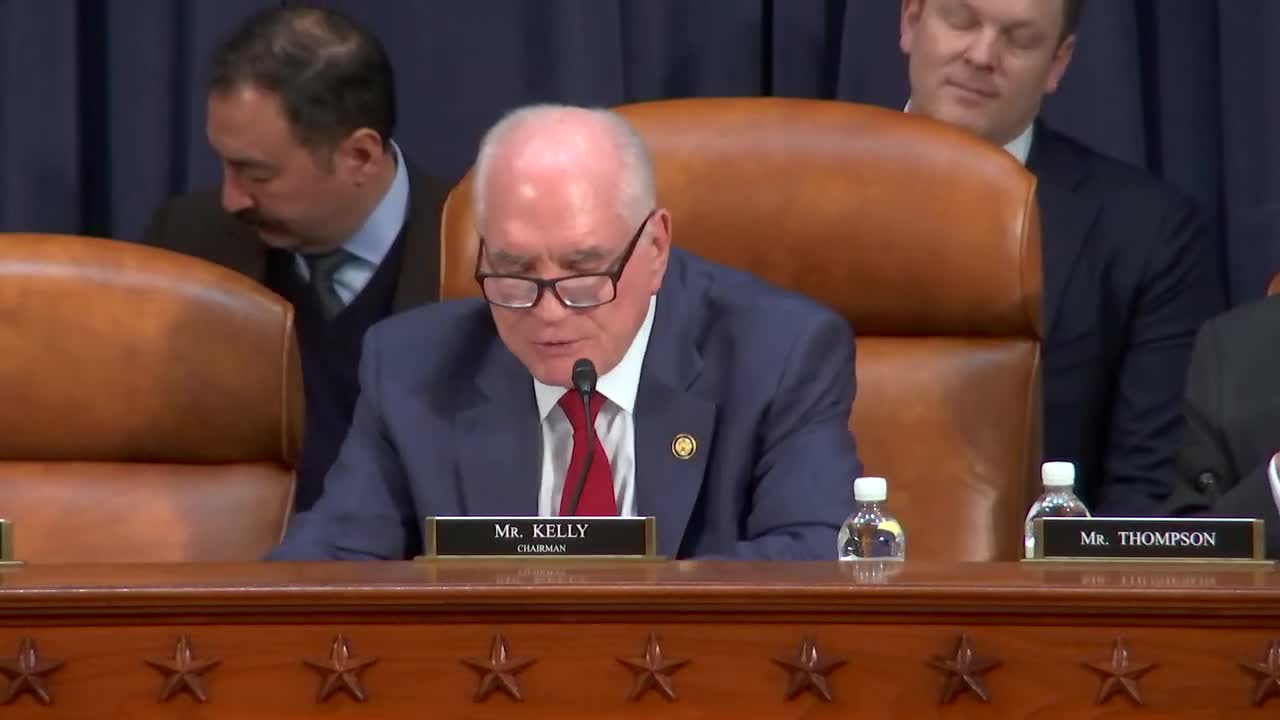
Chairman Kelly convened the House Ways and Means subcommittee and opened the hearing by praising tax legislation enacted since 2017 and the recent Working Families Tax Cuts Act, saying the law "protects and creates over 7,000,000 American jobs." The hearing assembled former chairs, corporate tax officers and tax law scholars to review whether the changes put U.S. businesses on firmer footing in global markets.
Kevin Brady, introduced as a former chairman of the House Committee on Ways and Means and an author of the 2017 reform, told lawmakers the earlier Tax Cuts and Jobs Act and the new measure lowered the corporate rate, revised international provisions and created incentives to bring investment and intellectual property back to the United States. "We set out to Leap Frog America," Brady said, arguing that permanency in the code gives businesses the certainty they need to make long-term investments.
Tax and law professors who testified said the United States has made substantial progress but identified areas for technical correction. Brett Wells, John Mixon Chair and professor of law at the University of Houston Law Center, recommended congressional action to tighten rules that enable "inbound earnings stripping" and to simplify overlapping provisions of the subpart F regime so the U.S. tax system treats foreign‑owned and U.S.‑owned businesses more evenly.
Agnes Webb, vice president of tax at Sylvamo, told the committee that the combination of lower rates and permanent international changes made the company’s U.S. investments more feasible. "We were proud to announce approximately a $150,000,000 in new investments" in South Carolina, Webb said, describing how immediate expensing and improved foreign tax credit treatment influenced plant and equipment decisions.
Lawmakers across the chamber pressed witnesses about targeted fixes: several members asked whether BEAT (base erosion anti‑avoidance tax) and related rules unintentionally penalize companies seeking to repatriate intellectual property, and whether Treasury regulations could be used to deliver the certainty businesses need without additional statutory changes. Brady and witnesses urged a careful, evidence‑based approach to avoid unintended consequences.
The hearing record included written submissions from the witnesses and a pledge that members would submit additional written questions; the subcommittee gave witnesses two weeks to respond in writing. The panel did not vote on legislation; the session concluded with staff and follow‑up work planned as members continue to craft technical corrections and oversight measures.
Kevin Brady, introduced as a former chairman of the House Committee on Ways and Means and an author of the 2017 reform, told lawmakers the earlier Tax Cuts and Jobs Act and the new measure lowered the corporate rate, revised international provisions and created incentives to bring investment and intellectual property back to the United States. "We set out to Leap Frog America," Brady said, arguing that permanency in the code gives businesses the certainty they need to make long-term investments.
Tax and law professors who testified said the United States has made substantial progress but identified areas for technical correction. Brett Wells, John Mixon Chair and professor of law at the University of Houston Law Center, recommended congressional action to tighten rules that enable "inbound earnings stripping" and to simplify overlapping provisions of the subpart F regime so the U.S. tax system treats foreign‑owned and U.S.‑owned businesses more evenly.
Agnes Webb, vice president of tax at Sylvamo, told the committee that the combination of lower rates and permanent international changes made the company’s U.S. investments more feasible. "We were proud to announce approximately a $150,000,000 in new investments" in South Carolina, Webb said, describing how immediate expensing and improved foreign tax credit treatment influenced plant and equipment decisions.
Lawmakers across the chamber pressed witnesses about targeted fixes: several members asked whether BEAT (base erosion anti‑avoidance tax) and related rules unintentionally penalize companies seeking to repatriate intellectual property, and whether Treasury regulations could be used to deliver the certainty businesses need without additional statutory changes. Brady and witnesses urged a careful, evidence‑based approach to avoid unintended consequences.
The hearing record included written submissions from the witnesses and a pledge that members would submit additional written questions; the subcommittee gave witnesses two weeks to respond in writing. The panel did not vote on legislation; the session concluded with staff and follow‑up work planned as members continue to craft technical corrections and oversight measures.
Don't Miss a Word: See the Full Meeting!
Go beyond summaries. Unlock every video, transcript, and key insight with a Founder Membership.
✓
Get instant access to full meeting videos
✓
Search and clip any phrase from complete transcripts
✓
Receive AI-powered summaries & custom alerts
✓
Enjoy lifetime, unrestricted access to government data
30-day money-back guarantee
