Grants Pass council amends transitional-housing code to allow intermodal container units amid safety concerns
December 04, 2025 | Grants Pass City, Josephine County, Oregon
This article was created by AI summarizing key points discussed. AI makes mistakes, so for full details and context, please refer to the video of the full meeting. Please report any errors so we can fix them. Report an error »
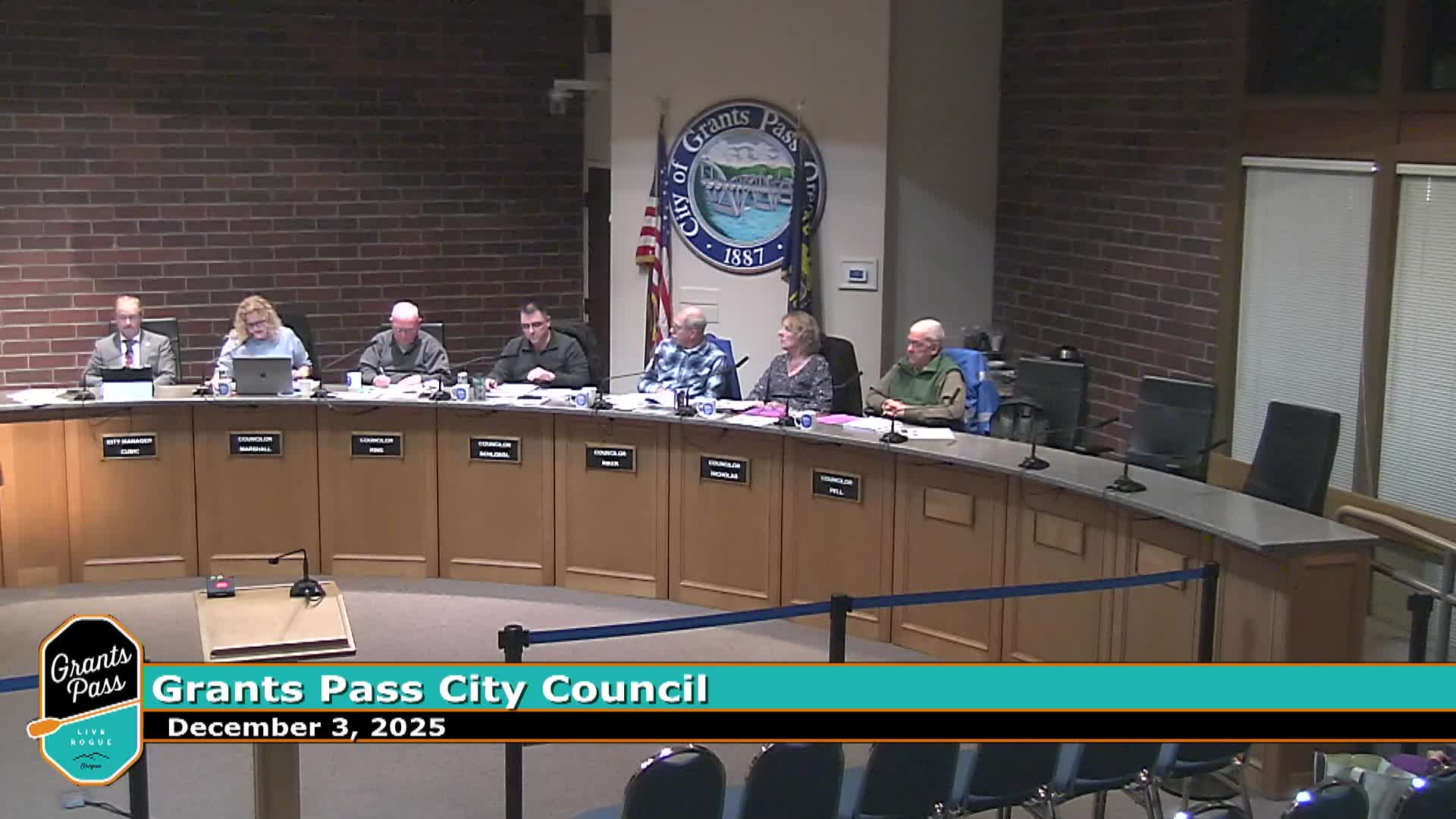
Bradley Clark, community development staff, told the council the change is a text amendment to the city's Title 9 transitional-housing code originally adopted in 2020 to accommodate nonstandard units such as those used for Foundry Village. Clark said the amendment adds an industry-standard definition for an "intermodal shipping container," adjusts the definition of a transitional-housing unit to permit attached rooms within a container, and creates new technical standards for interior finishes, insulation values and fire separation.
"This amendment would allow the Connex-box design Elk Island proposed to be considered under our local standards," Clark said, noting that electrical and plumbing remain subject to code and that the amendment is intended to mitigate public-health and safety risks.
Councilors and several members of the public pressed staff on safety details. "How is that going to be controlled to ensure it will not cause any kind of fire or risk?" Councilor Eric asked, citing concerns about foam-plastic interior finishes and occupants with substance-use or behavioral-health challenges. The city's fire chief responded that the project and any materials would be required to meet the Oregon Structural Specialty Code and applicable fire code during plan review, and that staff are pushing for fire-resistant products.
Several residents questioned unit livability and density. Bob Maguire asked whether the units would be treated like mobile homes and how they would be anchored; Erica Brown asked whether individual rooms would have windows; Bonnie McDonald asked how a fire in one unit would be contained and who would be liable for damage or injury. Clark and staff said proposed standards add a requirement that containers be separated by 6 feet or be separated by one layer of 5/8-inch Type X gypsum on abutting walls (a common one-hour fire-rated approach) and that foundation systems must comply with the Oregon Structural Specialty Code.
Council debate ranged from technical questions about R-values and insulation materials to broader concerns about placing tightly sized sleeping rooms on small lots. One councilor cited examples from other cities, saying container projects in some places experienced problems with heat, mold and deterioration; other councilors said the local code amendment provides the building official discretion to ensure safety. "Ken's objective as building official is always safety number one," Clark said of the city's building official, who has reviewed the draft language.
The amendment was presented as a code-level change distinct from any single site plan; Clark reminded the council that whether a particular configuration creates an "unreasonable risk" is a separate, project-specific determination. The council moved the resolution, heard a roll-call vote and gave staff direction to implement the adopted text amendments. The code change will enable Elk Island and other applicants to propose container-based transitional units subject to plan review and the city's building and fire-code processes.
The council record includes concerns about unit size and operational oversight; staff said those issues would be addressed during plan review, permit conditions and potential partnerships with service providers. The city cited ORS-based model language and the Oregon Structural Specialty Code as the regulatory basis for the draft edits.
Next steps: the amended text is now part of the city's transitional-housing standards and applicants proposing container-based units must still submit detailed plans for building, fire and health review before any units can be occupied.
View the Full Meeting & All Its Details
This article offers just a summary. Unlock complete video, transcripts, and insights as a Founder Member.
30-day money-back guarantee
Sponsors
Proudly supported by sponsors who keep Oregon articles free in 2025

