San Jose DOT outlines staffing increases, new expired-registration team and expanded Olive enforcement
December 02, 2025 | San Jose , Santa Clara County, California
This article was created by AI summarizing key points discussed. AI makes mistakes, so for full details and context, please refer to the video of the full meeting. Please report any errors so we can fix them. Report an error »
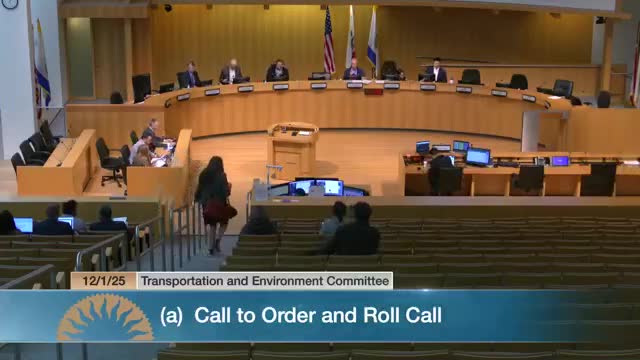
John Risto, director of the Department of Transportation, introduced the briefing and said the department would describe staffing, deployment and FY24-25 outcomes before outlining FY25-26 programs. "The Department of Transportation's parking compliance unit, or PCU, operates 247365," Deputy Director Heather Hochia said, explaining a layered model of multiple specialized teams aimed at improving citywide coverage and compliance.
The presentation described six teams that handled general safety and illegal parking enforcement (proactive citywide patrols, evening/overnight patrols, downtown/meter enforcement, residential permit parking enforcement, time-limited enforcement and a special-events/construction tow team) plus five teams dedicated to vehicle abatement and towing. DOT said proactive patrols rotate through every street roughly every 14 days and use a mix of automated license-plate readers (for RPP enforcement) and targeted patrols in Equity Atlas areas.
Aaron Collin, DOT division manager, laid out FY24-25 program metrics: "over 217,000 parking citations were issued, consisting of more than 60,000 street sweeping violations, nearly 50,000 parking meter violations, roughly 50,000 no parking/no stopping and red curb violations, and approximately 40,000 miscellaneous safety and illegal parking violations." He added that more than 3,200 vehicles were towed and nearly 300 school zones were visited for peak-hour enforcement.
To address vehicles with expired registrations, DOT launched a focused three-officer expired-registration enforcement team in July that began a warning-and-education phase (with more than 3,000 warning notices) and started citation and towing enforcement on Aug. 18. "During the first 12 weeks, the team towed 527 vehicles and issued 552 citations," staff reported, and described a tiered enforcement model prioritizing tows for vehicles with registration expired more than one year.
Staffing and resourcing are central to the changes: DOT said the PCU was budgeted for 48.5 full-time equivalents in FY24-25 and that FY25-26 funding increases the unit to 55.5 FTE ("more than a 14% increase"), which staff said remains lean given San Jose's large geographic size and that the city will operate at roughly 0.31 officers per square mile compared with higher densities in nearby cities.
Committee members pressed staff on collection and impacts. Chair Cohen and members asked whether citation revenue was tracked; Risto said roughly $12,000,000 in citation revenue is deposited to the general fund and staff promised to provide additional trend data on fee collection as the expired-registration program matures. Members also requested clearer public guidance in SJ311, better customer-service messaging and follow-up data on repeat offenders and business-related repeat violations.
Public commenter Jordan Moldau said the SJ311 vehicle-concerns workflow is difficult to use and urged focus on repeat business offenders and improved data collection. Councilmember Ortiz and others urged attention to neighborhood concentrations of blighted vehicles and requested staff engagement with council offices and community meetings to ensure visible relief.
The committee moved to accept the report; the motion carried 5-0. The department said it will return with follow-up data on revenue and enforcement trends, continued planning for potential permanent parking restrictions and an implementation timeline for the Olive supplemental enforcement program (OSEP) and expanded expired-registration patrols in early 2026.
View the Full Meeting & All Its Details
This article offers just a summary. Unlock complete video, transcripts, and insights as a Founder Member.
30-day money-back guarantee
Sponsors
Proudly supported by sponsors who keep California articles free in 2025

