Massachusetts unveils initial statewide graduation framework after voters ended MCAS diploma requirement
December 01, 2025 | Office of the Governor, Executive , Massachusetts
This article was created by AI summarizing key points discussed. AI makes mistakes, so for full details and context, please refer to the video of the full meeting. Please report any errors so we can fix them. Report an error »
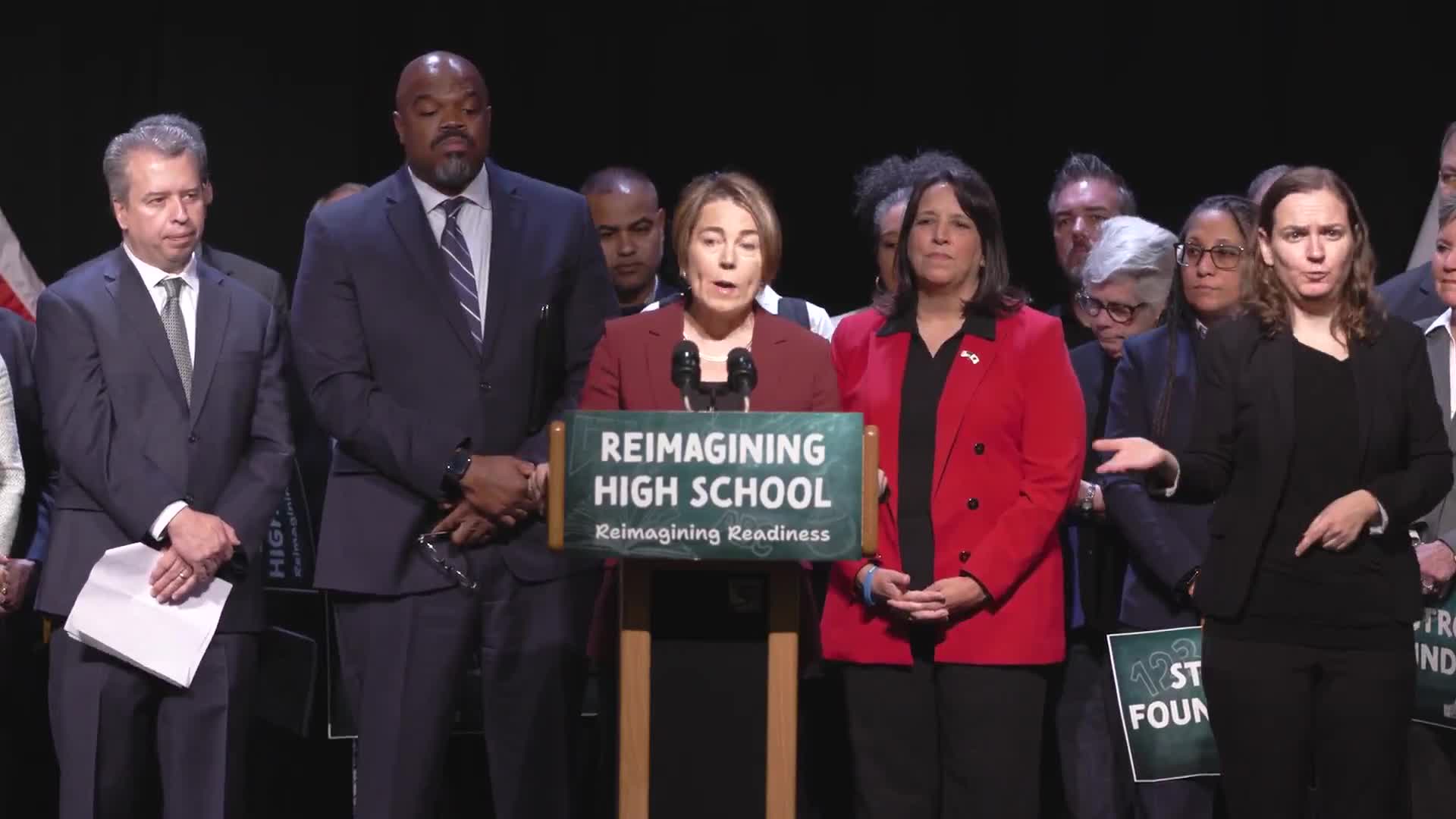
"We're moving away from high stakes to high expectations," Healy said, announcing the framework and saying the change follows last year’s voter decision to remove the MCAS graduation requirement. She said the plan includes course-based assessments, a capstone or portfolio option, and a requirement that every student complete a career-and-academic plan.
The framework outlines a foundation of required coursework in core subjects such as STEM and language skills, end-of-course assessments tied to the actual course rather than a single high-stakes test, and opportunities for students to demonstrate mastery through portfolios or capstone projects. Healy said the model also calls for all students to complete financial-aid applications (FAFSA or the state equivalent) and financial-literacy instruction.
"That will also allow us to phase out MCAS in tenth grade," Healy said, framing the change as an opportunity to broaden how the state measures readiness while maintaining rigorous standards.
Secretary of Education Pat Tutwiler, who led the statewide graduation council, described the framework as an "initial" package that builds on existing district practices rather than imposing mandates. "This is not about reinventing the wheel and it's not about mandates," Tutwiler said, adding that final standards will depend on educator input and further work to identify implementation timelines and resources.
Commissioner Pedro Martinez said the proposals seek to expand career-connected learning and early-college opportunities while giving students "multiple ways" to show learning. "A capstone project portfolio will allow students to demonstrate their knowledge and skills in different ways," Martinez said.
Speakers at the event included district and labor leaders who urged careful planning. Jessica Tang, president of AFT Massachusetts, said educators wanted access to key academic courses and clear implementation timelines and resources. Teacher representative Shelley Terry praised the framework’s holistic approach but cautioned that classroom-level detail and support will determine success.
Student council member Annabelle Griffin, who participated on the statewide graduation council, said the recommendations were crafted with student voices and aim to keep options open across colleges, careers and technical pathways. Business and taxpayer representatives also voiced support for consistent statewide expectations to preserve Massachusetts’ competitive workforce.
The administration described the release as a first step: officials repeatedly said the framework will be refined through outreach to educators, families and other stakeholders and did not provide a final implementation schedule or funding commitments at the event. No formal vote or regulatory adoption was announced.
Next steps: the state will solicit further educator and public input to finalize the standards, work through implementation timelines and identify resource needs before any new requirements take effect.
View the Full Meeting & All Its Details
This article offers just a summary. Unlock complete video, transcripts, and insights as a Founder Member.
30-day money-back guarantee
Sponsors
Proudly supported by sponsors who keep Massachusetts articles free in 2025

