Utah Government Trust webinar: make policies readable, tailored and reviewed regularly
December 01, 2025 | Utah Government Trust, Utah Government Divisions, Utah Legislative Branch, Utah
This article was created by AI summarizing key points discussed. AI makes mistakes, so for full details and context, please refer to the video of the full meeting. Please report any errors so we can fix them. Report an error »
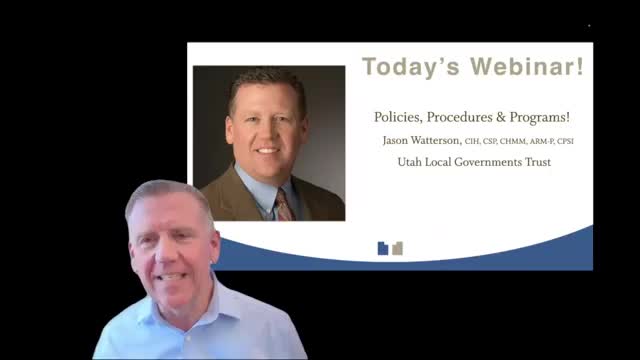
The presenter defined policy as the organization’s rule book and said policies should align with mission and daily operations so employees understand expectations. "If we don't write our policies, they're still gonna be written," he said, warning that unwritten or informal practices become de facto policy and can lead to inconsistent responses, legal exposure or safety incidents.
On procedures, the presenter distinguished step-by-step processes from policy and stressed training and certification for critical operations. He recounted a first‑hand incident working on a hydraulic punch press, saying a failure to implement a simple cleaning procedure caused parts to eject and injure him; he used the anecdote to illustrate how missing or poorly documented procedures can cause harm.
Programs and forms should package policies and procedures into organized efforts, he said, citing examples such as hearing conservation programs and confined-space entry permits. He emphasized documentation as evidence of compliance: "If it isn't written down, it never happened," the presenter said.
For drafting policies, the presenter recommended a consistent, plain‑language format that includes purpose, scope, references, definitions, assignment of responsibilities, operational controls (procedures), and a revision history. He advised going to primary regulatory sources when uncertain—"go to the horse's mouth"—citing OSHA and consensus standards such as ASTM and ANSI as places to start when building policy content.
The presenter cautioned against uncritically copying boilerplate. He described an OSHA inspection that flagged an irrelevant reference to an "ice cream freezer" in a purchased policy packet as an example of template material that had not been tailored to the organization and could mislead inspectors or staff. He recommended using boilerplates as a starting point but tailoring them to local practice and having management and legal review.
On resources and professional help, he mentioned a discounted policy‑rewriting offering from attorney Matt Church and said professionals can speed the work, but that legal review remains essential. He also warned about relying solely on AI tools: "I'm not saying don't use AI, but realize it is not the do‑all end all," and urged thorough review of any AI‑generated drafts.
As a practical schedule, the presenter recommended annual reviews of policies (by HR for personnel items, by safety committees for safety topics) and a legal review every three years. He closed by listing must‑have OSHA‑related policies and common personnel policies (discipline, grievance, FMLA) and invited attendees to follow up via chat or email (jason@utahtrust.gov).
The webinar concluded after roughly 40 minutes; chat comment from Jeff Rowley, the trust's claims manager, recommended sidewalk and property inspection and maintenance programs as strong defenses in liability claims—an item the presenter said would be covered in a future webinar.
View the Full Meeting & All Its Details
This article offers just a summary. Unlock complete video, transcripts, and insights as a Founder Member.
30-day money-back guarantee
Sponsors
Proudly supported by sponsors who keep Utah articles free in 2025

Excel Chiropractic

