Oregon committee weighs ALPR benefits and Flock privacy concerns
November 17, 2025 | Legislative, Oregon
This article was created by AI summarizing key points discussed. AI makes mistakes, so for full details and context, please refer to the video of the full meeting. Please report any errors so we can fix them. Report an error »
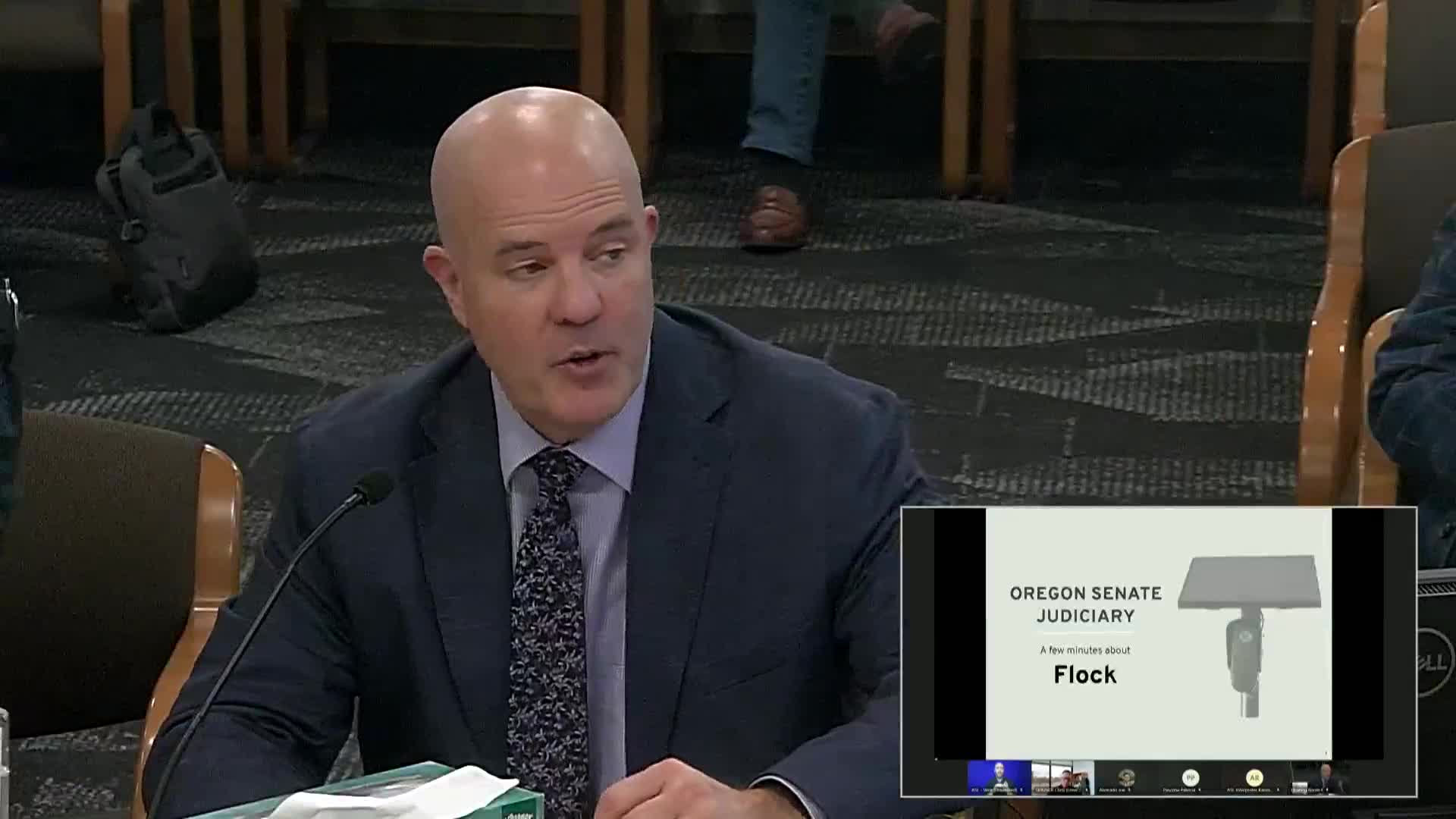
Kevin Campbell, executive director of the Oregon Association Chiefs of Police, described two ALPR deployments (fixed infrastructure and mobile units) and said each detection record typically contains a cropped plate image, a timestamp, the camera location and the translated plate number. "Each record includes a cropped image of the plate, the date and time of the detection, the GPS location or fixed camera site where it occurred," he said, and added that agencies typically retain non-hit historical data for about 30 days.
Chief Chris Skinner of the Eugene Police Department described arrests tied to Eugene's pilot and cautioned that discussions were conflating vendor behavior with the underlying technology. "We saw as many as 94 incidents where we were able to make arrests. 63 or 4 of those were felony arrests," he said, and noted civilian oversight mechanisms that allow audits of who has accessed data.
Privacy presenters, including Kai Fireside and Rob Sheldon, said Flock's cloud architecture collects more than plates, uploads to Amazon Web Services, and has in prior reporting allowed federal agencies to gain access through account mechanisms. "They are programmed to recognize and upload... including people and bicycles," Fireside said, and warned the committee that Flock's search interface "incentivizes data sharing."
During Q&A senators focused on whether federal agencies such as ICE or CBP had received access to Oregon ALPR data. Law‑enforcement witnesses disputed broad characterizations of unauthorized federal access in Oregon and said some prior incidents were misreported (one Medford example was described as a child-endangerment collaboration, not ICE routine access). Chief Skinner emphasized Eugene's data ownership under contract and said the city can audit who has viewed its ALPR records.
The committee said it will form a work group after the session to refine procurement standards, retention limits, penalties for misuse and whether ALPR records should receive any special treatment under public-records statutes.
What happens next: The committee will convene a work group to study ALPR procurement, retention, audit controls and sanctions for misuse, and will continue to invite stakeholders to brief the panel.
Don't Miss a Word: See the Full Meeting!
Go beyond summaries. Unlock every video, transcript, and key insight with a Founder Membership.
30-day money-back guarantee
Sponsors
Proudly supported by sponsors who keep Oregon articles free in 2025

