Lawmakers hear warnings that Oregon's waiver rule leaves recreation businesses facing soaring insurance costs
November 17, 2025 | Legislative, Oregon
This article was created by AI summarizing key points discussed. AI makes mistakes, so for full details and context, please refer to the video of the full meeting. Please report any errors so we can fix them. Report an error »
Industry witnesses told the committee that general liability and property insurance rates have climbed sharply, leaving smaller operators exposed. "Recreational releases are not valid in the state of Oregon," said Jeff Constam, president and area operator at Timberline Lodge, describing recent premium increases and the economic risk to a proposed Timberline–Government Camp connection. "This has been a slow tide coming in."
Why it matters: Recreation and fitness, the chair said, generate about $16 billion in economic activity and roughly $1 billion in state tax revenue annually and support hundreds of thousands of jobs. Witnesses warned that sustained insurance increases would reduce public access and shift recreation toward larger firms that can self-insure or absorb costs.
Small operators and nonprofit programs described steep, sometimes 50% increases. "If we continue down this road, what's going to be left of guided recreation in Oregon is only going to be for the very rich of people," said Pete Wahlstrom, owner of Momentum River Expeditions and representative of the Oregon Outfitters and Guides Association. He said one-person outfitters and youth programs are particularly vulnerable.
Insurers and underwriters said the market fundamentals in Oregon are strained. William Curtis, a managing general underwriter who provided coverage nationally, said his firm withdrew from Oregon this summer because underwriting results there were not sustainable. "For our general liability insurance product to exist there must be enforcement of the inherent risk doctrine ... and enforceable liability waivers when the duty of care has been met," he said.
Legal and policy disagreement emerged in committee exchanges. Hans Bernard of the Oregon Trial Lawyers Association recounted Miles Bagley's 2014 Oregon Supreme Court decision and warned that statutory language allowing broad waiver enforcement could erode constitutional jury-trial protections. "Waivers that ask Oregonians to forfeit their constitutional right to a jury trial are unconscionable and thus unenforceable," he said. In response, Dave Byrd of the National Ski Areas Association, an attorney based in Colorado, called some of those comparisons "categorically false" and emphasized that other Western states enforce ordinary-waiver releases while preserving remedies for gross negligence and intentional misconduct.
Committee members asked whether statutory changes would bar all negligence suits or only ordinary negligence claims and whether cases would be dismissed before reaching juries. Witnesses disagreed on how legislation might interact with court review and whether a narrowly tailored Colorado-model statute could address both insurer predictability and plaintiffs' rights.
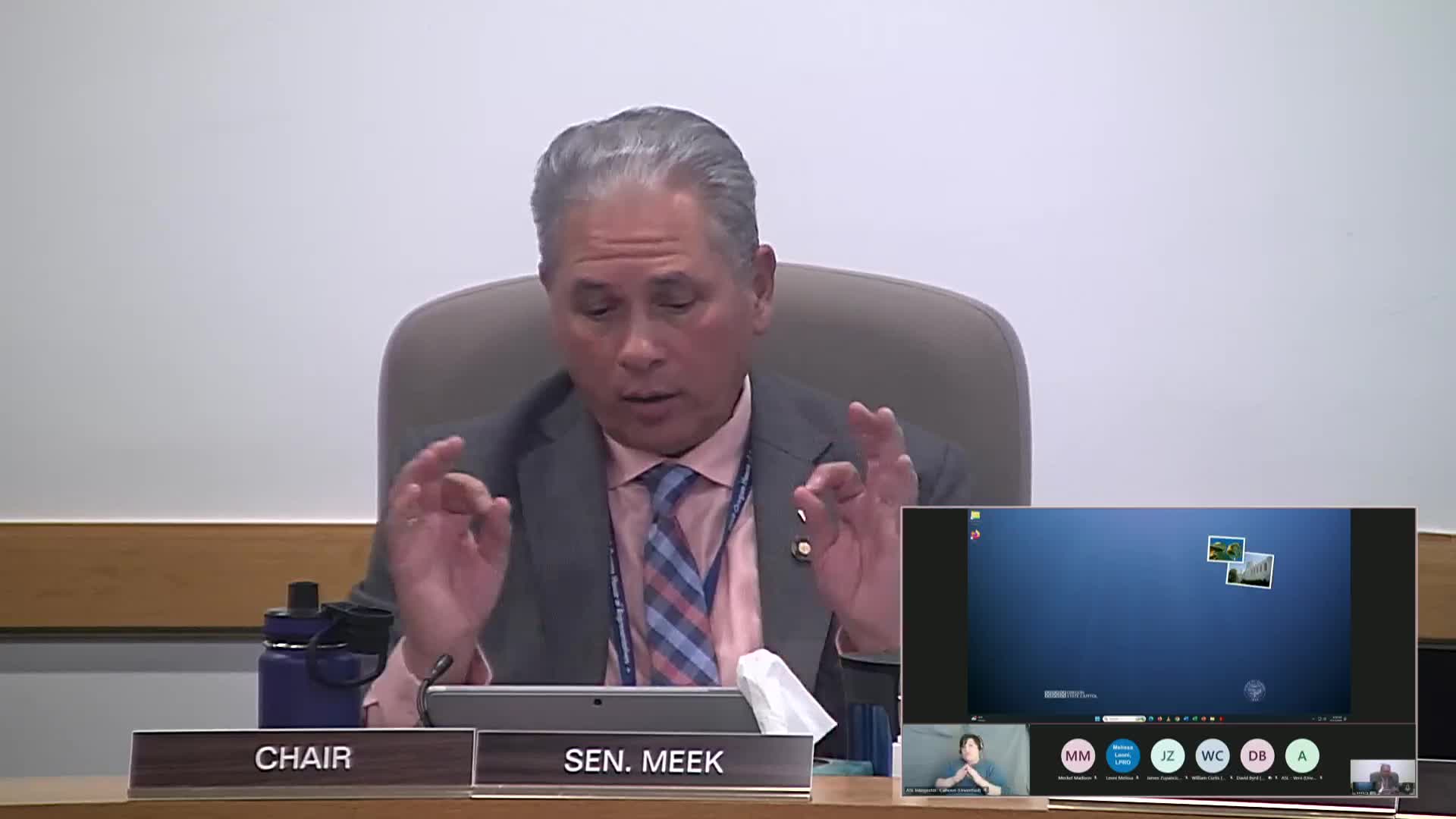
What happened next: Chair Mark Meek said he has begun outreach to state agencies (including Business Oregon, Travel Oregon and State Parks) to gather studies and data and pledged to address the issue in the 2026 short session with urgency. The committee took no formal legislative action at the hearing; the chair closed the informational hearing and moved on to the next panel.
Sources: Direct testimony and exchanges before the Senate Interim Committee on Commerce and General Government (11/17/2025) with quotes from Jeff Constam (Timberline Lodge), Pete Wahlstrom (Momentum River Expeditions), William Curtis (Safehold Special Risk), Hans Bernard (Oregon Trial Lawyers Association), and Dave Byrd (National Ski Areas Association).
View the Full Meeting & All Its Details
This article offers just a summary. Unlock complete video, transcripts, and insights as a Founder Member.
30-day money-back guarantee
Sponsors
Proudly supported by sponsors who keep Oregon articles free in 2025

