Advocates tell Massachusetts lawmakers ICE is using street tactics, 287(g) expansion and surveillance tools; coalition offers legal fixes
November 17, 2025 | 2025 Legislature MA, Massachusetts
This article was created by AI summarizing key points discussed. AI makes mistakes, so for full details and context, please refer to the video of the full meeting. Please report any errors so we can fix them. Report an error »
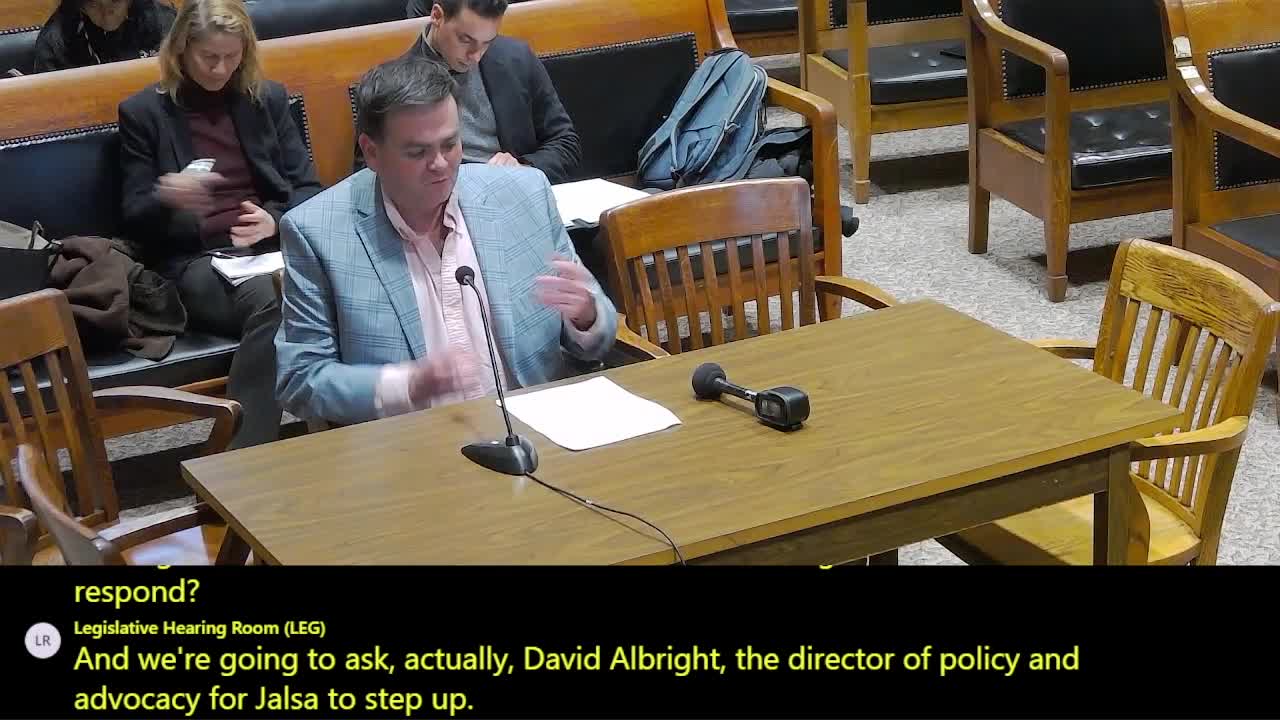
David Albright of the Jewish Alliance for Law and Social Action described how ICE has increased incentives for local collaboration, saying the agency is reimbursing salaries and raising per‑diem rates for bed contracts. Albright said the number of 287(g)-style agreements nationwide grew sharply — "at the start of... 2025, there were 135 287(g)s across the country. There are now 1,153," testimony recorded — and warned that the federal program and intergovernmental service agreements (IGSAs) create legal and operational pipelines into detention.
Neighbors to Neighbor’s rapid‑response organizer described hundreds of street‑level incidents: masked agents who do not identify themselves, armed vehicles encircling workers, impersonations and the use of children as leverage to detain family members. "We created this network and hotline to address the growing concern ... we've received as a hotline over 10,000 calls across 46 towns and cities," Danny said, summarizing volunteer documentation of stops, check‑ins and coercive tactics.
Witnesses also described technology and data flows that aid enforcement. Joshua Dankoff (Citizens for Juvenile Justice) warned that routine fingerprinting policies and surveillance databases (BRIC — Boston Regional Intelligence Center — and the Commonwealth Fusion Center) can funnel information to federal authorities. Cade Crockford of the ACLU of Massachusetts urged passage of privacy and facial‑surveillance reforms and flagged a commercial app and an ICE‑distributed tool (referred to in testimony as Mobile Fortify) that can be used roadside to determine immigration status.
Legal counsel from the State Democracy Research Initiative, Bridget Lavender, explained constitutional constraints on state efforts to regulate federal officers, noting that mask bans or criminal prohibitions face Supremacy Clause and intergovernmental‑immunity hurdles. Lavender recommended alternative state tools that may be less vulnerable in court: adding anti‑masking provisions to civil remedies, requiring identification during arrests (citing 8 CFR §287.8), and strengthening the Massachusetts Civil Rights Act so victims have clearer private remedies.
Community leaders described immediate consequences. Gladys Vega of La Colaborativa said immigrant business districts go quiet after enforcement actions, children skip school and families sometimes decide to self‑deport; she described mutual‑aid responses, temporary guardianships and emergency cash assistance. Nicole Eichbrett of the Asian American Resource Workshop highlighted disproportionate effects on Southeast Asian refugee communities whose decades‑old records are now driving deportation vulnerability.
Coalition priorities presented to legislators included banning future 287(g) agreements, prohibiting informal cooperation and advance alerts to ICE (for court appearances, releases or towing pickups), protecting license‑plate reader data from cross‑jurisdictional sharing, and increasing funding to scale immigrant legal representation. Witnesses noted that Massachusetts already funded an initial immigrant‑access‑to‑counsel initiative but said the sum must be expanded to meet current demand.
Lawmakers and witnesses agreed to exchange further materials — including hotline call breakdowns and public‑records extracts — to help draft statutory language. Chair Miranda and co‑chairs emphasized the committee will use the testimony to consider written requests, oversight and bill drafting in the new legislative year.
View the Full Meeting & All Its Details
This article offers just a summary. Unlock complete video, transcripts, and insights as a Founder Member.
30-day money-back guarantee
Sponsors
Proudly supported by sponsors who keep Massachusetts articles free in 2025

