OHCS presents SB 684 report proposing mixed‑income revolving loan fund to bridge construction financing gaps
November 17, 2025 | Legislative, Oregon
This article was created by AI summarizing key points discussed. AI makes mistakes, so for full details and context, please refer to the video of the full meeting. Please report any errors so we can fix them. Report an error »
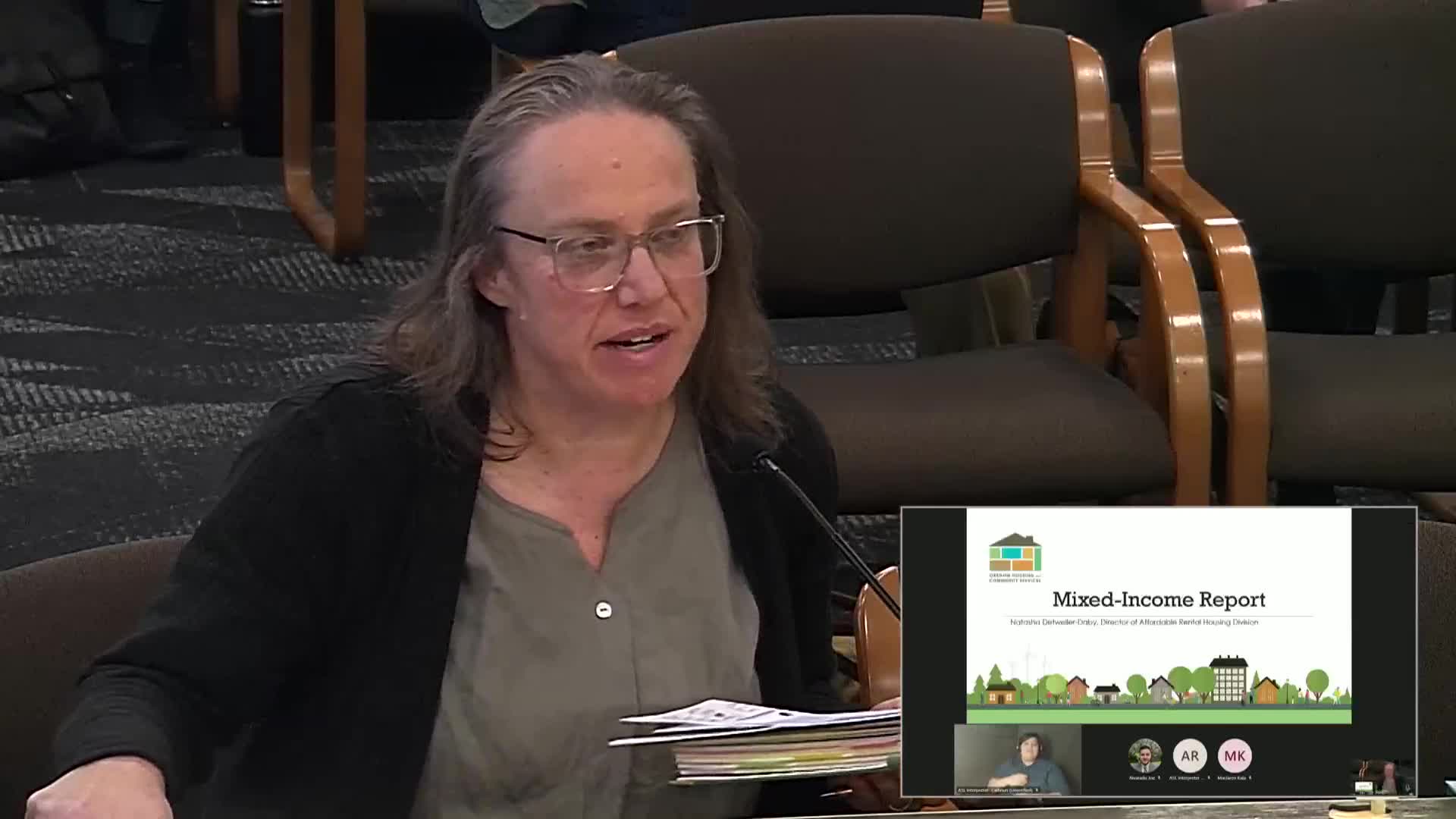
DeWiler Davey said public financing could take the form of direct below‑market loans, risk‑sharing bonds, or equity investments and that many successful pilots use mechanisms that do not strictly limit investment eligibility to projects at or below 120% AMI. "Many states that are having progress...are not relying on a statutory limitation to only be able to finance the units under 120% AMI," she told senators, arguing that AMI flexibility can increase lender and developer interest while preserving affordability protections for lower‑income units within mixed projects.
OHCS described typical financing gaps of roughly 25% of project costs that, if covered by public capital, can catalyze private equity and debt to complete projects. The agency emphasized these would be loans (revolving debt) rather than grants, requiring OHCS to underwrite loans and loan servicing carefully, and noted that mixed‑income lending cannot replace subsidy‑driven development for deep‑income affordability needs.
Committee questions focused on how higher private interest rates and tighter underwriting have contributed to stalled projects; OHCS said rising rates and stricter lender requirements have reduced private leverage and that underwriting both organizations and projects is essential when offering direct lending.
OHCS said the report includes statutory and programmatic recommendations and that the agency will continue to refine models, controls, and underwriting frameworks before presenting legislative proposals or implementing pilots.
Don't Miss a Word: See the Full Meeting!
Go beyond summaries. Unlock every video, transcript, and key insight with a Founder Membership.
30-day money-back guarantee
Sponsors
Proudly supported by sponsors who keep Oregon articles free in 2025

