Unions, legal advocates urge Massachusetts to expand unemployment insurance to long strikes
November 17, 2025 | 2025 Legislature MA, Massachusetts
This article was created by AI summarizing key points discussed. AI makes mistakes, so for full details and context, please refer to the video of the full meeting. Please report any errors so we can fix them. Report an error »
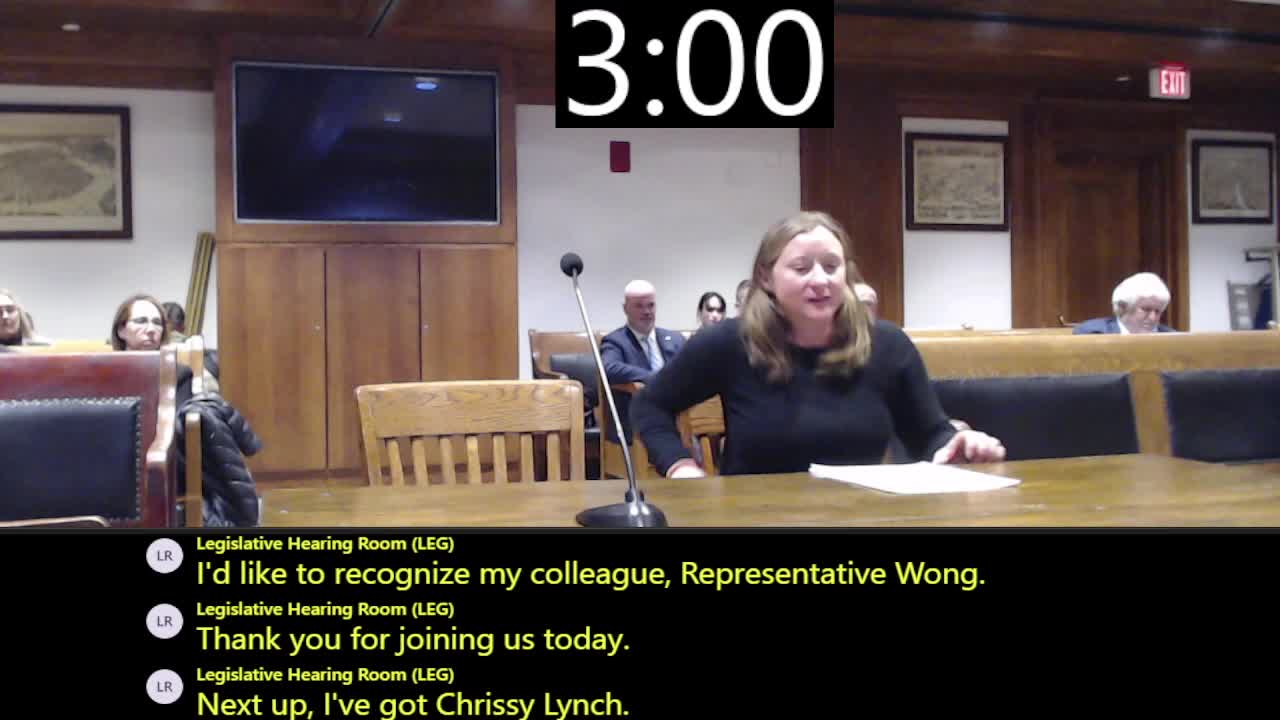
"UI for striking workers is something we've endorsed for several sessions," Chrissy Lynch told the committee, arguing the bills would help workers and their families avoid prolonged financial hardship and push employers to bargain in good faith. She asked the committee to report the bills "out favorably." Jason Salgado of Greater Boston Legal Services said the measure would allow workers unemployed because of a work stoppage lasting more than 30 days to access benefits and would "help ensure that local economies are sustained during strikes."
Union witnesses described personal and local impacts from long work stoppages. "For 82 days, we struck Republic Services," said a Teamsters member, recounting that 450 sanitation workers went months without pay. Martin Sweeney, recording secretary of IBEW 22, said lengthy strikes can force workers into medical and housing crises and urged support for the 30-day threshold as a reasonable safeguard.
Proponents cited experience in New York and New Jersey, noting those states have shorter waiting periods (14 days) and that studies show little evidence that extending UI to striking workers increases strike frequency. Jason Salgado told the committee that Massachusetts’ proposed 30-day waiting period is a moderate approach and cited an Economic Policy Institute study estimating only a small fiscal impact from paid benefits to striking workers.
Opponents were not recorded testifying on this day; committee members asked few follow-up questions during the session. Several labor representatives requested that written testimony be considered alongside the oral remarks; the committee also accepted remote testimony.
The committee did not take a formal vote on the bills at this hearing. The chairs reminded attendees that written testimony may be submitted through Nov. 20, and said the committee will meet again on Nov. 20 at 10 a.m. in Room B1.
Don't Miss a Word: See the Full Meeting!
Go beyond summaries. Unlock every video, transcript, and key insight with a Founder Membership.
30-day money-back guarantee
Sponsors
Proudly supported by sponsors who keep Massachusetts articles free in 2025

