Legislative working group lays out curriculum goals, divides tasks for xylazine training
November 17, 2025 | 2025 Legislature MA, Massachusetts
This article was created by AI summarizing key points discussed. AI makes mistakes, so for full details and context, please refer to the video of the full meeting. Please report any errors so we can fix them. Report an error »
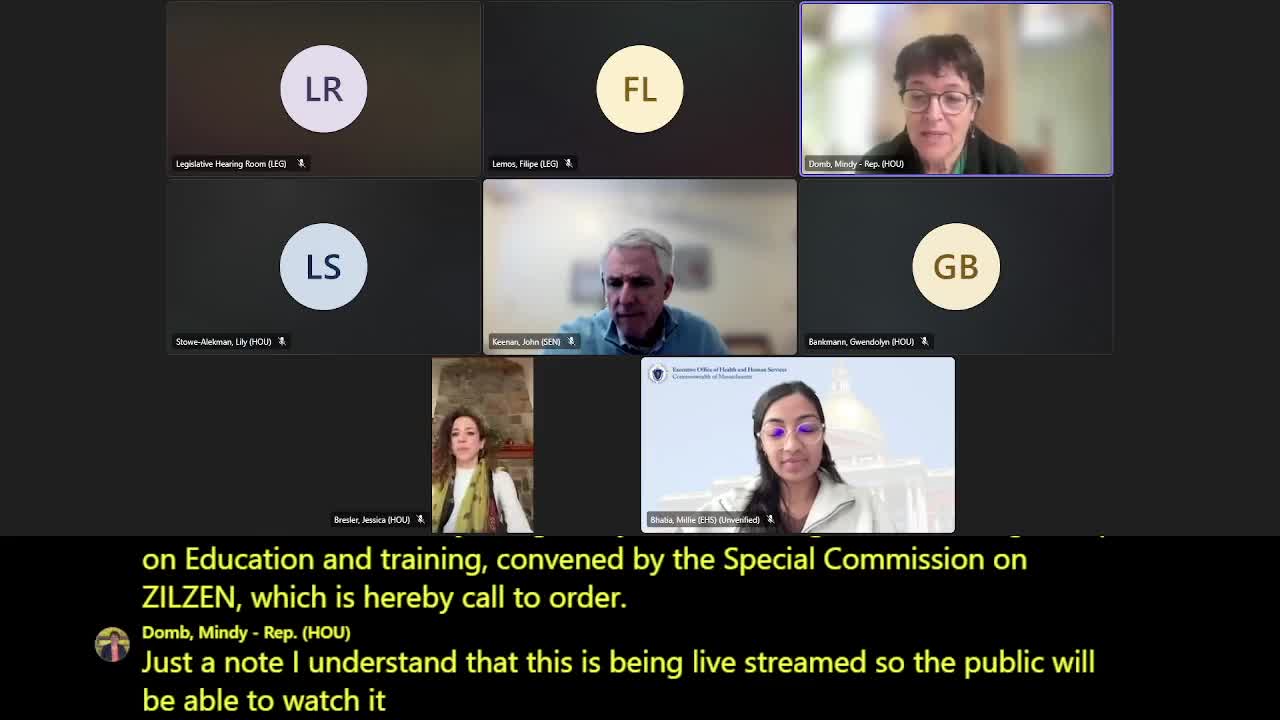
Mindy Daum, House chair of the Joint Committee on Mental Health, Substance Use and Recovery and chairing the working group, said the group must move quickly to produce recommendations and materials for the full commission. "As a reminder, this working group is charged with investigating and producing findings and recommendations on education and training for first responders, the medical community, the substance use treatment community, and people who use drugs," Daum said.
The group front‑loaded three training goals that members said should guide curriculum development. Members repeatedly emphasized that trainings should do more than convey facts: they should build the skills people need to act. "One, describe xylazine and its harms; two, describe signs of xylazine poisoning; and three, identify steps that you can take to respond to it," Daum summarized as a proposed set of learning objectives.
Jess Bressler, legal counsel to the joint committee, framed the practical questions the group must answer: how information is best delivered, who should deliver it, and what is most digestible for each audience. "How do you see folks getting this information in the most easy to digest way, and, from whom does that come?" Bressler asked, prompting discussion about formats and sources.
Members identified distinct audiences and divergent needs. Sen. John Keenan highlighted geographic and setting differences and urged simple guidance for providers who have less exposure to xylazine than urban centers, saying communities outside inner‑city hospitals may not be familiar with the drug or how to respond. Millie Bhatti, Health Policy Manager at EOHHS, noted that "the prevalence of xylazine has been diminishing in the drug supply," and urged proactive surveillance and early harm‑reduction messaging when contaminants appear.
Participants compiled a short list of existing resources for the working group to inventory and adapt, including a Department of Public Health memo, the Massachusetts Drug Supply data stream (MADS), Brandeis/MADS information sheets and webinars, and BSAS‑funded trainings at Boston Medical Center. Staff said the DPH memo and prior Epi Aid work with CDC include recommendations and background that can inform the curriculum.
Practical content priorities included: recognizing signs of xylazine exposure, clarifying the role and limits of naloxone for overdoses involving xylazine, and wound management for skin injuries associated with xylazine exposure. Several members stressed that training should be "tiered" — with shared foundational facts in plain language and tailored clinical modules for emergency department staff and more operational guidance for first responders and nonclinical harm‑reduction workers. Dr. Kevin Simon supported stratifying material into clinical and nonclinical tiers so each audience receives appropriate detail.
The working group divided tasks to gather background materials and draft slides by audience. Sen. John Keenan volunteered to gather materials related to first responders (EMS, fire and law enforcement); Millie Bhatti agreed to focus on information for people who use drugs; Chair Daum took responsibility for the substance use treatment community. Staff will create a PowerPoint template for a public meeting in December, and group members will place source documents, drafts and links into a shared Google Drive.
Commission staff asked for deliverables by Nov. 25 so the working group’s findings and recommended training elements can be presented to the full commission in December. Staff encouraged members to submit useful articles, existing trainings or source documents before that date if they encounter them.
The meeting ended after brief final remarks and a motion to adjourn was moved and seconded. The working group will reconvene in coordination with commission staff to finalize the materials for the December presentation.
Don't Miss a Word: See the Full Meeting!
Go beyond summaries. Unlock every video, transcript, and key insight with a Founder Membership.
30-day money-back guarantee
Sponsors
Proudly supported by sponsors who keep Massachusetts articles free in 2025

