University of Utah students describe global internships from Auschwitz archives to Mexico City consulting
November 19, 2025 | Hinckley Institute of Politics, Utah Lobbyist / NGO, Utah Legislative Branch, Utah
This article was created by AI summarizing key points discussed. AI makes mistakes, so for full details and context, please refer to the video of the full meeting. Please report any errors so we can fix them. Report an error »
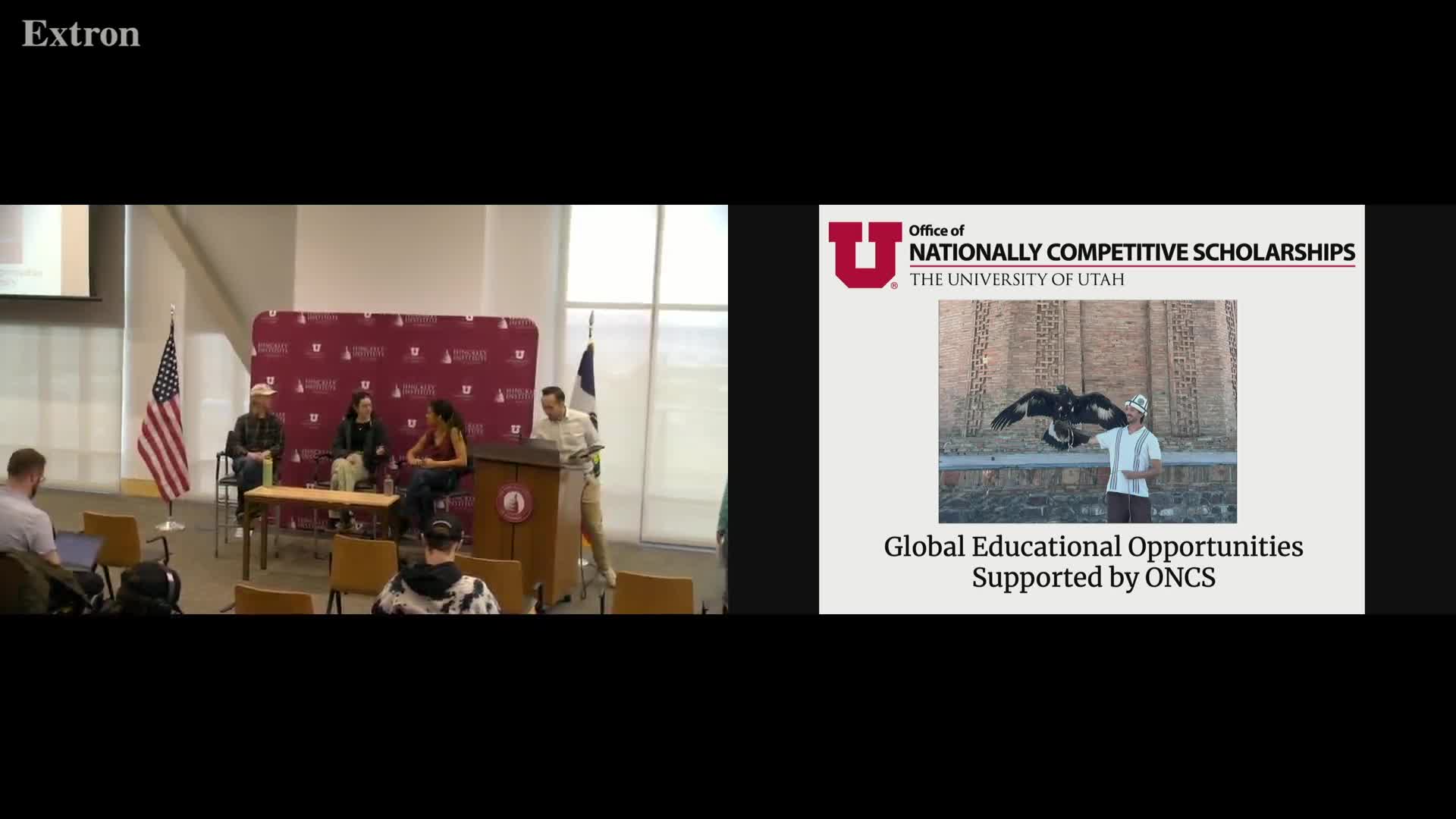
Rory Stewart, the forum host, introduced moderator Jean Oh and student panelists Will Mortenson, Abby Williamson and Anika Rao. Mortenson described a 10‑week placement with the Auschwitz Birkenau Memorial Museum in Poland, where he worked in the archives to index prisoner data and help make records more accessible online. "6,000,000 is just the official number that we give, but it could be even more than that," Mortenson said when an audience member questioned a common public estimate.
Abby Williamson said her internship at the Excellence Center in Halle, Germany, involved teaching German to refugees preparing for language exams and assisting with center operations. She emphasized the value of immersive cultural experiences, noting trips to Berlin and Prague and the community formed among interns. "Refugees are often seen either as victims or threats, but rarely as humans," Williamson said, describing how in‑person interaction reshaped her goals in refugee affairs.
Anika Rao described interning at Grupo Estrella Politica, a public affairs firm in Mexico City, supporting consulting projects for U.S. and Mexican clients. Rao said her team work led to client‑facing responsibilities; she recalled producing a brief on enforcement changes to the Foreign Corrupt Practices Act that was distributed to clients. "My work is directly impacting all of these companies," Rao said.
Moderator Jean Oh framed the global internship as a for‑credit program with a minimum placement of 10 weeks and typical time commitments of 20 to 30 hours per week. She said internships are designed to build global competencies and allow students to test career directions; some students return to change majors or to confirm their career choices.
Panelists discussed common challenges: Mortenson spoke about the emotional difficulty of working at sites tied to traumatic history; Williamson said adapting to less structured schedules and practicing cultural humility were central lessons; Rao cited language barriers and the need to cultivate relationships with colleagues. Each panelist said those challenges often translated into increased responsibility and meaningful professional experience.
The session closed with audience questions and a reminder that Office of Nationally Competitive Scholarships staff would present information on scholarship funding and application support. Students were encouraged to follow up with Hinckley staff and the scholarship office for guidance on applications and placements.
View the Full Meeting & All Its Details
This article offers just a summary. Unlock complete video, transcripts, and insights as a Founder Member.
30-day money-back guarantee
Sponsors
Proudly supported by sponsors who keep Utah articles free in 2025

Excel Chiropractic

