Milwaukie reviews Metro �Community Choice program, green-space management and grants timeline
November 19, 2025 | Milwaukie, Clackamas County, Oregon
This article was created by AI summarizing key points discussed. AI makes mistakes, so for full details and context, please refer to the video of the full meeting. Please report any errors so we can fix them. Report an error »
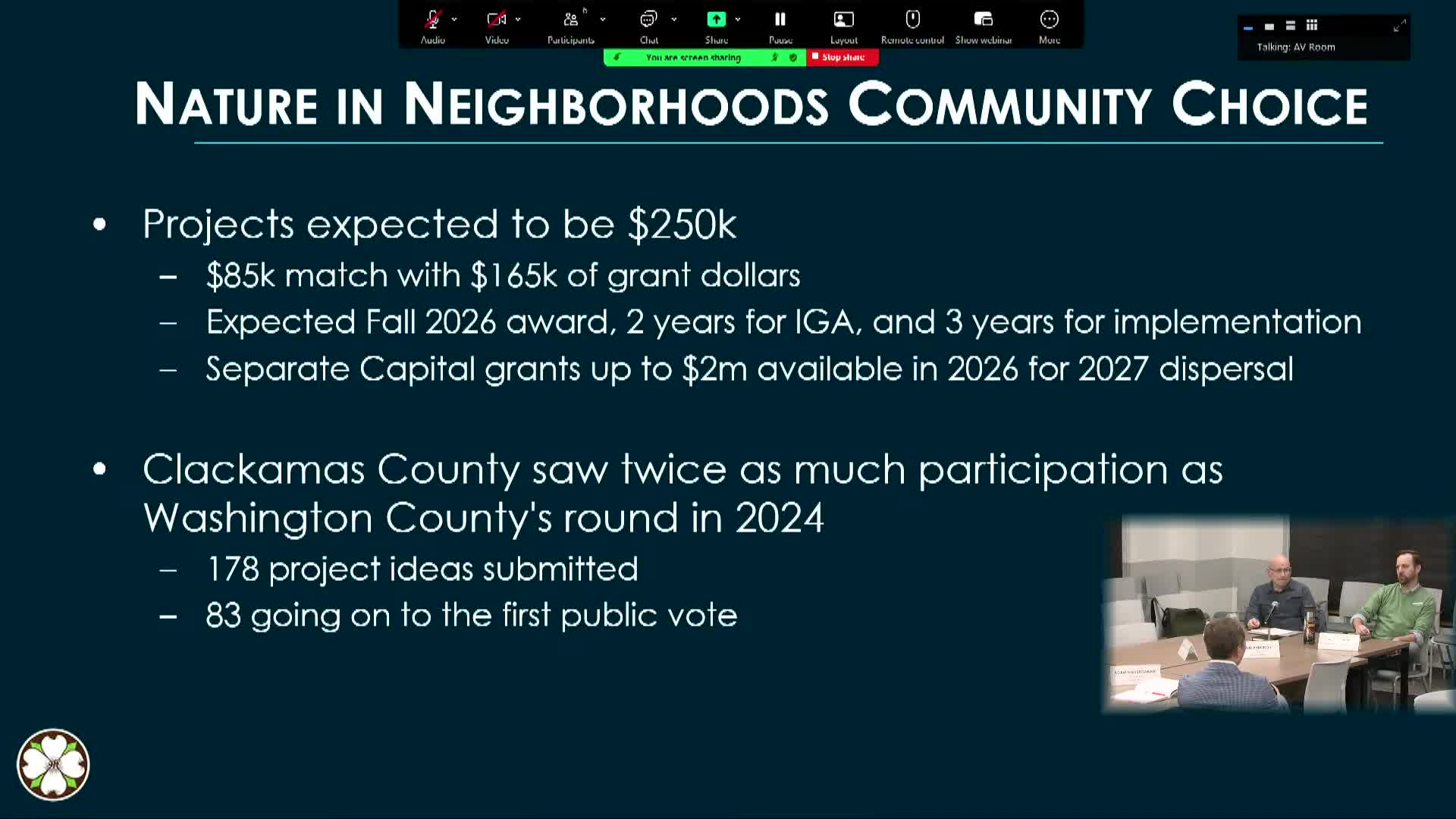
Peter Pastorelli, a city staff presenter, said Metro piloted Community Choice in Washington County and that Clackamas County saw higher engagement; he gave participation totals of 178 projects submitted and about 1,400 people voting in the first round. "Everyone that participated got 10 votes," Pastorelli said, and Metro expanded the initial selection from roughly 30 projects to 50 to reflect local interest.
The program's finances and timeline were central to the briefing. Staff said typical projects are expected to total about $250,000 and described Metro's matching structure: a local match of about $85,000 would pair with roughly $165,000 in Metro funds. Pastorelli said the city would be the awardee under Metro's IGA and that once an IGA is executed the jurisdiction will have two years to finalize match/codify procedures and three years to implement awarded projects.
Why it matters: the council must weigh how many projects the city can realistically support, how to prioritize geographically, and what partners can supply match or manage projects. Pastorelli noted Metro set aside $15 million for acquisition tied to Community Choice goals but will negotiate only with willing sellers; if demand exceeds funds, Metro could adopt a competitive allocation among jurisdictional partners.
Councilors pressed staff on community-originated ideas that lacked sponsor organizations or clear feasibility. Staff said there will be a development period during which project sponsors will be identified or projects combined, and the city will use January and February to gather stakeholder feedback before second-round design work. A staff list of recommended projects will be shared with council on Dec. 9 and then submitted to Metro, with design workshops expected in February and a likely second voting round in March or April.
Staff also reported parallel work on a green-space management plan: a community survey is being compiled, and staff expect to return to council in January with naming and memorial-donation policy proposals and further details about a multi-year financial strategy for Milwaukie Bay Park and other priorities. Natural Resources and Climate Manager Katie was named as leading a new public website for external water-quality reporting emerging from council requests.
The presentation listed four early project priorities Metro will consider for acquisition outreach (Elk Rock Island; Willow Place natural area; a private farm adjacent to Fernburg; and Scott Park). Pastorelli said Metro will approach property owners now and only proceed with willing sellers. If more willing sellers come forward at higher aggregate prices, Metro may require a competitive allocation process among jurisdictional partners.
Next steps: staff will finalize a recommended project list for the council study session on Dec. 9, continue coordination with Metro, and bring back draft grant agreements and partner coordination plans to prepare for the January design work and the second-round voting.
Don't Miss a Word: See the Full Meeting!
Go beyond summaries. Unlock every video, transcript, and key insight with a Founder Membership.
30-day money-back guarantee
Sponsors
Proudly supported by sponsors who keep Oregon articles free in 2025

