Harbor advisory committee weighs streamlined marina rules, enforcement and short-term rentals
November 17, 2025 | Alpena, Alpena County, Michigan
This article was created by AI summarizing key points discussed. AI makes mistakes, so for full details and context, please refer to the video of the full meeting. Please report any errors so we can fix them. Report an error »
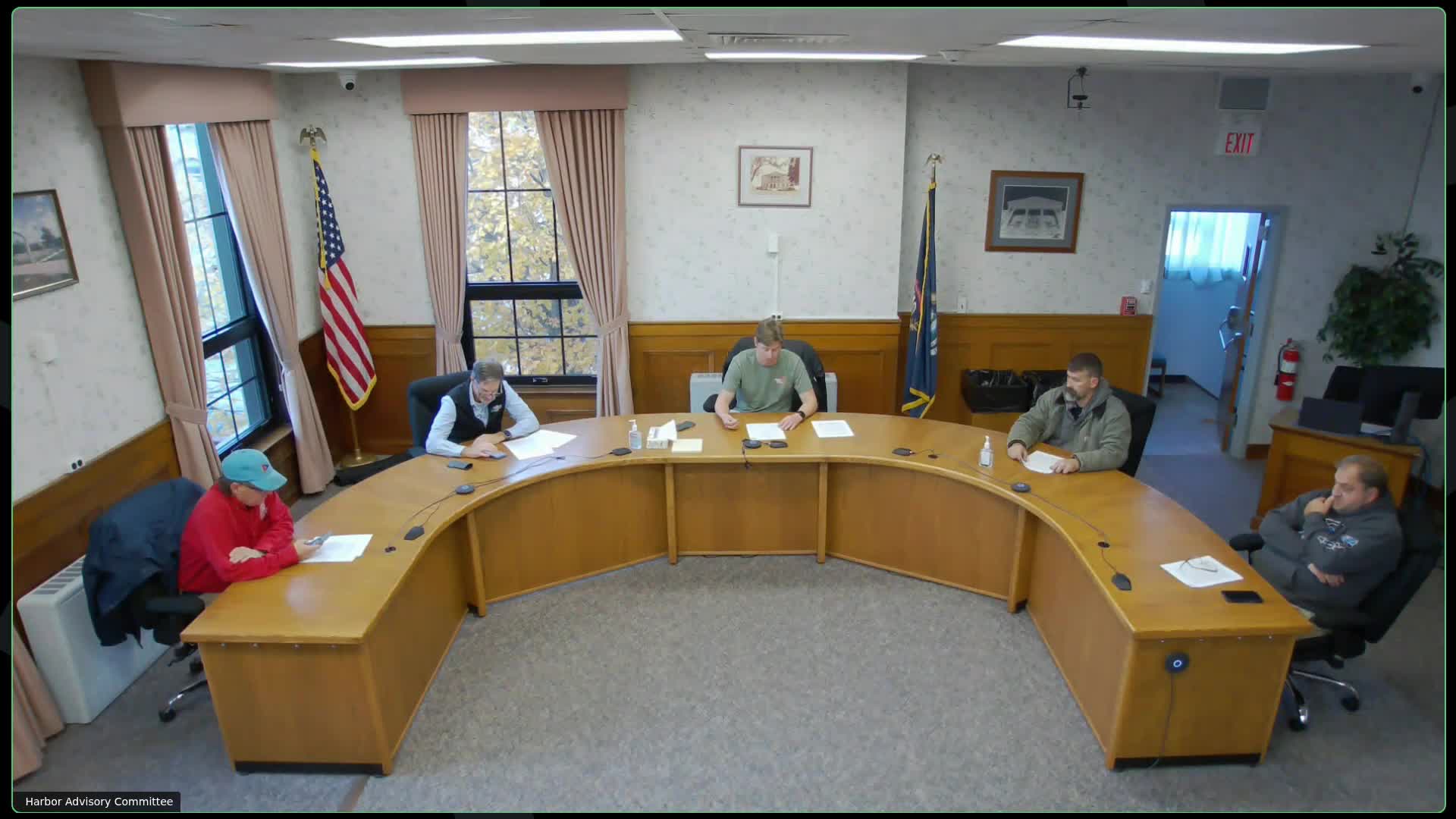
Committee members opened debate on condensing the current five-page document to a shorter, clearer two- or three-page version to make it easier to distribute and post at the marina. "I have been working on going through and slimming this down from 5 pages to I wanna try to get it down to maybe 2 or 3," said Speaker 4, who presented the draft. Members supported removing duplicative language but disagreed about whether some repeated rules should remain to help on-the-ground enforcement.
The committee discussed recurring enforcement problems. Speaker 4 listed common infractions, noting "Unleashed dogs" as a frequent issue, and described how the marina checks insurance at registration: "I get a policy number...and I kick them out if they can't provide it" (Speaker 4). Members clarified they do not expect full insurance binders but do expect a certificate or policy number and acknowledged limits on municipal enforcement when state agencies (DNR) or law enforcement have primary jurisdiction.
Members debated fee language and slip-sizing rules in the draft. The document includes a provision that a vessel judged too large or too small for its assigned slip would be charged 25% of the seasonal rate to retain assignment; some members questioned whether that clause should remain or be replaced by charging by vessel length rather than slip length. Speaker 4 said the marina has charged by vessel length for the past five to seven years and that reverting to slip-length pricing would likely increase many rates.
Short-term rentals on boats (so-called boat Airbnbs) drew targeted discussion. Speaker 4 said the marina currently "allows up to 2 of them" and members reported limited demand—one houseboat was noted last season. The committee asked staff to confirm that the required inspections and paperwork for those rentals were on file; Speaker 1 said paperwork and inspection records may be outstanding. Members agreed to monitor the program and revisit policy if problems continue.
The committee also discussed harbor hosts—seasonal slip-holders who volunteer to keep the harbor welcoming. Members described two slip-holders (the Heilmans) who act as de facto hosts, spending personal time and money on minor improvements, and debated whether to formalize the role (application and expectations) or provide informal assistance (paint, materials) or a small financial recognition. Concerns included creating a formal entitlement that would require an application process if the role were official.
On derelict boats, Speaker 4 described seizure as the next enforcement step for some vessels and said the state initially covers seizure costs; the municipality generally reimburses the state and may recoup expenses from a public auction of the vessel. The committee asked staff to look into timelines and whether the owner's response period could be shortened, while staff noted the police office often adds days to the process.
No formal vote or ordinance change was adopted at the meeting on these items. Committee members asked staff for a red-lined version of the proposed regulations showing deletions and a follow-up report on insurance verification, Airbnb paperwork, and possible modest support for volunteer harbor hosts. The committee slated further review at a future meeting.
The committee also approved routine meeting items (agenda and prior minutes) at the start of the session and adjourned with the next meeting slotted for December 4.
Don't Miss a Word: See the Full Meeting!
Go beyond summaries. Unlock every video, transcript, and key insight with a Founder Membership.
30-day money-back guarantee
Sponsors
Proudly supported by sponsors who keep Michigan articles free in 2025

