Miami Lakes council hears engineering report saying Phase 1 canal lining failed; staff weighing targeted repairs vs. larger rebuild
November 19, 2025 | Miami Lakes, Miami-Dade County, Florida
This article was created by AI summarizing key points discussed. AI makes mistakes, so for full details and context, please refer to the video of the full meeting. Please report any errors so we can fix them. Report an error »
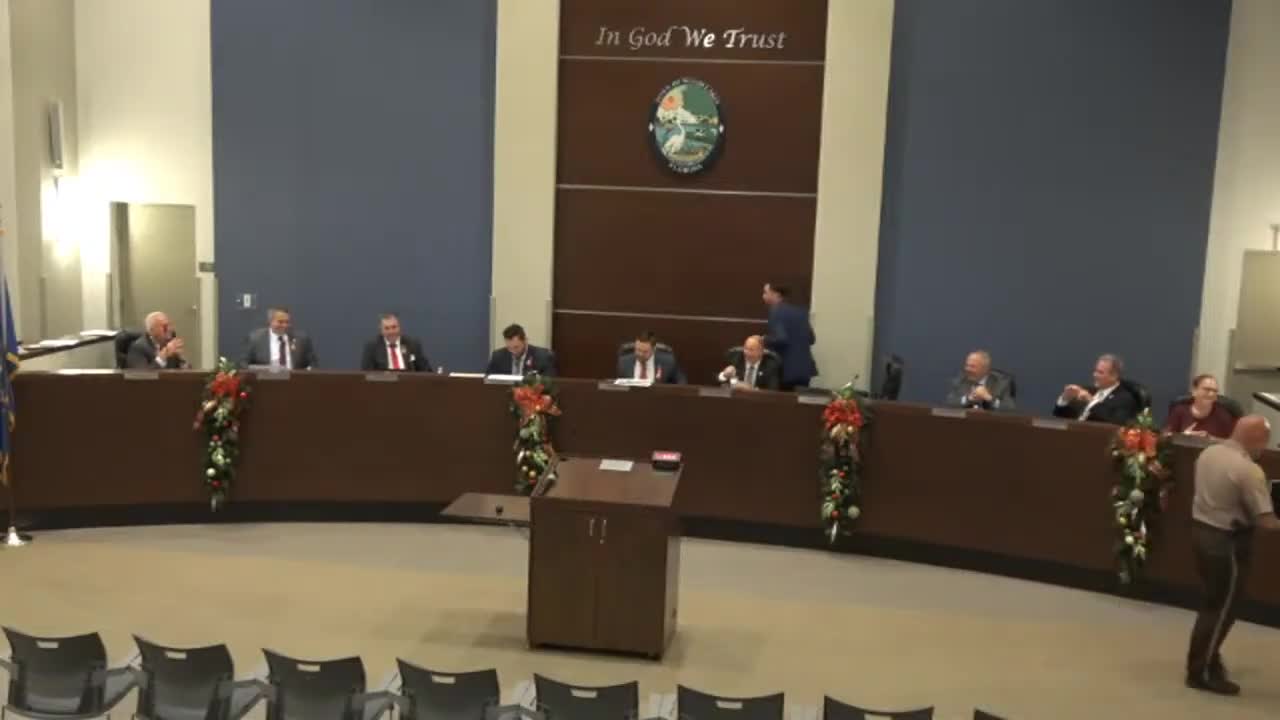
The presentation by Eric Padron of Calvin Giordano & Associates summarized a field inspection of Phase 1 work and the manufacturer’s recommendations. Padron said inspectors found torn or displaced cellular containment panels at about 69% of properties reviewed and washout of the bottom two rows of cells at roughly 50% of properties. He told the council the likely causes include hydraulic flow during storm events, concentrated private-property drainage points, machinery impacts from county dredging equipment and, potentially, burrowing by green iguanas.
"What we're seeing is base erosion that undermines the cells," Padron said. "The material that was used as infill has washed through the rock base and left empty cells. There are specific locations where a repair overlay will work; in other areas you need a more robust foundation such as concrete to lock the stone in place, like we used in Phase 3." (Presentation began with manager and director introductions.)
Padron emphasized two recurring technical issues: the plans did not show geofabric layers at regular lifts as the manufacturer's construction guide illustrates, and the foundation in some locations is not sufficiently locked to prevent washout. He recommended a tiered approach: (1) repair overlay and refilling of empty cells where possible; (2) remove and replace severely damaged sections in kind; and (3) where recurrent scour is present, install a more permanent foundation (concrete or concrete-locked stone) below the waterline.
Council members pressed for responsibility and cost estimates. Councilman Steven Herzberg and others asked whether the original designer complied with manufacturer guidance and whether contractor deviations contributed to the failures. Padron said contractors had in some cases altered installations (in some spots to the project’s benefit), but he stressed that the root problem is that Phase 1 design did not use the same foundation approach later adopted in Phase 3.
Councilman Guadalupe Garcia, who has urged action for years, said the product choice and local blasting/ground vibration conditions should have been considered during design. "We warned them," he said, arguing that the solution must address the underlying pocket that allows fines to wash through rock foundations.
Manager Peterman reminded councilors the town previously spent roughly $25,000 to mitigate voids; Padron said a piecemeal approach risks repeat repairs and estimated a robust remediation program using concrete-filled cells or comparable foundations could cost substantially more — he suggested a starting ballpark in the low-to-mid hundreds of thousands of dollars but cautioned a full rebuild of Phase 1 using Phase 3 standards would be significantly higher.
Padron emphasized repairs should be prioritized to the worst-performing locations first, with work scoped to prevent downstream scour that could reveal additional failures. He also recommended consulting the product manufacturer (Presto) for specific repair methods and testing hydraulic flows in targeted locations as part of design refinements.
Next steps: council directed staff to pursue the engineer’s recommendations for targeted repairs and to return with more precise cost estimates, scopes and a procurement approach. The council also asked the town attorney to review potential liability paths with the designer and contractor while staff develops short-term mitigation to limit further erosion.
The council’s discussion underlined two policy choices going forward: a staged, targeted maintenance program focused on the worst stretches, or a more comprehensive Phase 1 upgrade to Phase 3-style concrete foundations that would be costlier but likely more durable. Staff will return with firm cost estimates, procurement options and recommendations on who would pay for repairs pending legal review.
View the Full Meeting & All Its Details
This article offers just a summary. Unlock complete video, transcripts, and insights as a Founder Member.
30-day money-back guarantee
Sponsors
Proudly supported by sponsors who keep Florida articles free in 2025

