Council declines school-zone speed camera program after debate over safety, revenue and oversight
November 19, 2025 | Miami Lakes, Miami-Dade County, Florida
This article was created by AI summarizing key points discussed. AI makes mistakes, so for full details and context, please refer to the video of the full meeting. Please report any errors so we can fix them. Report an error »
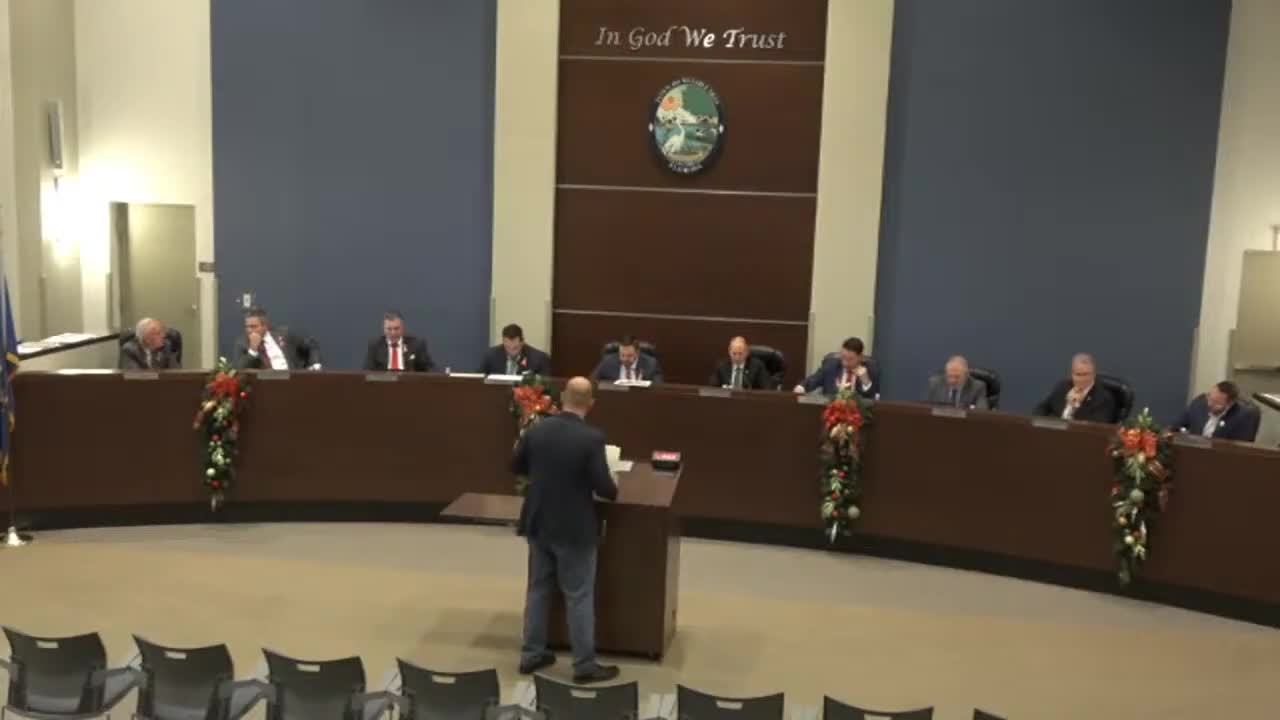
Staff and police briefed the council on a model used elsewhere in the county: cameras would operate 30 minutes before and 30 minutes after school hours, issue civil citations for speeding in school zones, and allocate fines per state statute (example breakdown presented: $20 to the state general fund; $60 split between county and town; $12 to the school district; $3 to FDLE training funds; $5 to a crossing-guard fund). Police said the cameras include license-plate-recognition (LPR) capability and that the vendor offered LPRs tied to system installs.
Supporters of the pilot said the cameras can reduce speeding in sensitive zones and generate targeted enforcement without a large recurring town cost; some council members said revenue could support school crossing guards and other safety programs. "The main focus is to mitigate the speeding," the police representative said.
Opponents questioned the program’s legal and policy trade-offs: Council members flagged due-process concerns (civil citations issued by a private vendor), the challenge for residents to contest fines, vendor transparency about calibration and notice procedures, the perception that the cameras are a revenue generator, and limits on local control over program hours and fines under state law. Several council members cited broader controversies about automated enforcement and said they were uncomfortable delegating enforcement to private contractors.
A motion to defer the item to gather additional vendor documentation and calibration proof failed. On the substantive motion, the council rejected adoption by roll call. The staff presentation and police briefing will remain available for future consideration if council revisits the issue.
What happened next: Council asked staff to document vendor calibration and notice processes and to clarify how contested citations would be handled locally; but no further action was adopted at this meeting. The vendor model used in nearby jurisdictions — and the allocation of fines set by state statute — remain legally binding constraints on any future program. The council may revisit automated enforcement if additional safeguards or statutory changes appear.
View the Full Meeting & All Its Details
This article offers just a summary. Unlock complete video, transcripts, and insights as a Founder Member.
30-day money-back guarantee
Sponsors
Proudly supported by sponsors who keep Florida articles free in 2025

