Oak Harbor adopts chronic nuisance ordinance to allow civil abatement of repeat law-violation properties
November 19, 2025 | Oak Harbor, Island County, Washington
This article was created by AI summarizing key points discussed. AI makes mistakes, so for full details and context, please refer to the video of the full meeting. Please report any errors so we can fix them. Report an error »
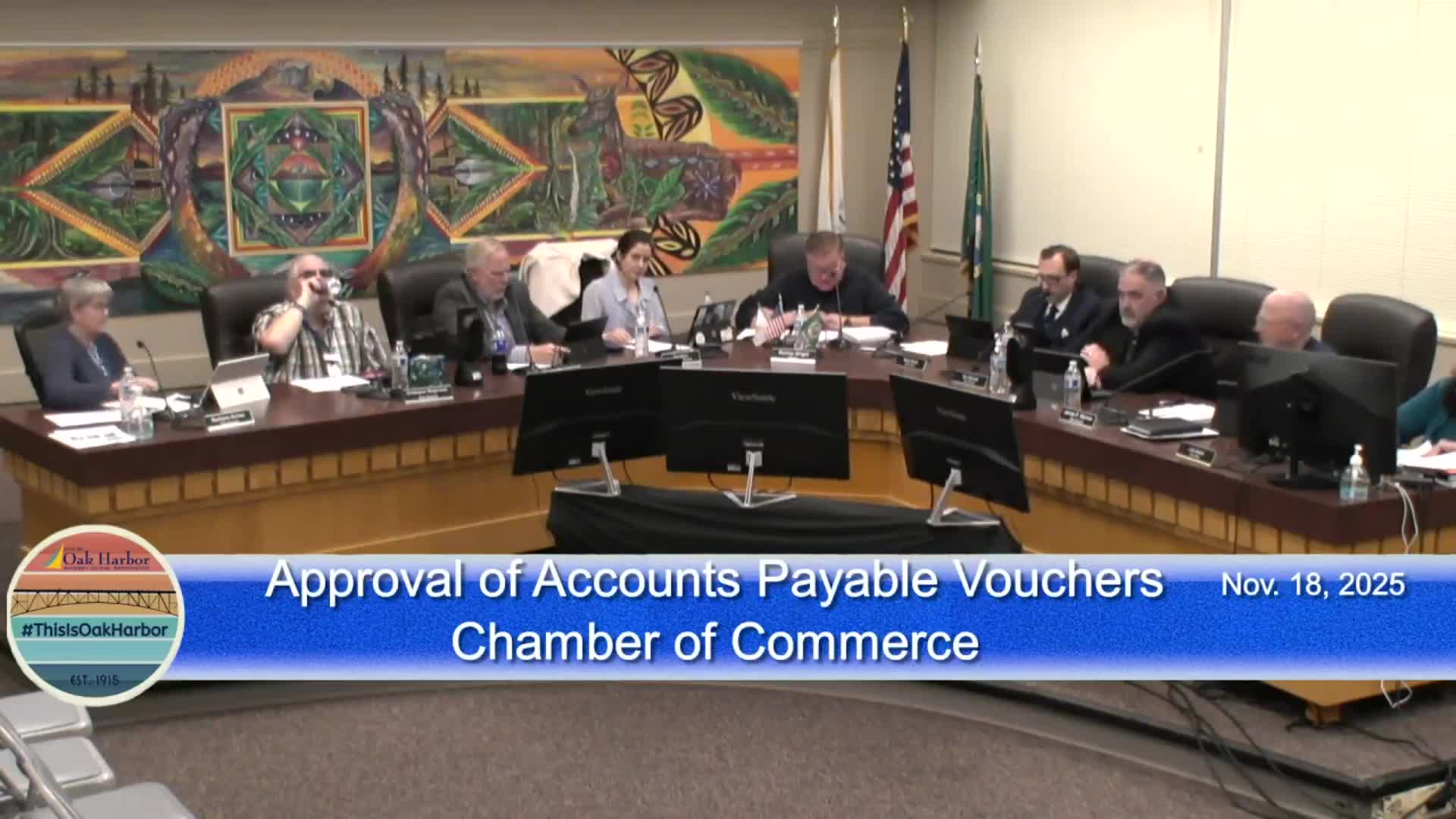
City attorney Hillary Evans, who drafted the ordinance at the mayor’s request, told council the chronic nuisance ordinance differs from a typical nuisance code by focusing on properties linked to repeated law violations — examples she cited include domestic violence incidents, drug activity and vacant houses repeatedly broken into. "It allows your police department to identify those properties…offer them a warning and an opportunity to work with the city to abate those nuisances," Evans said, adding abatement can include negotiated measures such as lighting or fencing and, as a last resort, civil litigation seeking a court-ordered remedy.
Public commenter Jeff Ward urged transparency and data-driven justification for the ordinance and suggested the council be explicit about intended targets. Chief Slovak said the ordinance is not intended for a single business and that the city has used other mechanisms such as health-department actions in some cases; the chief described the tool as "more tools in our toolbox" to work with property owners and landlords.
Councilmembers debated scope and discretion, noting protections for property owners who call for aid. Councilmember Romero moved adoption; the motion was seconded and passed. Council recorded the ordinance as a new enforcement option intended to be used sparingly and with civil process rather than summary action.
The ordinance establishes a framework for warnings, voluntary correction agreements, and civil court actions seeking abatement. Councilmembers and the police chief stressed the measure is intended to be a last resort and to preserve due process.
View the Full Meeting & All Its Details
This article offers just a summary. Unlock complete video, transcripts, and insights as a Founder Member.
30-day money-back guarantee
Sponsors
Proudly supported by sponsors who keep Washington articles free in 2025

