Grand Rapids committee asks city attorney to draft ordinance limiting amplified sound near medical facilities
November 19, 2025 | Grand Rapids City, Kent County, Michigan
This article was created by AI summarizing key points discussed. AI makes mistakes, so for full details and context, please refer to the video of the full meeting. Please report any errors so we can fix them. Report an error »
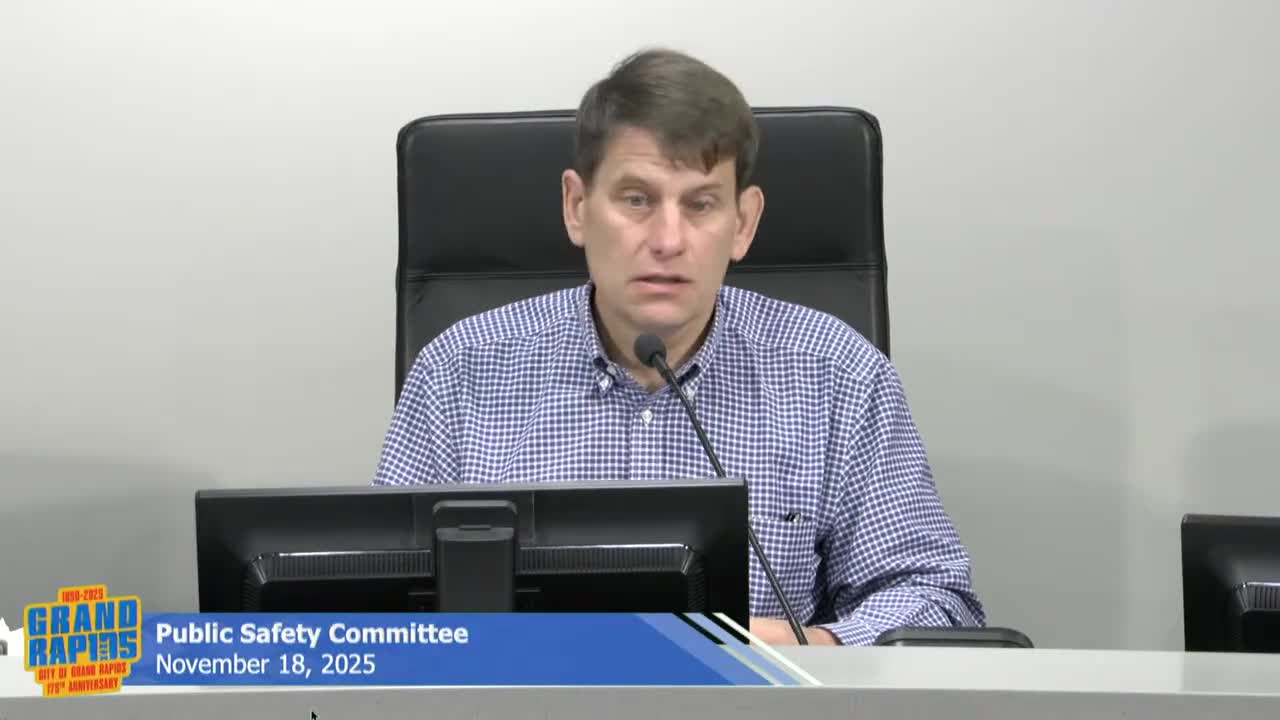
Interim City Attorney Strong framed the issue as legally delicate: the city’s existing noise rule prohibits amplified sound louder than average conversational level at 100 feet, but plaintiffs and staff have reported enforcement challenges. Strong cautioned that time‑place‑manner restrictions around sensitive places must be content neutral and narrowly tailored to avoid First Amendment violations. "If we're gonna regulate amplified sound, we have to be very careful about how we do that to make sure we're not inviting litigation from people and potential rights violations," Strong said.
Commissioners and other speakers described enforcement difficulties (lack of decibel meters in routine patrols) and urged workable, measurable rules. Commissioner James cited Sacramento’s ordinance banning amplifiers within 100 feet of health‑care facilities during hours of operation and Detroit’s additional personal‑bubble rules as examples of enforceable approaches that do not measure decibels. Members repeatedly emphasized they did not seek incarceration for ordinance violations; the mayor and others suggested graduated fines and non‑jailable penalties if an ordinance is changed.
Several committee members and staff worried a broad definition of "medical facility" in the zoning code could sweep in many businesses and produce disproportionate enforcement. Interim City Attorney Strong acknowledged the tension and said staff would be mindful of unintended consequences, including increased police contacts for nonviolent situations.
Next steps: Strong offered to draft a proposed ordinance revision and to work with the city manager to determine whether the draft returns to the Public Safety Committee or goes to the Committee of the Whole. No formal vote was taken and staff signaled more public engagement and legal review before any final ordinance would be proposed.
Don't Miss a Word: See the Full Meeting!
Go beyond summaries. Unlock every video, transcript, and key insight with a Founder Membership.
30-day money-back guarantee
Sponsors
Proudly supported by sponsors who keep Michigan articles free in 2025

