Bethlehem residents and firefighters press council to increase staffing as 2026 budget moves forward
November 19, 2025 | Bethlehem, Lehigh and Northampton Counties, Pennsylvania
This article was created by AI summarizing key points discussed. AI makes mistakes, so for full details and context, please refer to the video of the full meeting. Please report any errors so we can fix them. Report an error »
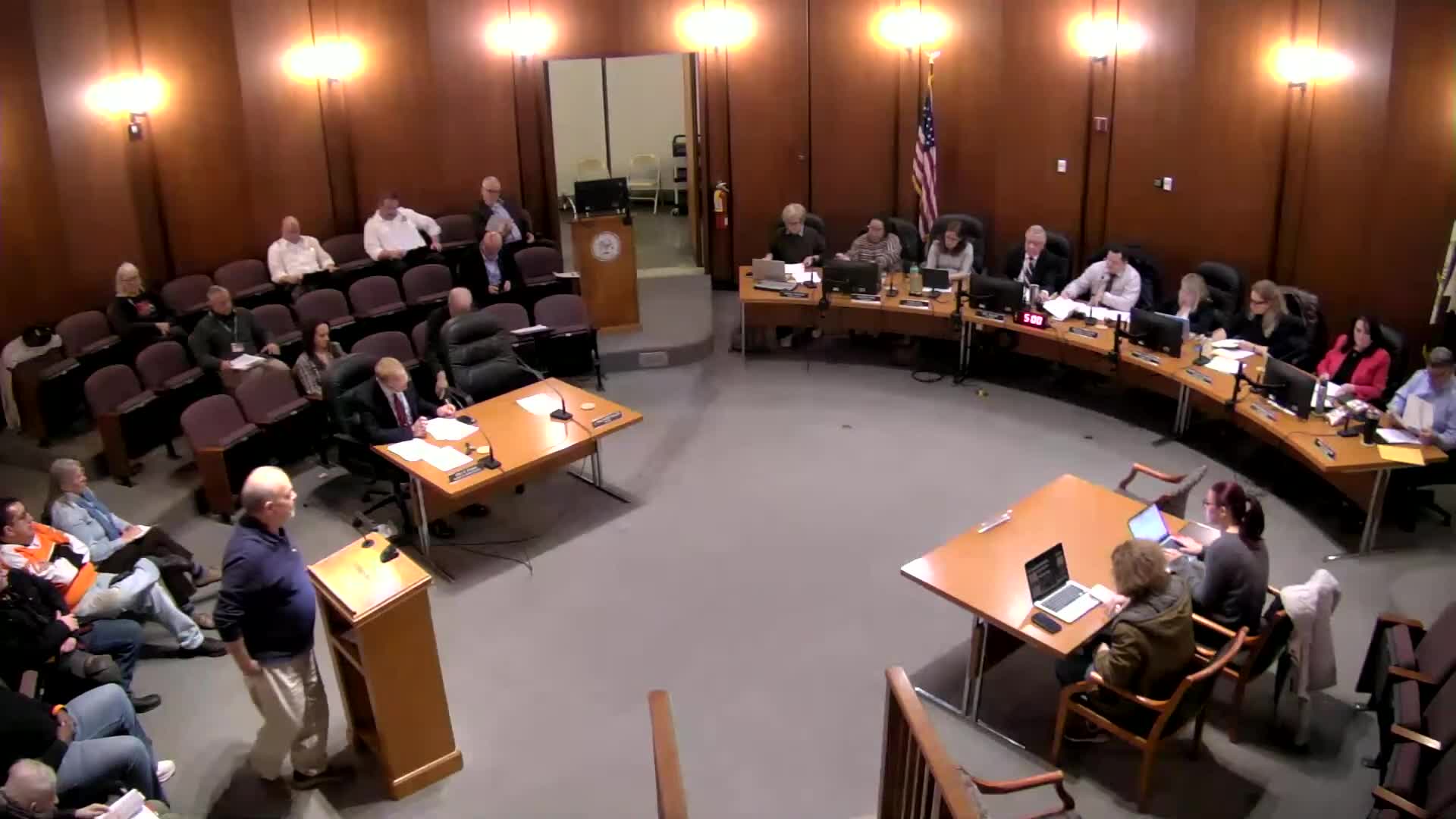
Dozens of residents and active members of the Bethlehem Fire Department told City Council on a packed night in mid-November that the department is operating at dangerously low staffing levels and asked elected officials to find money now rather than wait for consultants. The council accepted the first reading of the city's general-fund budget for 2026 but several members said they will seek amendments to add frontline firefighters.
Union leaders and firefighters led public comment, recounting fatal fires and day-to-day strains from repeated overtime and vacancies. "Staffing is not a luxury. It's a necessity," Lou Jimenez, president of Local 735, told the council, asking officials to restore a complement the speakers said the city had for years. Rosemary Jimenez said IAFF data showed Bethlehem spends roughly "10% of its city budget on fire protection" and argued many neighborhoods do not meet a four-minute response benchmark.
City officials acknowledged a persistent gap between retirements and hires. Business administrator Eric Evans told council the city has placed 35 firefighters in the last three years but said retirements have spiked, which complicates short-term staffing. Evans said the 2026 budget includes funding to send up to 15 cadets to academy training (about $20,000 per cadet, or roughly $300,000 total) but that academy timing—classes run on a fixed schedule and training lasts months—limits how quickly new hires can be on the line.
Council members weighed two options: identify one-time general-fund or ARPA money to pay for a small number of immediate hires while accepting the timing constraints of the academy, or wait for a comprehensive, city-commissioned study the administration plans to award early next year and present by summer. Councilwoman Grace Cramsey Smith said she intends to propose an amendment to add four firefighters and to promote four firefighters to lieutenant so there is an officer at Engine 9 on each shift.
Council also discussed overtime costs and alternatives to recurring spending. Several members pointed to mandatory overtime and a 39-hour safety cap that has been used to prevent extreme overwork; the council discussed whether moving money from one-time funds would only postpone the problem without a sustainable revenue plan. Estimates discussed at the meeting placed overtime spending at roughly $500,000 in recent budget presentations and higher in prior years (staff cited numbers on the order of $1.0'.2 million in some years).
On the formal calendar, the council set a schedule for further review. The administration listed a third budget hearing for Thursday at 6 p.m. to review community and economic development, police and the fire department budget; the deadline to submit proposed amendments to the budget clerks is noon Tuesday, Nov. 25. Councilmembers who oppose delaying action said they will try to identify general-fund dollars before the amendment deadline.
Votes at a glance: the first reading of the 2026 general-fund budget (Bill 47 20 25) passed first reading by roll call, 5' (Council President Callahan and Councilwoman Grace Cramsey Smith recorded Nays). Multiple other enterprise and capital budget ordinances on the consent calendar passed on roll calls, most by unanimous votes.
The council did not adopt a final budget on the night; the second reading and final vote remain scheduled for the December council meeting per the published calendar. Council President Callahan invited residents to Thursday's budget hearing for detailed line-item discussion and reminded members of the formal amendment and advertising deadlines.
Union leaders and firefighters led public comment, recounting fatal fires and day-to-day strains from repeated overtime and vacancies. "Staffing is not a luxury. It's a necessity," Lou Jimenez, president of Local 735, told the council, asking officials to restore a complement the speakers said the city had for years. Rosemary Jimenez said IAFF data showed Bethlehem spends roughly "10% of its city budget on fire protection" and argued many neighborhoods do not meet a four-minute response benchmark.
City officials acknowledged a persistent gap between retirements and hires. Business administrator Eric Evans told council the city has placed 35 firefighters in the last three years but said retirements have spiked, which complicates short-term staffing. Evans said the 2026 budget includes funding to send up to 15 cadets to academy training (about $20,000 per cadet, or roughly $300,000 total) but that academy timing—classes run on a fixed schedule and training lasts months—limits how quickly new hires can be on the line.
Council members weighed two options: identify one-time general-fund or ARPA money to pay for a small number of immediate hires while accepting the timing constraints of the academy, or wait for a comprehensive, city-commissioned study the administration plans to award early next year and present by summer. Councilwoman Grace Cramsey Smith said she intends to propose an amendment to add four firefighters and to promote four firefighters to lieutenant so there is an officer at Engine 9 on each shift.
Council also discussed overtime costs and alternatives to recurring spending. Several members pointed to mandatory overtime and a 39-hour safety cap that has been used to prevent extreme overwork; the council discussed whether moving money from one-time funds would only postpone the problem without a sustainable revenue plan. Estimates discussed at the meeting placed overtime spending at roughly $500,000 in recent budget presentations and higher in prior years (staff cited numbers on the order of $1.0'.2 million in some years).
On the formal calendar, the council set a schedule for further review. The administration listed a third budget hearing for Thursday at 6 p.m. to review community and economic development, police and the fire department budget; the deadline to submit proposed amendments to the budget clerks is noon Tuesday, Nov. 25. Councilmembers who oppose delaying action said they will try to identify general-fund dollars before the amendment deadline.
Votes at a glance: the first reading of the 2026 general-fund budget (Bill 47 20 25) passed first reading by roll call, 5' (Council President Callahan and Councilwoman Grace Cramsey Smith recorded Nays). Multiple other enterprise and capital budget ordinances on the consent calendar passed on roll calls, most by unanimous votes.
The council did not adopt a final budget on the night; the second reading and final vote remain scheduled for the December council meeting per the published calendar. Council President Callahan invited residents to Thursday's budget hearing for detailed line-item discussion and reminded members of the formal amendment and advertising deadlines.
Don't Miss a Word: See the Full Meeting!
Go beyond summaries. Unlock every video, transcript, and key insight with a Founder Membership.
✓
Get instant access to full meeting videos
✓
Search and clip any phrase from complete transcripts
✓
Receive AI-powered summaries & custom alerts
✓
Enjoy lifetime, unrestricted access to government data
30-day money-back guarantee
