Appellate Court Hears Challenge to Post‑Conviction Relief Tied to Twitter Evidence in Jabril Lindsey Case
November 19, 2025 | Judicial, Tennessee
This article was created by AI summarizing key points discussed. AI makes mistakes, so for full details and context, please refer to the video of the full meeting. Please report any errors so we can fix them. Report an error »
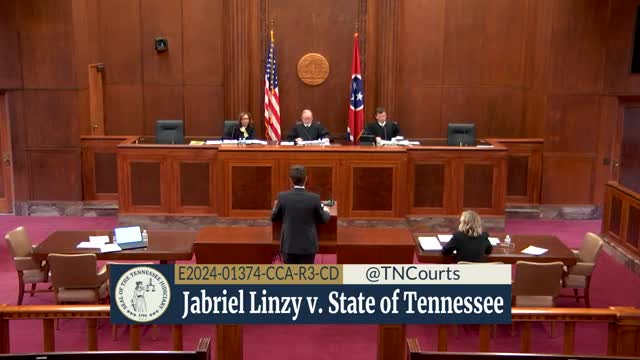
Akers said there was “no physical evidence linking Jabril Lindsey to this homicide,” and that the prosecution had leaned on 10 Twitter messages to provide motive and shore up weak and contradictory eyewitness testimony. She told the court that the post‑conviction record showed only two of the ten posts were from the same year as the Oct. 4, 2014 homicide and that neither referenced the victim’s screen name, while the other posts dated to 2013.
The argument centered on whether trial counsel Kit Rogers rendered constitutionally deficient performance by failing to present timing, retweet provenance, and alternate‑target evidence to the jury. Akers said post‑conviction counsel had obtained a full Twitter record (about 5,000 pages) that showed the timing, retweet status and that some posts read to the jury were authored by others — information she said was never presented to the jury and that would have undercut the prosecution’s motive theory. She also told the panel that a material, readily available witness, Garfield Adams, would have testified that Lindsey had fought at school with a different person nicknamed “Domo,” potentially explaining some of the posts attributed to the victim.
State counsel urged deference to trial strategy. The state pointed to trial‑level objections on authentication and hearsay and argued Rogers pursued an informed strategy to undermine authorship and authenticity, telling the jury that “there is simply no way to know who sent these tweets.” In rebuttal the state argued the post‑conviction court engaged in impermissible speculation about a missing exhibit and that the record does not show Rogers was unaware of the Twitter record’s contours.
The panel’s questioning focused on three discrete disputes: whether the tweets were clearly tied to the victim or to another person with the same nickname; whether trial counsel knew or should have known of alternative explanations (and therefore whether his strategy was “informed”); and what effect the absence of exhibit 60 from the appellate record had on evaluating prejudice. Both sides agreed the tweets were used by the prosecution to argue motive in closing, but they disagreed over whether the jury saw sufficient context (dates, times, screen names) to merit that use.
The court did not issue a ruling. A judge told counsel, “We’ll take it under advisement,” and recessed the argument until 1:00 p.m.
Akers emphasized Lindsey’s age at arrest — about 18 — and that he was convicted and sentenced to life at 19, arguing the combination of weak eyewitness testimony and the state’s reliance on the tweets supported the post‑conviction court’s factual findings and its ultimate grant of relief. The state responded that courts should not overturn strategic trial decisions absent proof they were ill informed.
The panel’s decision will turn on mixed questions of fact and law: appellate deference applies to the post‑conviction court’s factual findings, while the ultimate legal question whether counsel’s performance was deficient and prejudicial is reviewed de novo. The court has taken the matter under advisement.
View the Full Meeting & All Its Details
This article offers just a summary. Unlock complete video, transcripts, and insights as a Founder Member.
30-day money-back guarantee
Sponsors
Proudly supported by sponsors who keep Tennessee articles free in 2025

