Residents press Plan Commission to delay Pulte Homes rezoning after packed public hearing
November 18, 2025 | Town of Zionsville, Boone County, Indiana
This article was created by AI summarizing key points discussed. AI makes mistakes, so for full details and context, please refer to the video of the full meeting. Please report any errors so we can fix them. Report an error »
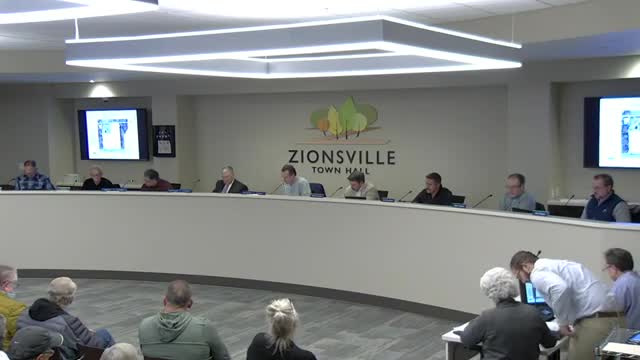
Rex Ramage of Pulte Homes said the proposal—called Bradbury—would yield roughly 1.67 units per acre, deliver about 56 acres of open space and internal pedestrian connections, and include a mix of home sizes aimed at both growing families and empty‑nest buyers. "We think this community does have some natural features that we're paying homage to," Ramage told the commission.
Neighbors centered objections on density, notice and environmental impacts. "We're requesting an unfavorable recommendation by the plan commission to a rezone of R2 density," said Matt Corniche, speaking for a group of 12 families. Kyle Schmidt, a veterinarian and resident, asked the commission to request a DNR review for reported sightings of eastern box turtles and other species, saying the developer’s DNR letter does not substitute for field studies.
Several residents also told the commission they received late or limited notice of the developer’s neighborhood meeting and that signage was sparse. "The neighborhood meeting was scheduled concurrently with the comprehensive plan meeting in this very building making it impossible for residents to offer input at both meetings," one speaker said.
Commissioners probed the application’s relationship to the draft comprehensive plan and to infrastructure needs. One commissioner noted that the draft plan includes mixed‑residential and neighborhood activity center designations for parts of the site, but stressed the draft had not been adopted and that decisions must be made on the materials before the commission.
On traffic, Pulte said its traffic impact study supports future intersection improvements identified in town planning documents and that the developer will pay applicable road‑impact fees. "Our intent is to pay our fair share," Ramage said, adding that required fees are typically collected at certificates of occupancy.
After extended public comment and internal discussion about buffers, transitions to adjacent estate lots and time needed to negotiate design and mitigation measures, the commission voted to continue the matter to a January planning commission meeting and the developer agreed to waive a speedy‑hearing requirement to allow extra review time.
Next steps: the item will return to the Plan Commission in January for additional submissions and staff review; the commission may forward a recommendation to the Town Council after that process.
View the Full Meeting & All Its Details
This article offers just a summary. Unlock complete video, transcripts, and insights as a Founder Member.
30-day money-back guarantee
Sponsors
Proudly supported by sponsors who keep Indiana articles free in 2025

