Residents press Clifton Heights council on speeding, noisy vehicles; borough plans rumble-strip pilot and traffic study
November 18, 2025 | Clifton Heights, Delaware County, Pennsylvania
This article was created by AI summarizing key points discussed. AI makes mistakes, so for full details and context, please refer to the video of the full meeting. Please report any errors so we can fix them. Report an error »
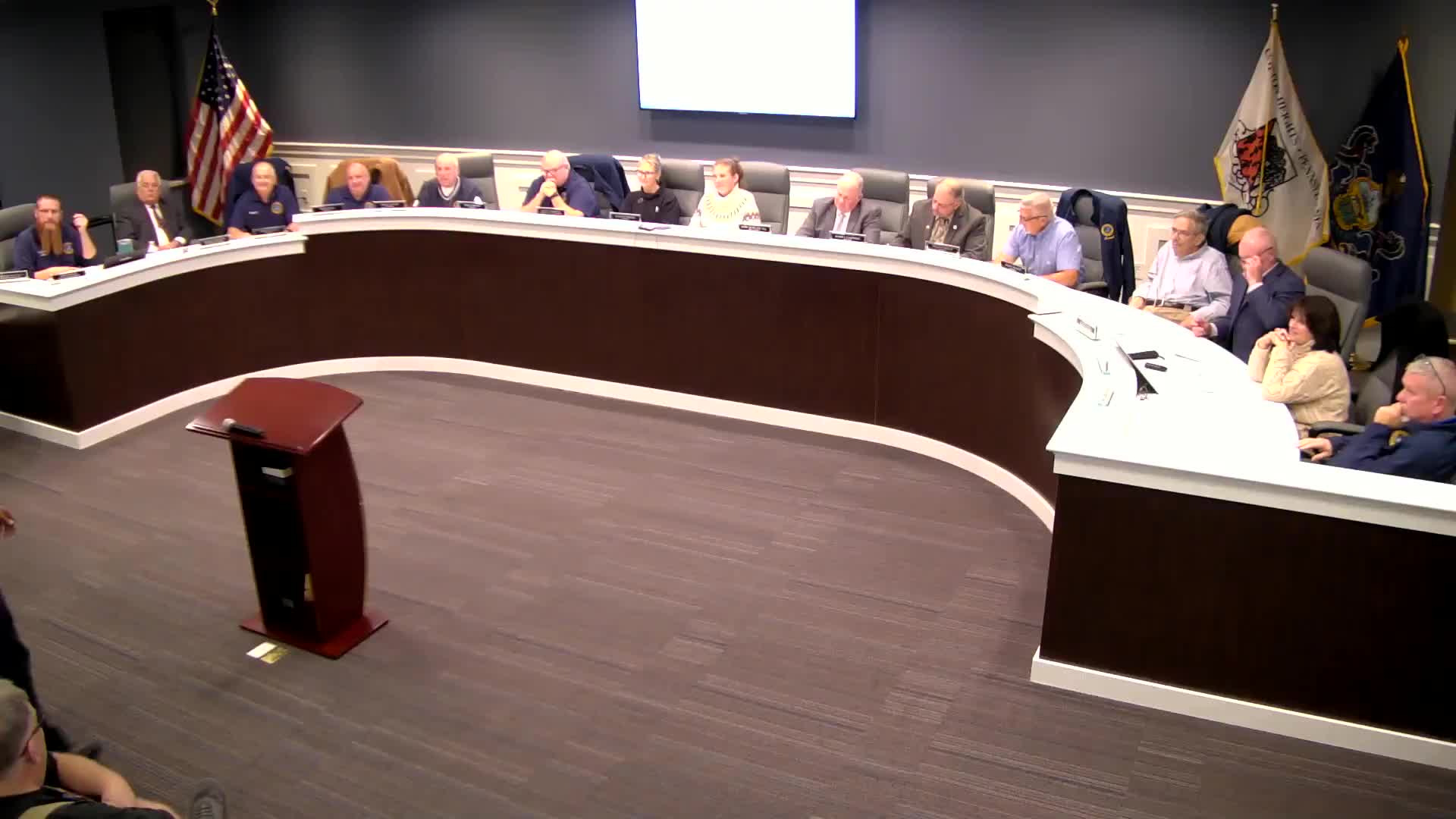
Several Clifton Heights residents used closing public comment to press the borough on speeding, heavy construction trucks and loud vehicle noise in residential neighborhoods. Council members, the police chief and the borough engineer outlined short-term and longer-range responses.
Residents’ concerns: Speakers described construction trucks, cut-through traffic on Harrison Avenue, and motorists speeding through residential streets near schools. One resident identified himself as Andy Robinson of 17 Harrison Avenue and asked about construction trucks and traffic patterns. Other residents raised repeated concerns about loud engine noise and parking problems.
Police and staff response: The police chief said the department assigned additional patrol details to problem areas and noted the department recently completed a PennDOT-funded enforcement campaign. He also explained a statutory constraint: Pennsylvania does not permit some municipalities to use radar enforcement, which limits speed enforcement tools available to the borough. The borough will continue issuing citations where officers can document violations.
Traffic-calming steps: The engineer and manager said the borough purchased test rumble strips and will pilot them on one road in each ward, noting the adhesive used for installation requires temperatures of about 55°F and rising. The engineer will evaluate streets for compliance with PennDOT rules on speed cushioning and liability; the borough also plans a traffic study once the Springford Road construction project returns traffic to normal and again one year after school starts to assess remediation such as wayfinding or turn restrictions.
Noise and enforcement limits: Council and police noted the borough has ordinances covering daytime work and residential parties but lacks a specific ordinance and equipment to measure vehicle engine noise; enforcement options are therefore limited and in some cases restricted to parking citations.
Next steps: The borough will proceed with the rumble-strip pilot, continue targeted patrols, and schedule traffic studies as described. Council members encouraged residents to identify problem locations so staff can prioritize enforcement and traffic-calming measures.
Residents’ concerns: Speakers described construction trucks, cut-through traffic on Harrison Avenue, and motorists speeding through residential streets near schools. One resident identified himself as Andy Robinson of 17 Harrison Avenue and asked about construction trucks and traffic patterns. Other residents raised repeated concerns about loud engine noise and parking problems.
Police and staff response: The police chief said the department assigned additional patrol details to problem areas and noted the department recently completed a PennDOT-funded enforcement campaign. He also explained a statutory constraint: Pennsylvania does not permit some municipalities to use radar enforcement, which limits speed enforcement tools available to the borough. The borough will continue issuing citations where officers can document violations.
Traffic-calming steps: The engineer and manager said the borough purchased test rumble strips and will pilot them on one road in each ward, noting the adhesive used for installation requires temperatures of about 55°F and rising. The engineer will evaluate streets for compliance with PennDOT rules on speed cushioning and liability; the borough also plans a traffic study once the Springford Road construction project returns traffic to normal and again one year after school starts to assess remediation such as wayfinding or turn restrictions.
Noise and enforcement limits: Council and police noted the borough has ordinances covering daytime work and residential parties but lacks a specific ordinance and equipment to measure vehicle engine noise; enforcement options are therefore limited and in some cases restricted to parking citations.
Next steps: The borough will proceed with the rumble-strip pilot, continue targeted patrols, and schedule traffic studies as described. Council members encouraged residents to identify problem locations so staff can prioritize enforcement and traffic-calming measures.
View the Full Meeting & All Its Details
This article offers just a summary. Unlock complete video, transcripts, and insights as a Founder Member.
✓
Watch full, unedited meeting videos
✓
Search every word spoken in unlimited transcripts
✓
AI summaries & real-time alerts (all government levels)
✓
Permanent access to expanding government content
30-day money-back guarantee
