Howard County Drainage Board approves two reconstruction orders for John Downhauer regulated drain
November 17, 2025 | Howard County, Indiana
This article was created by AI summarizing key points discussed. AI makes mistakes, so for full details and context, please refer to the video of the full meeting. Please report any errors so we can fix them. Report an error »
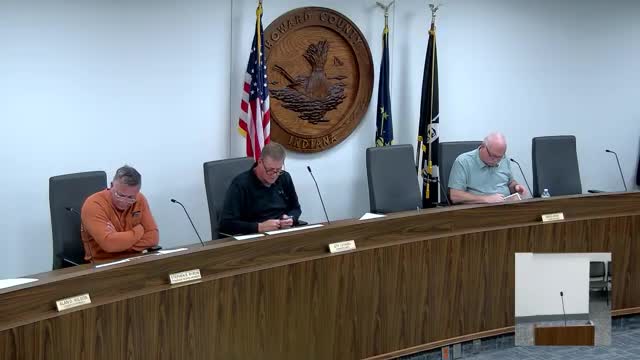
Paul, the meeting presenter, described the project as replacing approximately 2,240 feet of existing regulated drain with new perforated plastic pipe sized to the watershed and increasing some reaches to 18- and 15-inch pipe. He said petitioning landowners will arrange and pay for the installation, while the board will appropriate ARP funds to buy the pipe itself: "They're petitioning the board," Paul said, and "we are going to appropriate some ARP funds to pay for the pipe on this project."
The board read and adopted Resolution HCDB2508, which applies to property where the John Downhauer regulated drain runs and lists findings required under IC 36-9-27-52.5, including that specifications were approved by the county surveyor and that no other watershed owners will be adversely affected. After no public comment was offered, a motion to approve the resolution was made by Mr. Dodd and seconded; the board voted in favor and the motion passed.
The board then considered Resolution HCDB2511, a separate reconstruction order under the same statute for real estate owned by the Miller Marion G. Trust. The resolution contains the same set of findings and notes that the petitioner will complete the project at no cost to the county or other watershed owners, using pipe acquired by the surveyor with federal grant funds. The board approved HCDB2511 after a motion and affirmative vote.
What the board approved are formal reconstruction orders under Indiana Code § IC 36-9-27-52.5. Both resolutions direct reconstruction to proceed under supervision of the county surveyor and state that, based on surveyor representations, no other owners in the watershed will be adversely affected. The resolutions were added to the record and passed during the public hearing portion of the meeting.
Next steps: the board will oversee construction under the county surveyor's supervision. The resolutions authorize reconstruction but do not themselves set construction timelines or contractors; petitioning landowners are responsible for arranging completion of the work.
Don't Miss a Word: See the Full Meeting!
Go beyond summaries. Unlock every video, transcript, and key insight with a Founder Membership.
30-day money-back guarantee
Sponsors
Proudly supported by sponsors who keep Indiana articles free in 2025

