Ryman Hospitality proposes elevated greenway at Ascend Amphitheater; pledges to build and hand over structure to city
November 18, 2025 | Bicycle and Pedestrian Advisory Commission, Nashville, Davidson County, Tennessee
This article was created by AI summarizing key points discussed. AI makes mistakes, so for full details and context, please refer to the video of the full meeting. Please report any errors so we can fix them. Report an error »
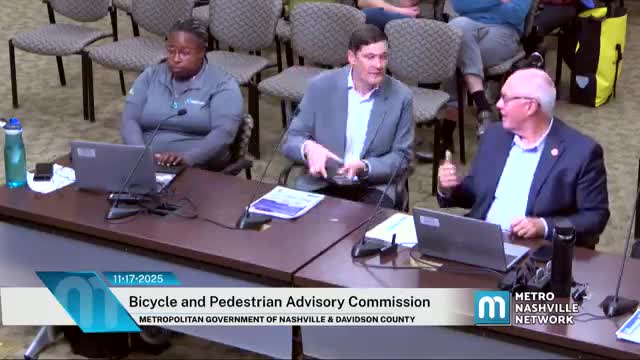
Sam Reid, representing Ryman Hospitality, said the company plans interior venue upgrades and "we're gonna spend... up to $1,100,000" on an elevated greenway that would be handed over to the city after construction. Designer Kevin Crumley described the structure as roughly 640 feet long, with a midspan height of about 24–25 feet and a 12‑foot clear width; the plan calls for a maximum running grade of about 4.5 percent to meet accessibility standards.
Design teams said the bridge would be built with wood decking, include landscaping to replace removed trees, and would be screened in places to reduce sightlines into the amphitheater. Ryman and Barge said they have engaged with the railroad company, the National Tree Foundation, the City arborist and Metro Parks to finalize design details and minimize impacts to park character.
Commissioners raised multiple practical concerns during Q&A: how the design separates bicyclists and pedestrians on a 12‑foot deck, whether the elevated alignment will encourage crowds to watch concerts from the structure, and whether the existing Greenway underpasses will remain open during construction. Designers said the greenway is intended to remain open 24/7 and that screening, landscaping and monitoring would help manage crowding and sightlines on event nights.
Why it matters: the greenway would reestablish a continuous Riverfront Greenway connection where the amphitheater currently blocks access for much of the year. The project is privately funded (Ryman) and intended to be transferred to Metro for long‑term operation and maintenance.
Next steps: Ryman said construction could begin soon after the company assumes venue control in January and that the project team will refine design in coordination with city stakeholders. BPAC provided feedback on separation, screening and maintenance; no formal commission action was taken at the meeting.
Don't Miss a Word: See the Full Meeting!
Go beyond summaries. Unlock every video, transcript, and key insight with a Founder Membership.
30-day money-back guarantee
Sponsors
Proudly supported by sponsors who keep Tennessee articles free in 2025

