Logansport utility staff update sewer-use ordinance; council asked for two readings in December
November 18, 2025 | Logansport City, Cass County, Indiana
This article was created by AI summarizing key points discussed. AI makes mistakes, so for full details and context, please refer to the video of the full meeting. Please report any errors so we can fix them. Report an error »
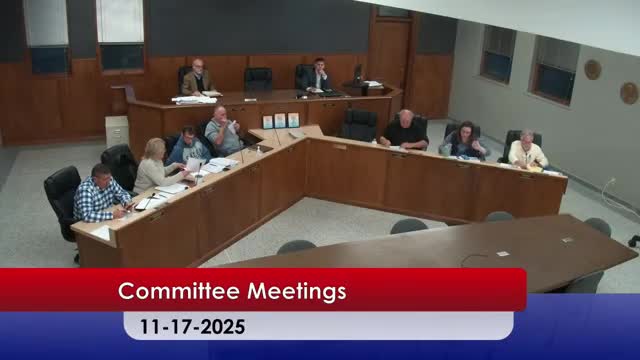
“The Sewer Use Ordinance is, in its essence, it’s obviously a long document,” said Speaker 6, who led the presentation, explaining the ordinance sets contaminant concentration limits and the rules governing industrial dischargers. Staff and consultant Commonwealth Engineering reviewed the document and recommended updates based on a local limits evaluation.
Staff described how composite sampling of the municipal wastewater stream and of local industries produced new local limits reflected in the draft ordinance. Speaker 6 said the city reclassified some users after an industrial pretreatment audit by the Indiana Department of Environmental Management (IDEM): “the EPA and IDEM do not recognize nonsignificance, so we were forced to eliminate the nonsignificant and change all of our industries to significant,” he said. Staff said a small number of historically compliant, low-risk industries were removed from the list entirely to reduce administrative burdens.
Committee members asked for a detailed list of the nine industries currently designated as significant industrial users; staff agreed to provide the list and to share an example Notice of Violation (NOV) and the enforcement response guide used to implement the ordinance.
On enforcement and finance, Speaker 6 explained that significant noncompliance can trigger NOVs, publication at year-end for chronic violators, and surcharges intended to offset system costs. He provided example penalty structures used in the enforcement guide (for example NOVs and surcharges that can escalate substantially if violations recur) and said pretreatment program costs are pooled and allocated among SIUs so the program operates at breakeven for the utility.
Staff also detailed testing cadence: the city uses monitoring and contract confirmation tests twice per quarter. When asked whether lead-line replacements had affected lead loading to the wastewater plant, staff said they have not seen a clear change in wastewater lead concentrations and offered to compile plant-level data for committee review.
On timing, staff requested two council readings and asked the council to consider suspending rules to approve the ordinance in December to align with EPA timing; committee members discussed scheduling additional December meetings to accommodate the timeline. The utility committee closed after members confirmed staff would supply requested documentation.
Next steps: staff will provide the SIU list, sample NOV language and the enforcement response guide to committee members; the ordinance was recommended to move forward for two council readings with a target of December action.
Don't Miss a Word: See the Full Meeting!
Go beyond summaries. Unlock every video, transcript, and key insight with a Founder Membership.
30-day money-back guarantee
Sponsors
Proudly supported by sponsors who keep Indiana articles free in 2025

