Grand Rapids approves additional Oracle ERP licenses as staff outlines implementation hurdles
November 18, 2025 | Grand Rapids City, Kent County, Michigan
This article was created by AI summarizing key points discussed. AI makes mistakes, so for full details and context, please refer to the video of the full meeting. Please report any errors so we can fix them. Report an error »
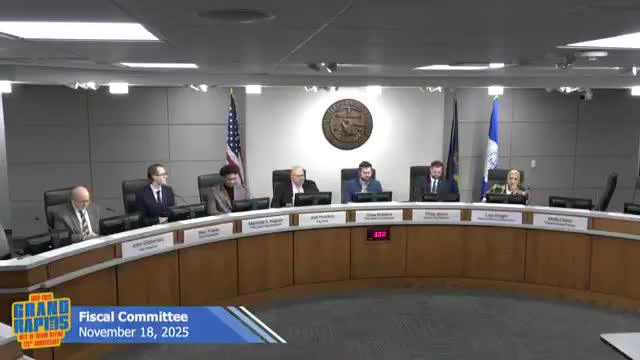
Claire, a finance staff presenter, told commissioners the city has been live on Oracle Cloud Fusion for more than six months and has realized some early gains: “our payroll clerks have gained about an hour and a half on payroll processing time,” she said. But the project has required repeated change orders and added cost: staff reported roughly $4.8 million in change orders to date on the implementation and said software/cloud services total about $2.18 million. Implementation and related change orders put the overall project cost nearer to $9.5 million, officials said.
Staff attributed much of the difficulty to external events and implementation turnover. Claire said the timing of a bank merger disrupted interfaces to the city's systems and turnover on the implementation team slowed knowledge transfer. She also noted the city lost a key payroll supervisor during the rollout, requiring extra staff overtime.
Commissioners pressed staff on near-term expectations. One commissioner asked, “What is this gonna look like three months down the line?” Claire said staff is testing automated fixes for project modules that remain manual — notably reporting and the projects module — and expects some fixes to launch by the end of the month. She added the city is holding its implementation partner accountable and has engaged Oracle services and the city attorney's office where appropriate.
The commission voted to approve the license purchase; no change in recurring service rates was proposed during the vote. Finance staff said the ERP project has been funded by a mix of transformational-fund carryover, American Rescue Plan Act (ARPA) grant money and some general fund support.
The commission asked staff to return with further updates on performance metrics, outstanding module rollouts, and options for third-party assessment to evaluate whether to continue with the current implementer when the support contract ends in roughly two years.
View the Full Meeting & All Its Details
This article offers just a summary. Unlock complete video, transcripts, and insights as a Founder Member.
30-day money-back guarantee
Sponsors
Proudly supported by sponsors who keep Michigan articles free in 2025

