Scottsdale council trims legislative agenda after residents demand review of license‑plate readers
November 18, 2025 | Scottsdale, Maricopa County, Arizona
This article was created by AI summarizing key points discussed. AI makes mistakes, so for full details and context, please refer to the video of the full meeting. Please report any errors so we can fix them. Report an error »
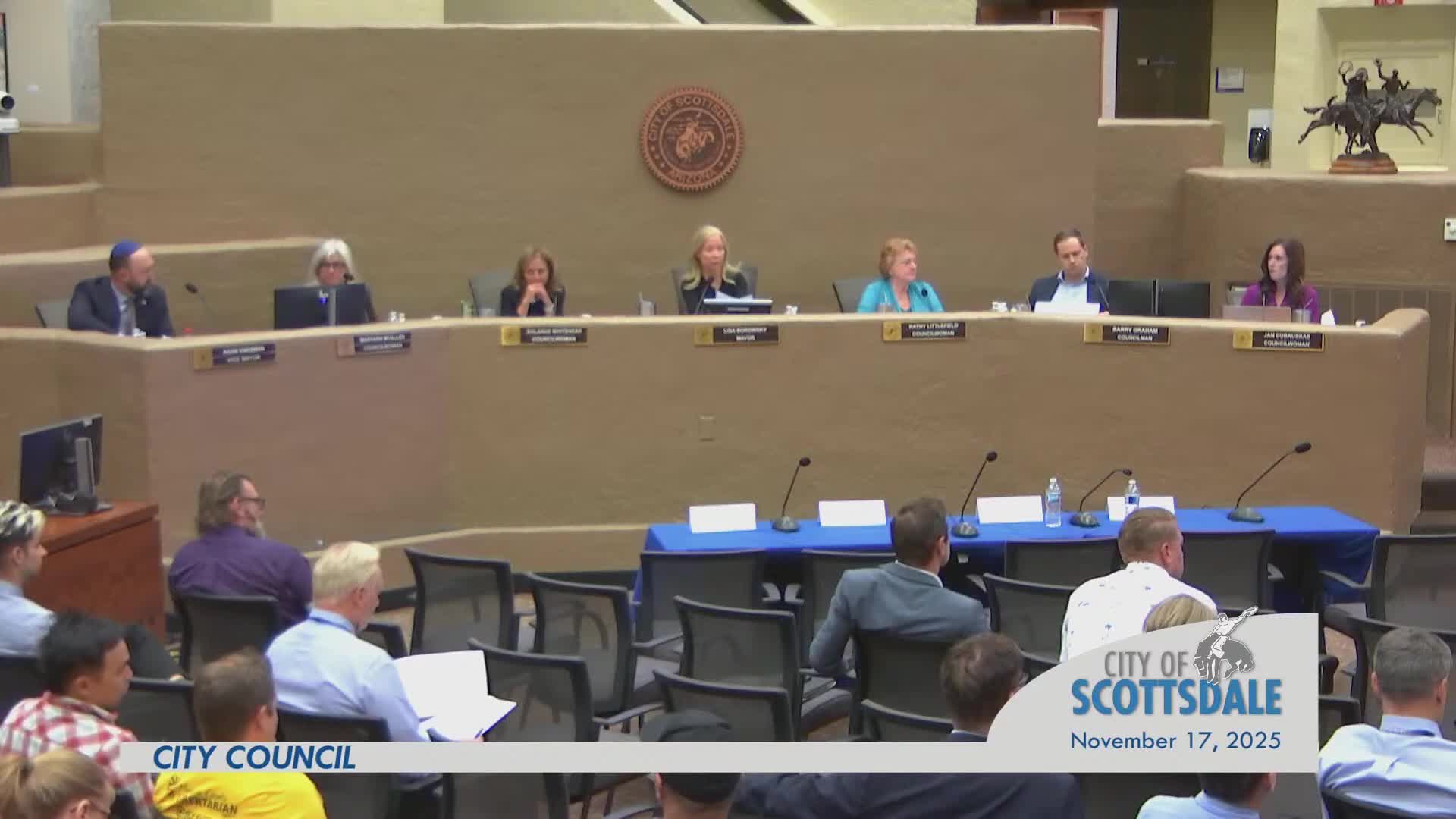
At the council meeting Nov. 17, multiple residents argued the ALPR network was installed without public process, raised constitutional and privacy concerns, and cited examples where other cities removed Flock systems or faced litigation. Eric Fowler, chair of the Maricopa County Libertarian Party, told the council the system "appeared overnight" and called it "unconstitutional" unless subject to public oversight.
Council debate and staff explanation
Councilmember Barry Graham moved to simplify the public‑safety line in the legislative agenda to read that the city should "promote the responsible and transparent use of technologies" rather than enumerating specific technologies such as drones, real‑time crime centers, license‑plate readers, photo radar and AI. His intent was to keep the agenda non‑controversial and allow staff flexibility in advocacy. Several councilmembers signaled support for the narrower language.
City staff said the legislative agenda serves as authorization for the city’s registered lobbyists to take positions on bills at the state level. "If technology is simply removed from this agenda item, then we would not be able to take a position on that legislation," the city attorney noted, saying the agenda gives staff a framework to act in the legislature.
Public concerns and examples cited
Speakers described cybersecurity and privacy risks, cited incidents elsewhere where ALPR results led to mistaken detentions, and noted cases in which vendors allegedly shared data more widely than promised. A software engineer urged the council to investigate Flock’s security and access controls, citing instances where officers misused ALPR logs to stalk private individuals. Residents asked the council either to press for strict state rules or to remove support for ALPR usage from the legislative agenda entirely.
Outcome
Council approved an edit to the public‑safety policy language (per Councilmember Graham’s motion) to a shorter, more general statement about responsible and transparent use; council retained a broader legislative agenda so staff would have authority to respond to proposed state bills.
What to watch for
Residents and civil‑liberties groups said they will press the council for a separate policy discussion and fuller public review of ALPR operations, audit logs, retention rules and third‑party data‑sharing agreements. Council staff said they are monitoring potential state legislation and will report back if bills advance.
View the Full Meeting & All Its Details
This article offers just a summary. Unlock complete video, transcripts, and insights as a Founder Member.
30-day money-back guarantee
Sponsors
Proudly supported by sponsors who keep Arizona articles free in 2025

