Central York board begins major rewrite of Policy 819 on suicide prevention; detailed implementation questions remain
November 18, 2025 | Central York SD, School Districts, Pennsylvania
This article was created by AI summarizing key points discussed. AI makes mistakes, so for full details and context, please refer to the video of the full meeting. Please report any errors so we can fix them. Report an error »
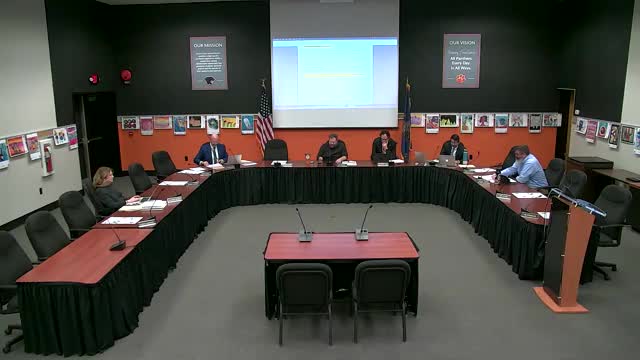
Speaker 1 introduced Policy 819 as a substantive rewrite of the district’s suicide awareness, prevention and response policy and read the purpose statement committing the board to protect student health and promote behavioral‑health supports.
The board examined the authority section and added a new requirement that the district notify employees, students and parents/guardians of the policy and post it on the district website. Multiple members praised the clarity of the authority language.
The definitions section drew sustained attention. Board members proposed punctuation and phrasing changes to improve readability; Director Stewart and others suggested inserting commas and adjusting clause order so that 'emotions, behaviors and biology' clearly relate to mental well‑being.
Director Milson questioned a guideline specifying that suicide-prevention instruction be delivered in small groups or classrooms rather than a large-auditorium setting. District staff and counseling representatives said small-group/classroom delivery supports engagement, interactivity and the availability of trained staff to respond if students become distressed.
The draft requires a minimum of four hours of youth suicide awareness and prevention training every five years for educators in grades 6–12 and states the district 'may' require training for K–5. Board members noted district practice currently offers the same training K–12 (via an online module referred to as the Vector system) and proposed consolidating the language to require K–12 training and to make ancillary schoolwide staff training mandatory rather than permissive. Speaker 5 confirmed the district’s current practice has been to require such training annually for support staff, custodians and others who interact with students.
Board members also debated coordinator structure: one paragraph refers to a 'district-level suicide prevention team' while another specifies a single 'district suicide prevention coordinator.' Director Milson asked that the language be clarified so the policy consistently recognizes both a coordinator (who may be an existing district employee) and building-level teams. Staff said the coordinator would likely be a district-level contact working with building teams and that contracting for outside expertise could remain an option in extraordinary circumstances.
The Columbia Suicide Severity Rating Scale (CSSRS) was discussed as an assessment tool; presenters said the scale is used by crisis workers and hospitals, focuses on intent and plan questions, yields a numeric score and that certification is free and valid for two years.
Board members raised operational concerns about current staffing levels for school psychologists and whether shortages would hamper implementation; staff said the district relies on SAP teams, counselors, social workers and outside contracts as interim mitigation while recruiting continues.
On communication policy, staff said the district’s practice has been not to notify the broader school community about suicide attempts but to coordinate any communication about a completed suicide closely with the family and use discretion about what information to share.
Speaker 1 closed by saying time had run out; the board agreed to continue review at a December policy meeting and thanked Tristan for attending and advising on operational matters.
The board examined the authority section and added a new requirement that the district notify employees, students and parents/guardians of the policy and post it on the district website. Multiple members praised the clarity of the authority language.
The definitions section drew sustained attention. Board members proposed punctuation and phrasing changes to improve readability; Director Stewart and others suggested inserting commas and adjusting clause order so that 'emotions, behaviors and biology' clearly relate to mental well‑being.
Director Milson questioned a guideline specifying that suicide-prevention instruction be delivered in small groups or classrooms rather than a large-auditorium setting. District staff and counseling representatives said small-group/classroom delivery supports engagement, interactivity and the availability of trained staff to respond if students become distressed.
The draft requires a minimum of four hours of youth suicide awareness and prevention training every five years for educators in grades 6–12 and states the district 'may' require training for K–5. Board members noted district practice currently offers the same training K–12 (via an online module referred to as the Vector system) and proposed consolidating the language to require K–12 training and to make ancillary schoolwide staff training mandatory rather than permissive. Speaker 5 confirmed the district’s current practice has been to require such training annually for support staff, custodians and others who interact with students.
Board members also debated coordinator structure: one paragraph refers to a 'district-level suicide prevention team' while another specifies a single 'district suicide prevention coordinator.' Director Milson asked that the language be clarified so the policy consistently recognizes both a coordinator (who may be an existing district employee) and building-level teams. Staff said the coordinator would likely be a district-level contact working with building teams and that contracting for outside expertise could remain an option in extraordinary circumstances.
The Columbia Suicide Severity Rating Scale (CSSRS) was discussed as an assessment tool; presenters said the scale is used by crisis workers and hospitals, focuses on intent and plan questions, yields a numeric score and that certification is free and valid for two years.
Board members raised operational concerns about current staffing levels for school psychologists and whether shortages would hamper implementation; staff said the district relies on SAP teams, counselors, social workers and outside contracts as interim mitigation while recruiting continues.
On communication policy, staff said the district’s practice has been not to notify the broader school community about suicide attempts but to coordinate any communication about a completed suicide closely with the family and use discretion about what information to share.
Speaker 1 closed by saying time had run out; the board agreed to continue review at a December policy meeting and thanked Tristan for attending and advising on operational matters.
View the Full Meeting & All Its Details
This article offers just a summary. Unlock complete video, transcripts, and insights as a Founder Member.
✓
Watch full, unedited meeting videos
✓
Search every word spoken in unlimited transcripts
✓
AI summaries & real-time alerts (all government levels)
✓
Permanent access to expanding government content
30-day money-back guarantee
