Harlem UD 122 proposes consolidating elementary schools under ‘Scenario 7’ to address declining enrollment and budget shortfall
November 18, 2025 | Harlem UD 122, School Boards, Illinois
This article was created by AI summarizing key points discussed. AI makes mistakes, so for full details and context, please refer to the video of the full meeting. Please report any errors so we can fix them. Report an error »
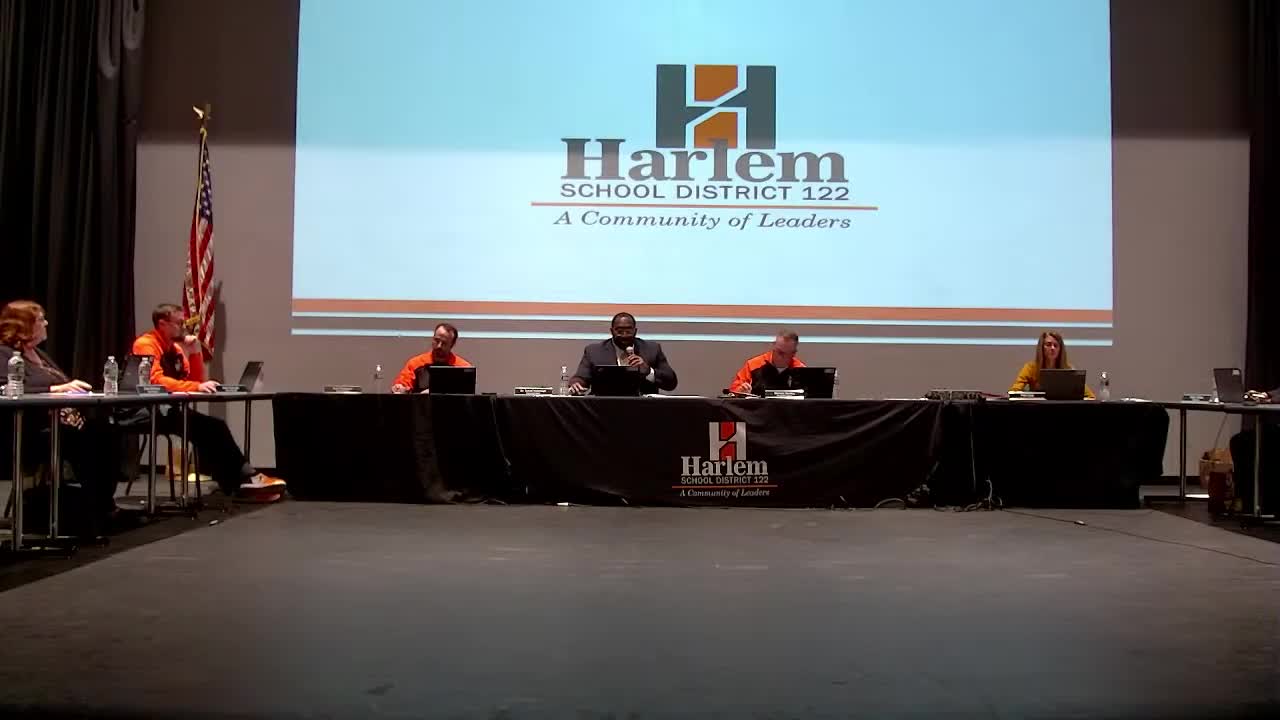
The proposal would reassign grade bands and programs across buildings: Parker Center would serve K–1 (West band) and house Life Skills/STP for select grades; Marquette would become a magnet site for early childhood, OLA and fine arts; other elementary assignments listed that Parker Center, Machesney, Marquette, Ralston, Rock Cut, Windsor, Maple, and Loves Park would be reorganized under East/West boundaries to target building utilization of about 300 students where feasible. "The rationale, for the change is declining enrollment," Doctor Bloom said during the presentation.
Administrators described anticipated instructional benefits, saying two-year grade bands would allow more specialized teacher collaboration, departmentalization at upper elementary grades, and more consistent access to services (ESL, interventionists, social workers). A curriculum leader said the model would increase interventionists and social workers—"2 interventionists in each of our East West Buildings"—and allow departmentalized honors options at grade 5.
Staff and finance presenters outlined the tradeoffs. The plan would reduce early-childhood capacity from 360 seats to 80 seats in the near term; administrators said they would seek to revisit that number with the state grant administrator when responsibilities transfer to 'illinois dot gov.' On staffing, administrators projected approximately a 33.5 reduction in certified positions, an additional 5 teacher reductions as the ALP program phases out, a decrease of about 38.1 support staff positions and three full-time substitute positions. "This plan does result in some significant... reductions," a district presenter said while explaining how roles would be adjusted.
Financial staff showed fund-balance projections comparing current trends with the proposed scenario and said reductions in custodial and energy costs would contribute to fiscal stabilization. The district noted an alternative option would be a referendum of about $5,000,000 (an estimated 9% authorization) but presented Scenario 7 as the administratively driven option to right-size operations.
Doctor Bloom also outlined community engagement and next steps: the district will publish the full proposal and a zoomable boundary map on the district website, open a community input form, and hold three public hearings in December (locations and times to be determined). "We will be activating some web pages... and a community input form where our staff, families, and community will be able to submit questions," Doctor Bloom said.
Board members asked programmatic questions—one asked why the fine arts program would not be placed where the stage and auditorium currently exist—and staff replied the configuration best supports class size balance and program growth under the selected scenario. The district repeatedly emphasized the recommendation grew from analysis of seven scenarios narrowed to four and then refined to Scenario 7.
What happens next: the district will solicit and review community feedback, update FAQs and maps based on that input, and return to the board for further consideration. Three public hearings will provide formal opportunities for comment before the board makes any final decisions.
View the Full Meeting & All Its Details
This article offers just a summary. Unlock complete video, transcripts, and insights as a Founder Member.
30-day money-back guarantee
Sponsors
Proudly supported by sponsors who keep Illinois articles free in 2025

