Manvel council approves first readings of annexation and PUD for proposed retail center, asks developer for clarifications
November 18, 2025 | Manvel, Brazoria County, Texas
This article was created by AI summarizing key points discussed. AI makes mistakes, so for full details and context, please refer to the video of the full meeting. Please report any errors so we can fix them. Report an error »
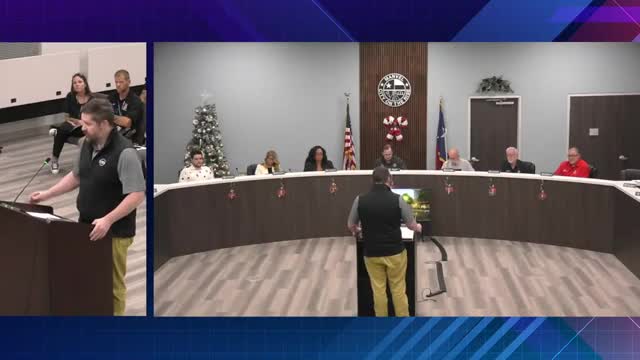
City staff and the applicant presented a revised PUD and master‑plan amendment that deletes several previously allowed uses, tightens sign and setback rules, ties parking stall dimensions to city standards and introduces a three‑year grandfathering clause for code changes following adoption. Ian Knox, the applicant’s representative, said the revisions remove fuel stations and car washes from permitted uses, adjust monument signage and increase some building setbacks to “improve safety.” He summarized other edits as formatting and NAICS‑code clarifications and said remaining items would be cleaned up before the second reading.
Why this matters: The approvals mark the procedural step necessary to annex the property into Manvel and to allow the PUD’s custom land‑use and design standards. The project promises new retail options and tax base growth but also raises recurring issues — building materials, parking, service access and potential public improvements — that council members wanted clarified before the final vote.
Council members pressed the applicant and staff on several specifics. Staff noted the city’s Highway‑6 overlay currently requires 90% masonry, while the proposed PUD would allow 75% masonry on a building’s front and sides and 50% on the rear; council discussion centered on whether 75% would achieve the desired appearance and durability. On shared parking — an optional analysis in the PUD that could reduce required paving by counting complementary peak times for different uses — staff and council cautioned about unintended long‑term consequences if tenant mixes change, with a staff recommendation to provide a clear methodology or remove the shared‑parking allowance.
Other issues discussed included: whether motel‑style lodging should be limited or removed (several council members asked for stricter wording or a limit of one hotel), fire‑protection implications for taller buildings and the need to coordinate detention‑area landscaping and trails with nearby developments. Councilman Bonner suggested the escrow formula for street and sidewalk construction should account for inflation (he proposed a 5% escalation over five to ten years); City Manager Dan said staff would set a numeric approach for the engineer to apply.
Applicant commitments and next steps: The applicant agreed to revise the PUD redlines to (1) enumerate non‑permitted uses clearly (including fuel stations and car washes), (2) align NAICS codes and definitions with the version staff prefers, (3) clarify any shared‑parking agreements would require signed arrangements between property owners, and (4) provide updated exhibits showing multiple Kirby access points. Staff told council it would return a final redline and the PUD resolution for second reading and the council asked staff to bring any final 380 (economic incentive) materials into an executive session if financing details require confidentiality.
The council’s approval was the first of two required readings; final action on annexation, zoning and any 380 financing will occur at a subsequent meeting after staff and the applicant supply the corrected PUD document and required county approvals.
View the Full Meeting & All Its Details
This article offers just a summary. Unlock complete video, transcripts, and insights as a Founder Member.
30-day money-back guarantee
Sponsors
Proudly supported by sponsors who keep Texas articles free in 2025

