Developer presents revised townhome sketch for 615–617 South Walnut; commission presses for buffering, stormwater and parking details
November 18, 2025 | West Chester, Chester County, Pennsylvania
This article was created by AI summarizing key points discussed. AI makes mistakes, so for full details and context, please refer to the video of the full meeting. Please report any errors so we can fix them. Report an error »
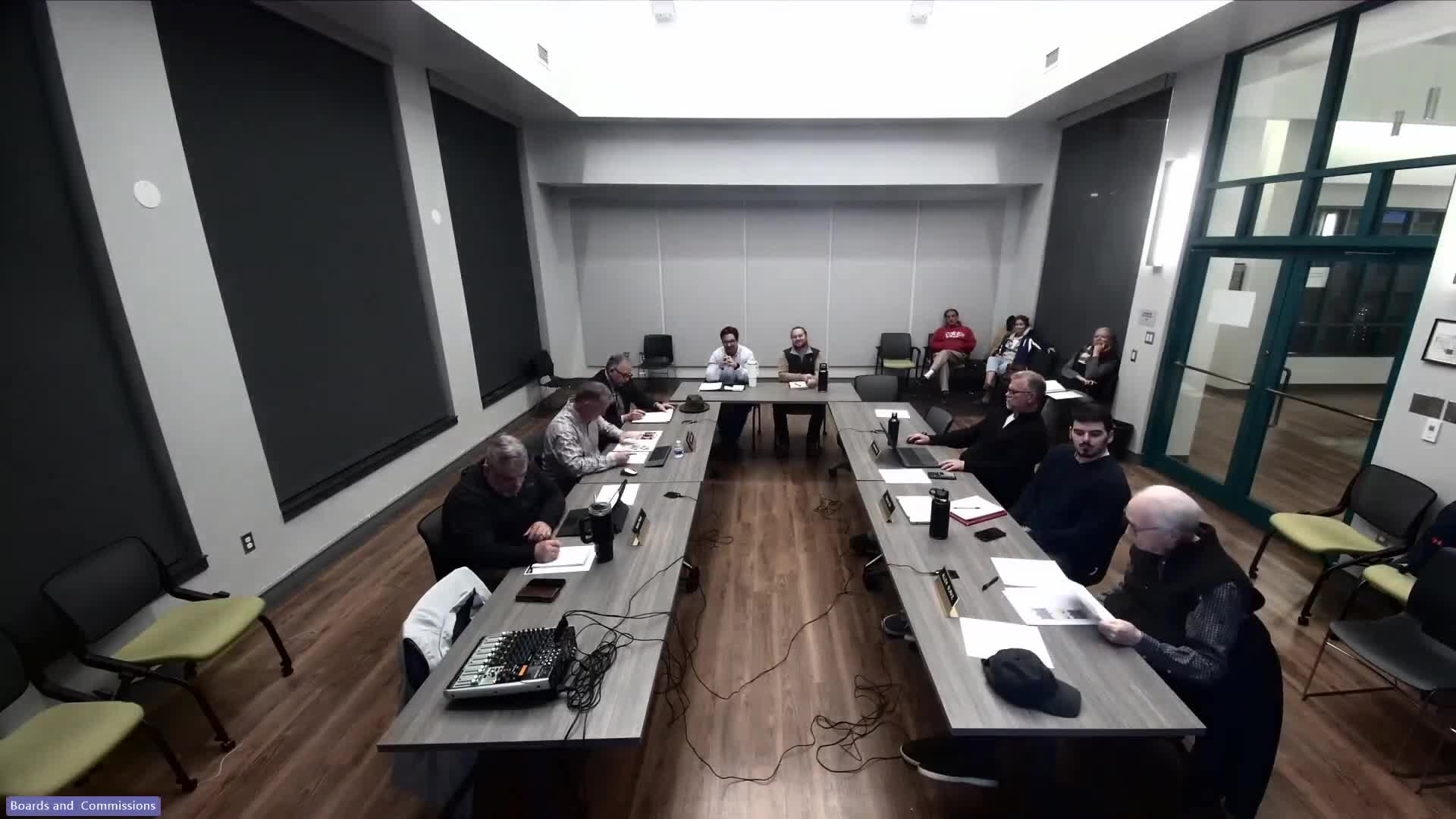
An applicant presented revised sketch plans for 615–617 South Walnut at the West Chester Borough Planning Commission's Nov. 17 working session, showing smaller unit footprints, an additional dwelling, and multiple options for alley parking and visual buffering.
The applicant representative said the team "came up with, 2 additional options" for the site and showed renderings that reduce unit widths, preserve two existing dwellings, and retain four parking spaces intended for the existing units. Chair Jim Charley, who opened the item, called the new direction "directionally correct," saying the proportions and corner treatment fit with the borough's historic scale.
Why it matters: The design choices affect how the new townhomes will relate to Walnut Street and adjacent alleys, how much stormwater mitigation the site will require, and whether the units remain attractive to owner-occupants instead of student or investor rentals.
What the plan shows and key changes
The applicant described moving from roughly 2,000-square-foot units toward about 1,700-square-foot units and adding a sixth unit to spread development costs. The team proposed one-car-deep garages stacked for two-car capacity and explored parking locations either along Willow Alley or Mechanics Alley. The applicant also proposed using pervious pavement in alley parking areas to help reduce impervious coverage and noted a planned EV charging point for a related nearby project.
Commissioners pressed for design details the sketch lacked. Charley recommended creating a small, communal "pocket park" or courtyard rather than a visible swath of parked cars: "It would just be nice to be able to present that as a backdrop," he said, urging a masonry wall or attractive fencing and landscaping to screen vehicles from Walnut Street. Commissioner Alan Burke said an elevation rendering from the architect would help determine whether cars would dominate the Walnut frontage.
Stormwater, trees and impervious coverage
The applicant reported being near the borough's maximum building-area coverage and said they planned some pervious paving; the applicant gave a rough building average of "35.3%" and said they expected to be "maxed off" without design accommodations. Commissioners asked whether mature trees on site would have to be removed; staff and the applicant said at least one large tree appeared unhealthy and new landscaping would be part of mitigation.
Ownership, HOA and market context
The applicant said the development would operate under a homeowners association limited to exterior maintenance, lawn/snow care and stormwater infrastructure reserves. On market target, the applicant said the smaller units were intended as entry-level for sale — "first-time homebuyers or a downsizing person" — and suggested smaller unit size lowers per-unit price; commissioners discussed prior nearby sales and offered rough price expectations in the mid-five-hundreds per unit.
Next steps
Commissioners encouraged the team to return with a fully surveyed site plan, detailed elevations, clarified impervious-area calculations and a proposed screening treatment before submitting for land development. The applicant agreed to return with more detailed drawings and a survey prior to formal submission.
The commission did not take any formal vote on the sketch plan during the Nov. 17 working session.
The applicant representative said the team "came up with, 2 additional options" for the site and showed renderings that reduce unit widths, preserve two existing dwellings, and retain four parking spaces intended for the existing units. Chair Jim Charley, who opened the item, called the new direction "directionally correct," saying the proportions and corner treatment fit with the borough's historic scale.
Why it matters: The design choices affect how the new townhomes will relate to Walnut Street and adjacent alleys, how much stormwater mitigation the site will require, and whether the units remain attractive to owner-occupants instead of student or investor rentals.
What the plan shows and key changes
The applicant described moving from roughly 2,000-square-foot units toward about 1,700-square-foot units and adding a sixth unit to spread development costs. The team proposed one-car-deep garages stacked for two-car capacity and explored parking locations either along Willow Alley or Mechanics Alley. The applicant also proposed using pervious pavement in alley parking areas to help reduce impervious coverage and noted a planned EV charging point for a related nearby project.
Commissioners pressed for design details the sketch lacked. Charley recommended creating a small, communal "pocket park" or courtyard rather than a visible swath of parked cars: "It would just be nice to be able to present that as a backdrop," he said, urging a masonry wall or attractive fencing and landscaping to screen vehicles from Walnut Street. Commissioner Alan Burke said an elevation rendering from the architect would help determine whether cars would dominate the Walnut frontage.
Stormwater, trees and impervious coverage
The applicant reported being near the borough's maximum building-area coverage and said they planned some pervious paving; the applicant gave a rough building average of "35.3%" and said they expected to be "maxed off" without design accommodations. Commissioners asked whether mature trees on site would have to be removed; staff and the applicant said at least one large tree appeared unhealthy and new landscaping would be part of mitigation.
Ownership, HOA and market context
The applicant said the development would operate under a homeowners association limited to exterior maintenance, lawn/snow care and stormwater infrastructure reserves. On market target, the applicant said the smaller units were intended as entry-level for sale — "first-time homebuyers or a downsizing person" — and suggested smaller unit size lowers per-unit price; commissioners discussed prior nearby sales and offered rough price expectations in the mid-five-hundreds per unit.
Next steps
Commissioners encouraged the team to return with a fully surveyed site plan, detailed elevations, clarified impervious-area calculations and a proposed screening treatment before submitting for land development. The applicant agreed to return with more detailed drawings and a survey prior to formal submission.
The commission did not take any formal vote on the sketch plan during the Nov. 17 working session.
Don't Miss a Word: See the Full Meeting!
Go beyond summaries. Unlock every video, transcript, and key insight with a Founder Membership.
✓
Get instant access to full meeting videos
✓
Search and clip any phrase from complete transcripts
✓
Receive AI-powered summaries & custom alerts
✓
Enjoy lifetime, unrestricted access to government data
30-day money-back guarantee
