SB Friedman presents 10-year status report for Lisle downtown TIF; board hears options to extend or dissolve
November 18, 2025 | Lisle, DuPage County, Illinois
This article was created by AI summarizing key points discussed. AI makes mistakes, so for full details and context, please refer to the video of the full meeting. Please report any errors so we can fix them. Report an error »
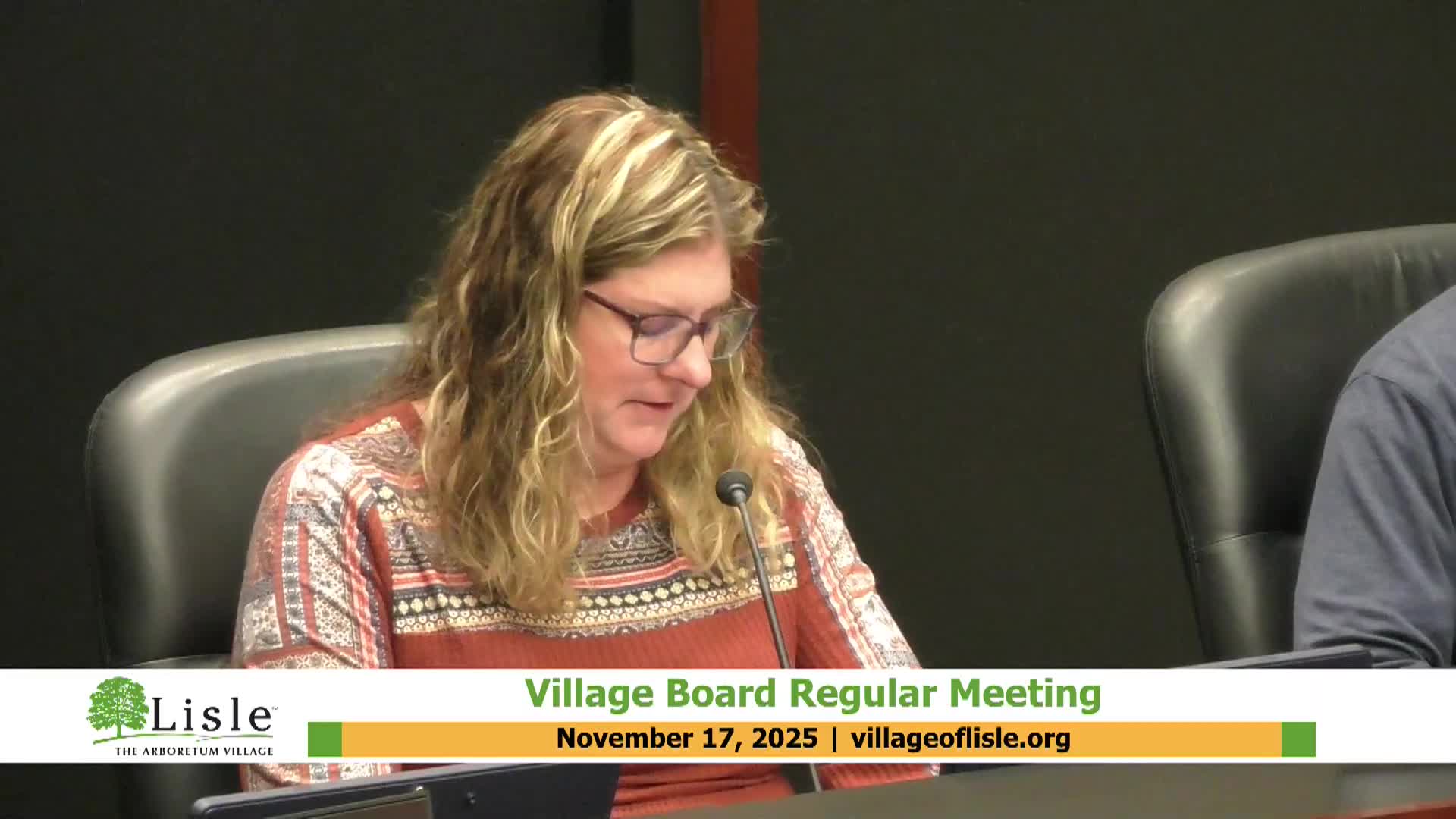
"This TIF was adopted in March 2015," said Jillian Gullett of SB Friedman Development Advisors, introducing the firm's findings. Gullett said the district generated nearly $192,000 in revenues over the past decade, all attributable to inflationary growth in existing property values, and that nearly $120,000 was spent on studies, plans and surveys. She identified the current TIF fund balance as $71,757 and said other public and private investment in the redevelopment project area totaled about $300,000 over the last decade.
Gullett also summarized redevelopment activity: a redevelopment agreement between the village and F & C Development entered in January 2022 was amended in May 2023 and June 2024, missed performance‑based deadlines and was automatically terminated. "To date, no projects in the RPA have received public assistance," she said, and she characterized the current status as having no active redevelopment agreements.
Consultants and counsel told the board the village has two primary paths: extend the Downtown TIF to create additional capacity for meeting the redevelopment plan's goals, or dissolve the existing TIF and reestablish it under a revised plan. Mike Jerussek, the village's special TIF counsel, described the 10‑year report as a transparency benchmark required by the TIF Act and said no state or county filing is required simply to hold the hearing.
Mayor Mary Jo Mullen opened the hearing, and after the presentation the board solicited public comment; none was offered. The board closed the public hearing without taking action beyond receiving the report. The next steps discussed were continued coordination with property owners and developers and possible follow‑up study or ordinance action depending on the board's policy direction.
What happens next: the report does not itself change the TIF. Any extension, dissolution or re‑establishment would require further board action and, where applicable, filings with county authorities.
View the Full Meeting & All Its Details
This article offers just a summary. Unlock complete video, transcripts, and insights as a Founder Member.
30-day money-back guarantee
Sponsors
Proudly supported by sponsors who keep Illinois articles free in 2025

