Okaloosa County keeps current concealed-carry policy for employees; declines immediate open-carry expansion
November 18, 2025 | Okaloosa County, Florida
This article was created by AI summarizing key points discussed. AI makes mistakes, so for full details and context, please refer to the video of the full meeting. Please report any errors so we can fix them. Report an error »
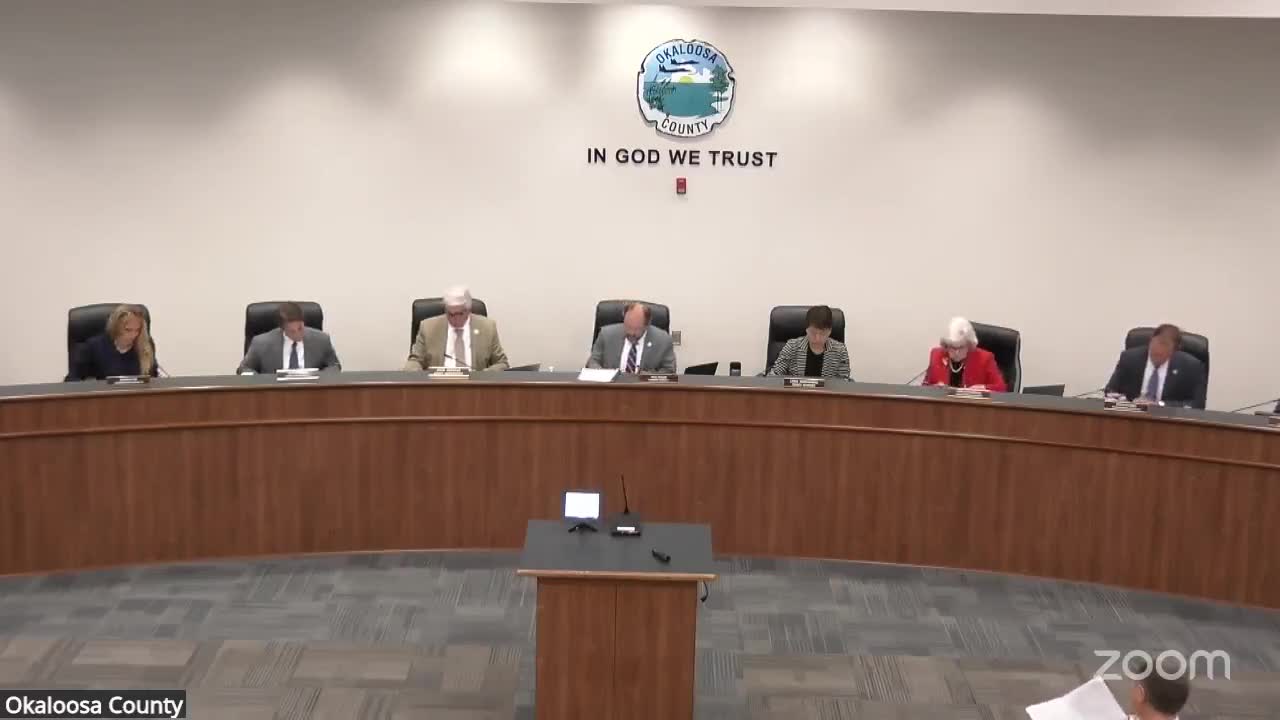
County staff and the county attorney reviewed recent state law changes that now permit open carry for eligible individuals and explained the board retains authority to regulate employee carrying during official duties. "The whole field of regulation of firearms and ammunition is preempted to the state...However, there is a statutory exception to the preemption, which allows the board to regulate and prohibit the carrying of firearms and ammunition by county employees during and in the course of their official duties," the county attorney said during the briefing.
Commissioners raised safety and perception concerns about exposed firearms during code-enforcement visits and other public interactions, discussed training requirements and the cost of any certification program, and weighed the balance between Second Amendment protections and representing the county in an employment capacity. Commissioner Goodwin said the current concealed-carry policy has worked and he'd be in favor of keeping it and exploring any future program with training requirements. Commissioner Cox and others cited potential negative public perception when employees visit private properties.
The board's motion to retain the policy also included an amendment directing county staff (county attorney and county administrator) to draft a letter for county employees explaining the county's stance and to continue sharing information from county attorneys in other jurisdictions about practices elsewhere. The action passed unanimously.
Why it matters: The county's decision clarifies workplace expectations for employees who are also gun owners and places future policy changes under a study-and-report approach rather than immediate adoption.
What happens next: County attorneys will continue to gather comparative information from other counties and staff will prepare an informational letter for employees describing the county's current stance and any procedural guidance.
Don't Miss a Word: See the Full Meeting!
Go beyond summaries. Unlock every video, transcript, and key insight with a Founder Membership.
30-day money-back guarantee
Sponsors
Proudly supported by sponsors who keep Florida articles free in 2025

