Appellant Juan Garnier asks appeals court to vacate verdict, cites false ambulance record and excluded treating‑physician testimony
November 17, 2025 | Judicial - Appeals Court Oral Arguments, Judicial, Massachusetts
This article was created by AI summarizing key points discussed. AI makes mistakes, so for full details and context, please refer to the video of the full meeting. Please report any errors so we can fix them. Report an error »
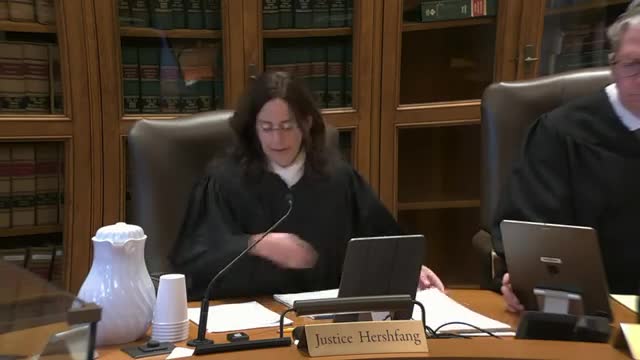
Garnier centered his appeal on two linked claims: (1) that a patient care report prepared by the responding EMT inaccurately recorded the ambulance transport as "without incident," contrary to eyewitness testimony and his own immediate report of pain, and (2) that the court improperly excluded a treating physician's opinion tying the transport to new spinal findings. Garnier invoked Massachusetts EMS regulations, citing "105 CMR 170.345(B)," and told the court that the uncorrected official record carried significant weight with the jury. "The record's inaccurate," he said, arguing that an uncorrected 'without incident' entry undercut the treating‑physician nexus and that the errors together were not harmless.
The court pushed on the remedies sought and the role of cross‑examination. One justice asked whether presenting the discrepancy through cross‑examination undermined the need to place the record before the jury; Garnier replied that a false official record carries lingering weight and that cross‑examination did not cure the prejudice. He asked the court to consider either an adverse‑inference instruction or, at minimum, relief that addresses both occurrence and causation simultaneously.
Counsel for Cataldo Ambulance, Janelle Gordon, responded that the facts did not amount to spoliation because there was no evidence the report was destroyed or manipulated after it was created. "That is not spoliation," she told the panel, explaining that spoliation requires evidence an item once existed and was subsequently destroyed, which she said did not occur here. Gordon argued that the contested facts about what occurred during transport were placed before the jury through testimony and cross‑examination and that limits on other medical records or expert testimony went to weight and relevancy, not automatic entitlement under the evidentiary statute. She also urged that claims under the Americans with Disabilities Act were waived or unsupported where the record did not show a specific accommodation request tied to the claimed disability.
Neither side sought further rebuttal after questioning; the panel took the case under advisement.
Don't Miss a Word: See the Full Meeting!
Go beyond summaries. Unlock every video, transcript, and key insight with a Founder Membership.
30-day money-back guarantee
Sponsors
Proudly supported by sponsors who keep Massachusetts articles free in 2025

