Arlington Heights directs staff to draft ordinance limiting civil immigration enforcement use of village property after lengthy public comment
November 17, 2025 | Arlington Heights, Cook County, Illinois
This article was created by AI summarizing key points discussed. AI makes mistakes, so for full details and context, please refer to the video of the full meeting. Please report any errors so we can fix them. Report an error »
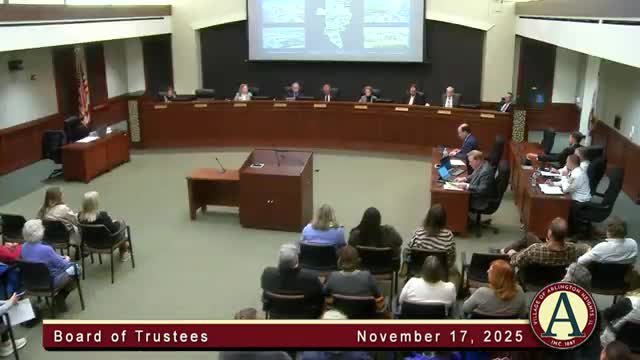
Trustee Santa Maria made the motion, citing neighborhood incidents, children's exposure to armed agents near schools and a need to protect community trust. The motion was seconded and, after staff clarified scope and enforceability, the board agreed the intended draft should focus on "village-owned public property" while excluding traditional rights-of-way such as streets and sidewalks.
Village Manager Reklaus explained the legal and practical limits of local authority during the staff presentation: federal law enforcement agencies cannot be prevented from operating in spaces broadly open to the public, but the village can restrict access to non-public or limited-access village-controlled facilities (for example, staff-only parking areas, secured municipal buildings) absent a warrant. Reklaus said the village issued an interim policy on Nov. 6 providing guidance to employees (deny access to non-public areas without a warrant, require FOIA for nonpublic information, document incidents, do not obstruct federal agents, continue public-safety duties) and recommended either making that policy permanent or drafting an ordinance or resolution as complementary steps.
Trustees debated whether to use the word "federal" or broader language such as "civil immigration enforcement" (some trustees preferred the broader term to reduce legal risk), whether an ordinance or a resolution better matched the village's goals, and the real-world enforceability of any local rule. Village Attorney Passman advised that while the village can pass an ordinance, enforcement against federal actors would likely be pursued in federal court and the practical remedy for unauthorized use of restricted village property would be litigation.
Dozens of residents, clergy, business owners and nonprofit representatives urged the board to adopt an ordinance or proclamation and to provide resources for immigrant residents (a village web page with rights and resources, a hotline, coordination with neighboring jurisdictions). Public commenters described incidents and emotional and economic consequences for immigrant residents; several called the measure both a moral statement of solidarity and a practical protection for specific village-controlled locations.
Following the public comment period, the board took a roll-call vote directing staff to draft the ordinance language that reflects the board's intent to prohibit civil immigration enforcement operations on village-owned public property (not including streets/sidewalks). The vote was unanimous. Manager Reklaus and counsel said staff will draft the ordinance for return at a future meeting and will continue communications and resource development.
What's next: staff will prepare a draft ordinance consistent with the board's direction, bring it back for committee/board consideration (anticipated December agenda), and pursue operational steps to make interim guidance permanent and to publish resident-facing resources.
Don't Miss a Word: See the Full Meeting!
Go beyond summaries. Unlock every video, transcript, and key insight with a Founder Membership.
30-day money-back guarantee
Sponsors
Proudly supported by sponsors who keep Illinois articles free in 2025

