Verona district projects multi‑million dollar shortfall and authorizes up to $7M promissory note for cash flow
November 18, 2025 | Verona Area School District, School Districts, Wisconsin
This article was created by AI summarizing key points discussed. AI makes mistakes, so for full details and context, please refer to the video of the full meeting. Please report any errors so we can fix them. Report an error »
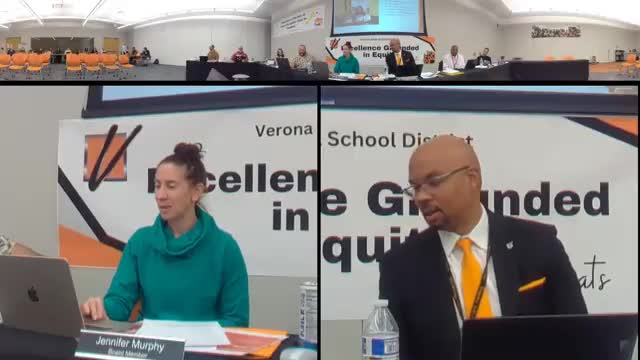
Chad, the district’s finance presenter, told the school board the district’s operating budget is about $109 million and that routine cost increases require roughly $5 million annually to maintain current services. “We really need $5,000,000 every year to balance our budget,” he said, explaining that recent state revenue increases (approximately $325 per student in the state budget) fall well short of that need.
Chad and other administrators said declining enrollment, a projected drop of about 100 full‑time equivalent students, and uncertainty in special‑education reimbursement add pressure. He flagged early signals that the state’s first round of special‑education reimbursement may be around 35% (lower than earlier expectations of ~42%), increasing the district’s exposure.
As interim cash‑flow protection, the board considered financial tools that do not change long‑term policy. Pete, the district’s business/treasurer staff, described short‑term borrowing mechanics and a proposed line of credit with Lake Ridge Bank: “The line of credit… we’re only paying interest on it when we’re drawing upon,” he said, explaining that districts commonly use short borrowing to smooth the gap between payroll timing and tax receipts.
Following discussion, the board voted to approve a resolution authorizing a taxable tax‑and‑revenue anticipation promissory note for cash‑flow purposes in an amount not to exceed $7,000,000. Joe moved the motion and Christopher seconded it; the board approved the resolution by voice vote.
Administrators outlined non‑referendum options to address recurring deficits — staff reductions through allocation/attrition rather than layoffs, freezing step increases (estimated $1.3 million savings), suspending CPI increases for a year, modifying facility prepayment strategies, health‑care plan design changes, and pursuing open‑enrollment seat growth — but warned these are largely one‑year fixes and structural gaps would remain without new revenue or referendum authority.
Chad said the board would return in December with more detailed scenarios including what a possible fall 2026 operating referendum might look like and timing for related decisions.
The board approved the short‑term promissory note resolution; administrators will continue to refine budget scenarios and present referendum and allocation options in upcoming meetings.
View the Full Meeting & All Its Details
This article offers just a summary. Unlock complete video, transcripts, and insights as a Founder Member.
30-day money-back guarantee
Sponsors
Proudly supported by sponsors who keep Wisconsin articles free in 2025

